
Two line items in one quarterly filing tell the whole story of where dealer marketing spend is going
You don't always need a survey or an industry forecast to see a structural shift happening in real time. Sometimes it's sitting right there in a company's own quarterly financial filing, in two adjacent revenue lines moving in opposite directions.
What the two numbers actually are
Autohome Inc., China's largest automotive portal, reported total net revenues of RMB 1,778.10 million in the third quarter of 2025. Buried within that total are two specific service lines worth examining together. Leads generation services, essentially the traditional directory-listing model of connecting car buyers to dealers, contributed RMB 663.70 million - down 20.10% from the same quarter a year earlier. Online marketplace and data product revenues, a category spanning more integrated technology tools and algorithmic transaction matching, contributed RMB 816.40 million - up 32.15% over the same period.
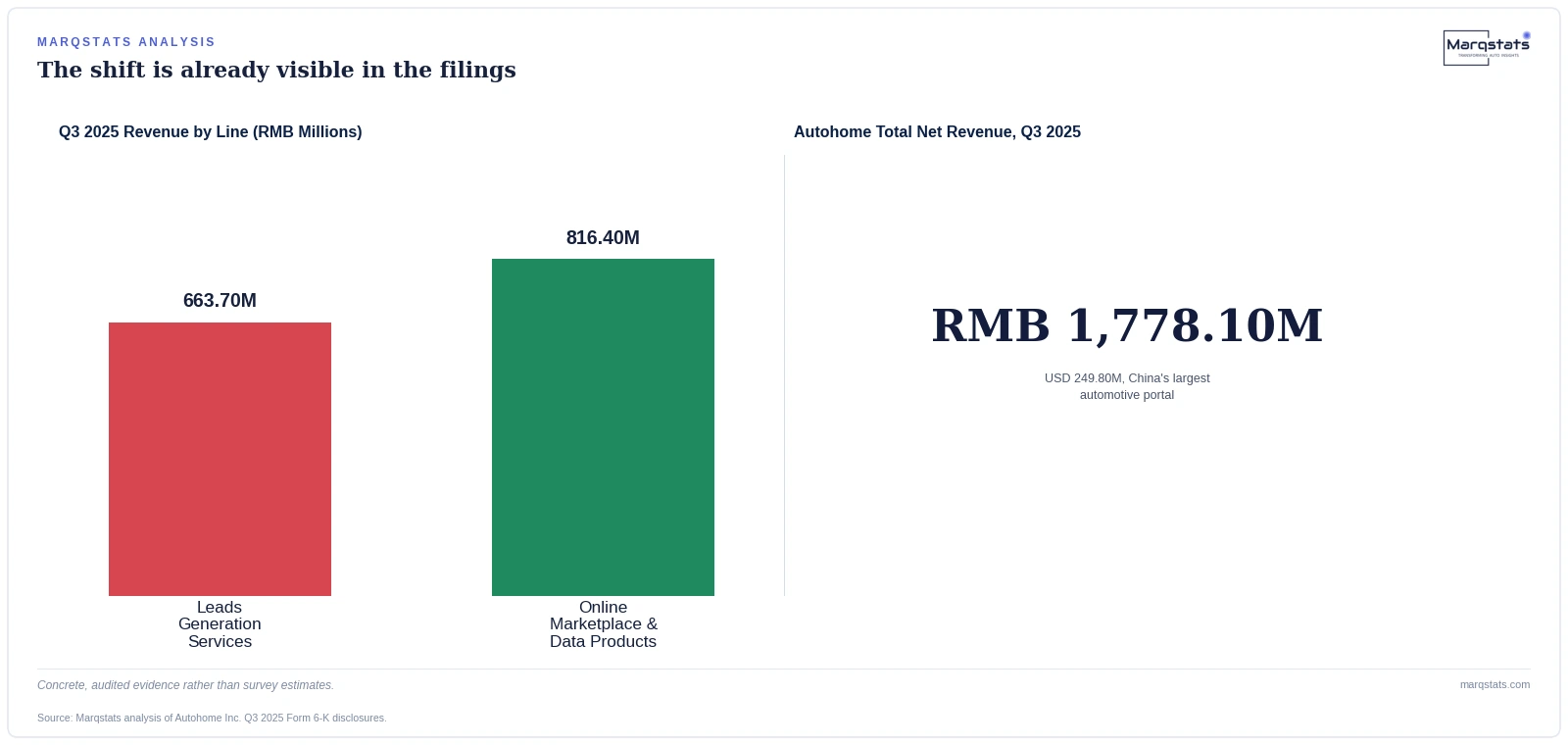
One number falling twenty percent, another rising thirty-two percent, in the same report. That's not noise, that's a trend.
— Marqstats Analyst Team
Why these two specific numbers matter together
Individually, either figure could be explained by any number of company-specific factors. Together, moving in opposite directions within the same quarterly report from the same company, they tell a considerably more specific story: dealerships that buy Autohome's services are actively cutting spending on static directory listings, the traditional pay-to-be-listed model, while simultaneously increasing spending on integrated technology tools, algorithmic matching and cloud data syndication services.
This is exactly the kind of reallocation you'd expect to see if dealer groups across China were genuinely shifting marketing budget away from traditional lead-generation advertising and toward more technically integrated, generative-search-compatible infrastructure - and the fact that it shows up clearly in a single company's audited quarterly disclosure, rather than requiring cross-company survey data, makes it a genuinely credible, concrete data point rather than an industry-wide narrative pieced together from indirect signals.
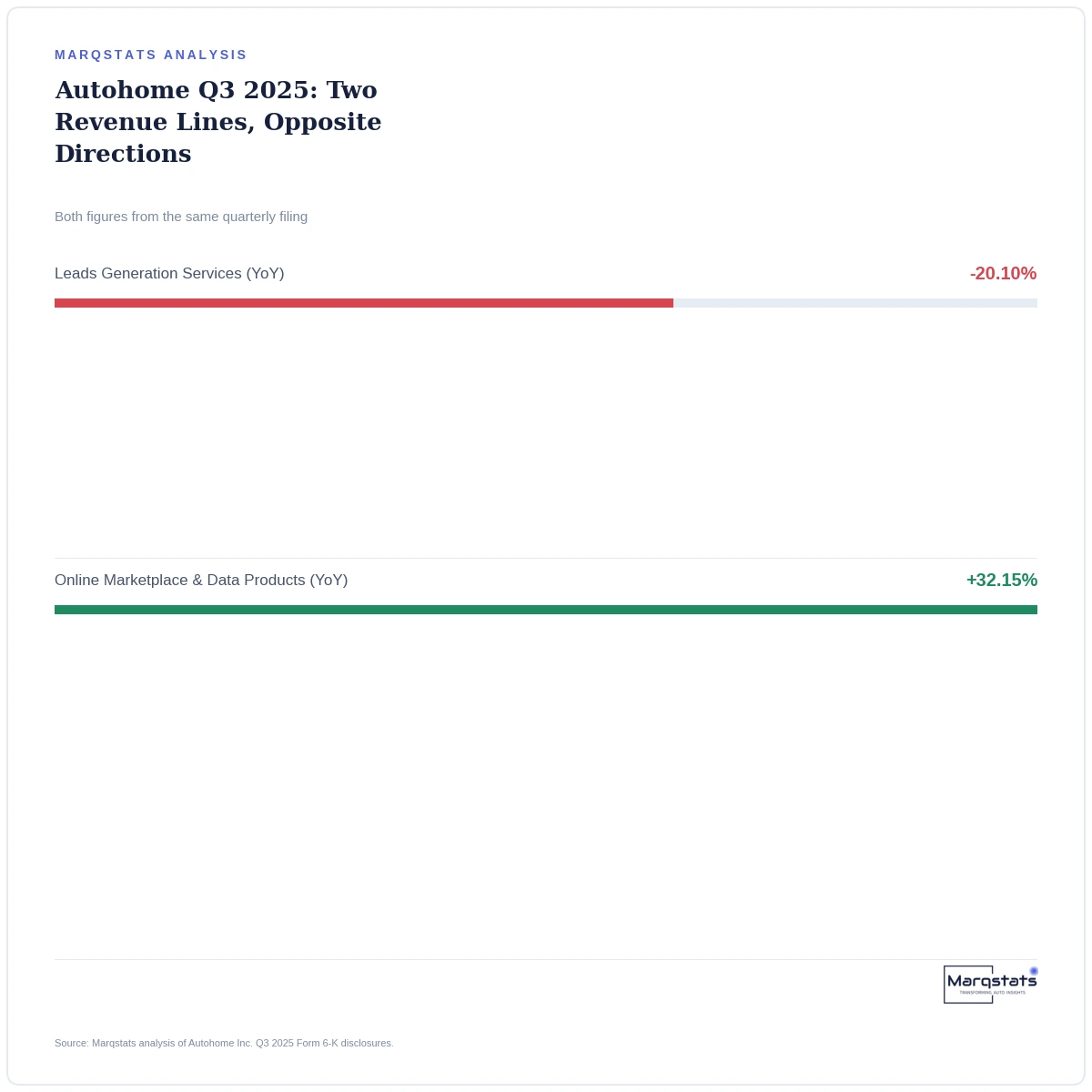
Why this specific evidence matters more than a general industry claim
Broad claims about industry-wide shifts toward generative search optimization can be hard to verify independently - they often rely on vendor surveys, anecdotal reporting, or aggregated estimates that are difficult to audit. A specific, named company's own audited financial filing showing two adjacent revenue lines moving in clearly opposite directions within the same reporting period is a meaningfully more concrete form of evidence. It doesn't require trusting anyone's forecast or survey methodology - it's simply what Autohome itself disclosed to regulators and investors about its own actual revenue composition.
The counter-argument: could this reallocation reflect something other than a genuine shift toward generative optimization specifically?
A fair objection is that a shift from leads generation revenue toward online marketplace and data product revenue at one company could reflect many things beyond a genuine industry-wide pivot toward generative search optimization specifically - it could reflect Autohome's own internal product strategy changes, broader e-commerce integration trends unrelated to generative search, or simply a repricing of existing services rather than customers actually changing their underlying marketing behavior. This is a reasonable caution, and a single company's revenue mix shift doesn't, on its own, prove a specific causal link to generative search adoption. What makes this data point still genuinely useful, though, is that it's consistent with, and corroborates, the broader pattern already documented elsewhere: dealer groups facing margin pressure moving away from static, pay-per-listing advertising models toward more integrated, technically sophisticated customer acquisition infrastructure, even if this single filing alone can't isolate generative search as the sole cause.
What this means for anyone tracking this shift
- Analysts seeking concrete evidence of generative search adoption trends should examine automotive classified companies' segmented revenue disclosures specifically, rather than relying solely on industry survey data.
- Automotive portals and classified operators should expect continued erosion of traditional directory-listing revenue and should proactively build out integrated technology and data product offerings as the more durable growth category.
- Dealerships evaluating their own marketing spend allocation should benchmark against this kind of documented industry-wide reallocation pattern when deciding how to shift budget between traditional listings and integrated technology tools.
The full market picture
Marqstats' complete Asia Pacific automotive Generative Engine Optimization market analysis, including the full financial reconciliation methodology, is available in the linked report below.
Related reportAsia Pacific Automotive Generative Engine Optimization Market Size, Share & Forecast 2026 – 2030