
Which V-16 Beacon Should You Actually Buy Now That the Mandate Is Enforced?
Buy a beacon certified specifically for the DGT 3.0 platform with confirmed NB-IoT or LTE-M connectivity — not just a beacon that flashes and claims GPS capability. Spain's requirement, enforced since 1 January 2026 and confirmed still active through September 2026, is specific: a V-16 device must transmit location to the DGT 3.0 cloud, not merely display a light, and a significant share of devices sold online do not meet that bar despite looking identical to ones that do.
What "Certified" Actually Requires
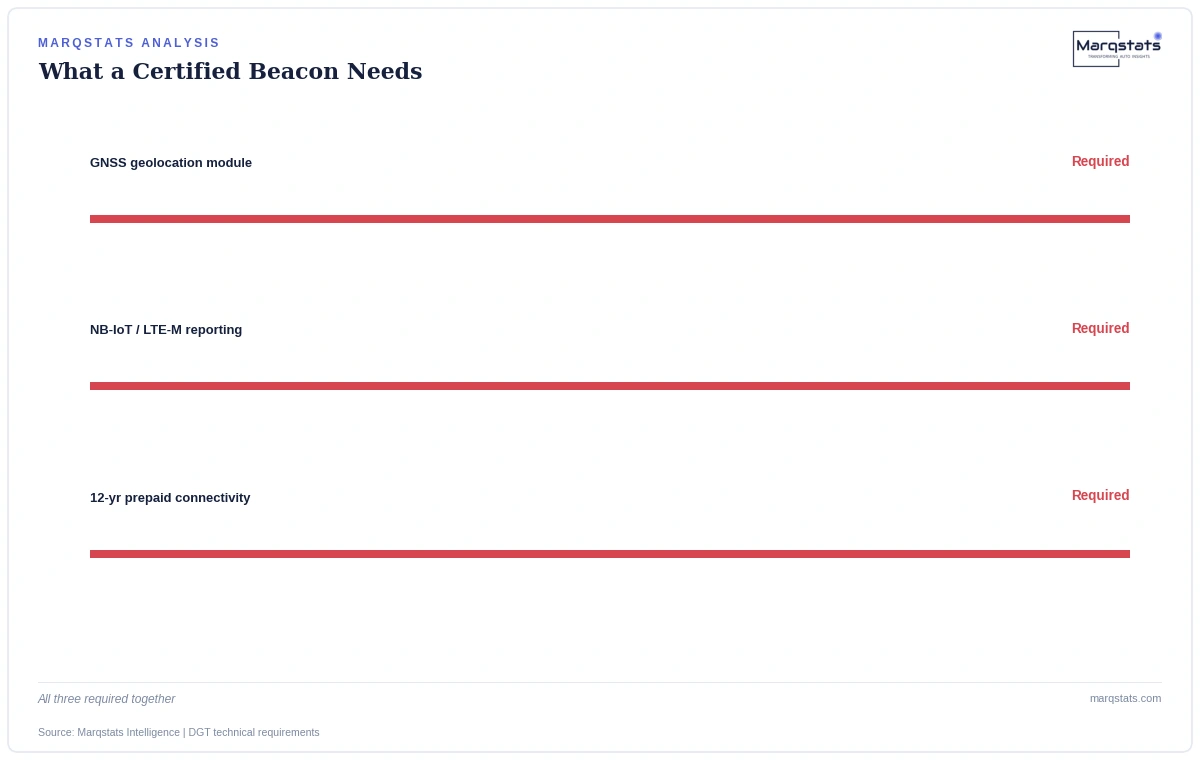
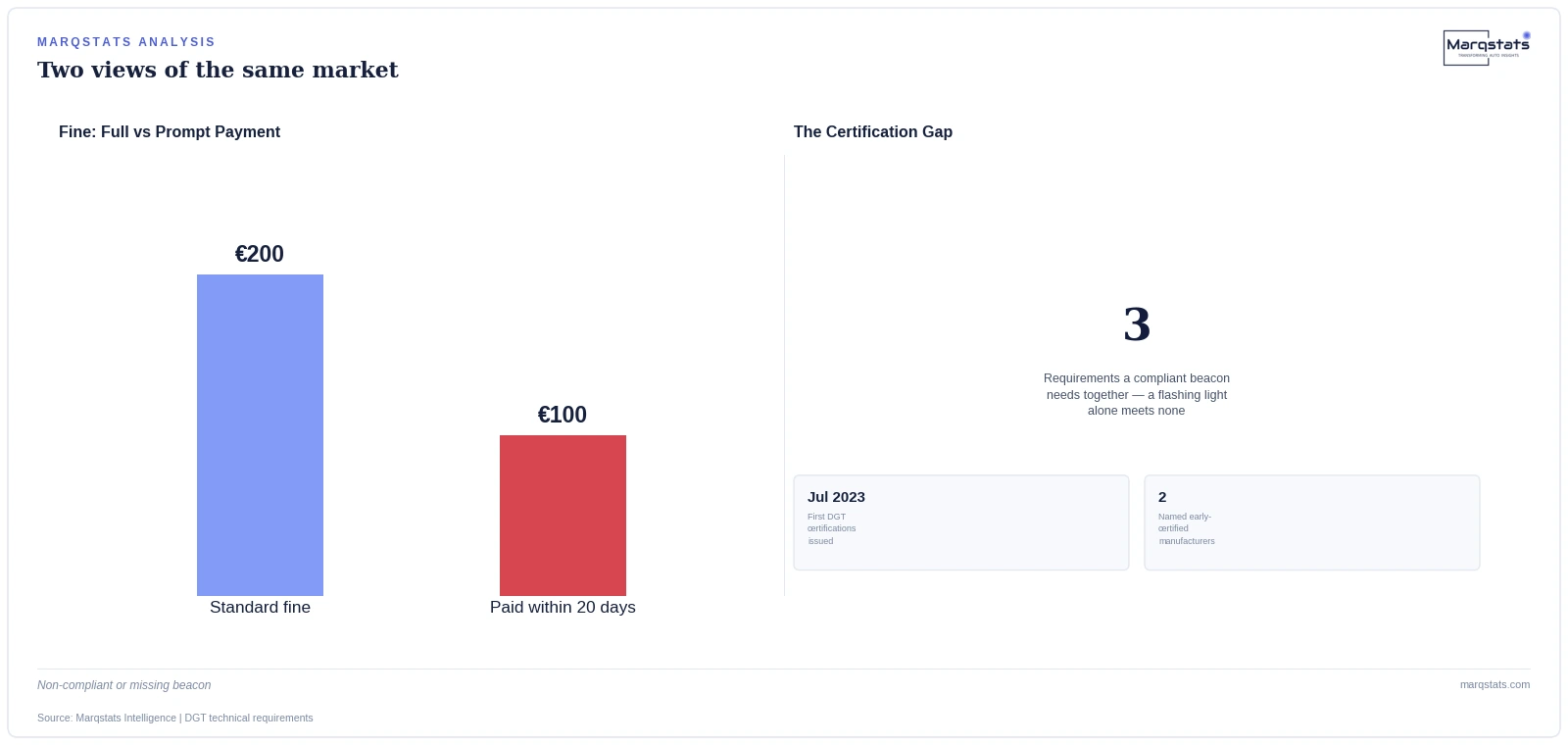
A compliant V-16 beacon needs three things a basic flashing light does not: an internal GNSS module for geolocation, a cellular IoT transceiver (NB-IoT or LTE-M) that reports that location to the DGT 3.0 platform, and a minimum 12 years of prepaid network connectivity bundled into the purchase price so the owner never pays a recurring fee. Devices manufactured by Netun Solutions and Erum Vial, among the earliest to receive DGT certification in July 2023, meet all three requirements. A generic "V16-style" beacon bought on a general marketplace may meet none of them.
Why the Distinction Costs Real Money
The fine for a non-compliant or absent beacon is EUR 200, reduced to EUR 100 with payment inside 20 days of notification. A beacon that flashes but does not report to DGT 3.0 does not satisfy the regulation — it looks compliant at a glance and is not, which is precisely the gap that catches drivers who bought based on price or appearance rather than confirmed certification.
How to Verify Before You Buy
Check the DGT's own published list of certified V-16 beacon models before purchasing anywhere, including on general marketplaces where used or unverified units circulate. A device from a named, DGT-certified manufacturer — Netun Solutions' Help Flash IoT line and Erum Vial's PF LED ONE among the earliest certified — is the safer default over an unbranded listing, because the certification process specifically tests the cellular reporting function that a visual inspection cannot confirm.
What About Secondhand Beacons?
Marketplace listings for used V-16 beacons have become common since the mandate took effect, and the same certification question applies with an added wrinkle: a beacon's 12 years of prepaid connectivity is tied to the device from its original activation date, not from the date of resale. A three-year-old secondhand beacon carries roughly nine remaining years of guaranteed connectivity, not a fresh twelve — a detail worth confirming with the seller, since the device itself carries no visible indicator of how much prepaid service remains. A buyer who assumes a full twelve years on a used device may find it stops reporting to DGT 3.0 years earlier than expected, at which point it no longer satisfies the mandate even though it still physically flashes.
The Motorcycle and Older-Vehicle Question
The V-16 requirement applies to turismos, vans, buses and mixed-use vehicles; motorcycles are explicitly exempt under the regulation. For older passenger cars still in active use — exactly the vehicles this market's aging-fleet dynamic centres on — the beacon requirement applies regardless of the vehicle's own age or connectivity, since the beacon is an accessory carried in the vehicle rather than a component of it. A twenty-year-old car with no embedded electronics whatsoever satisfies the mandate exactly as well as a new one, provided the beacon itself is certified and its prepaid service window has not lapsed.
That equivalence is actually the point of the whole policy. A beacon requirement that only worked on newer, already-connected cars would add nothing to Spain's safety-telemetry coverage; a requirement that works identically on the oldest car in the fleet is precisely what closes the connectivity gap the rest of this market's regulation cannot reach.