
A Business With No Dependency on Argentine Car Sales
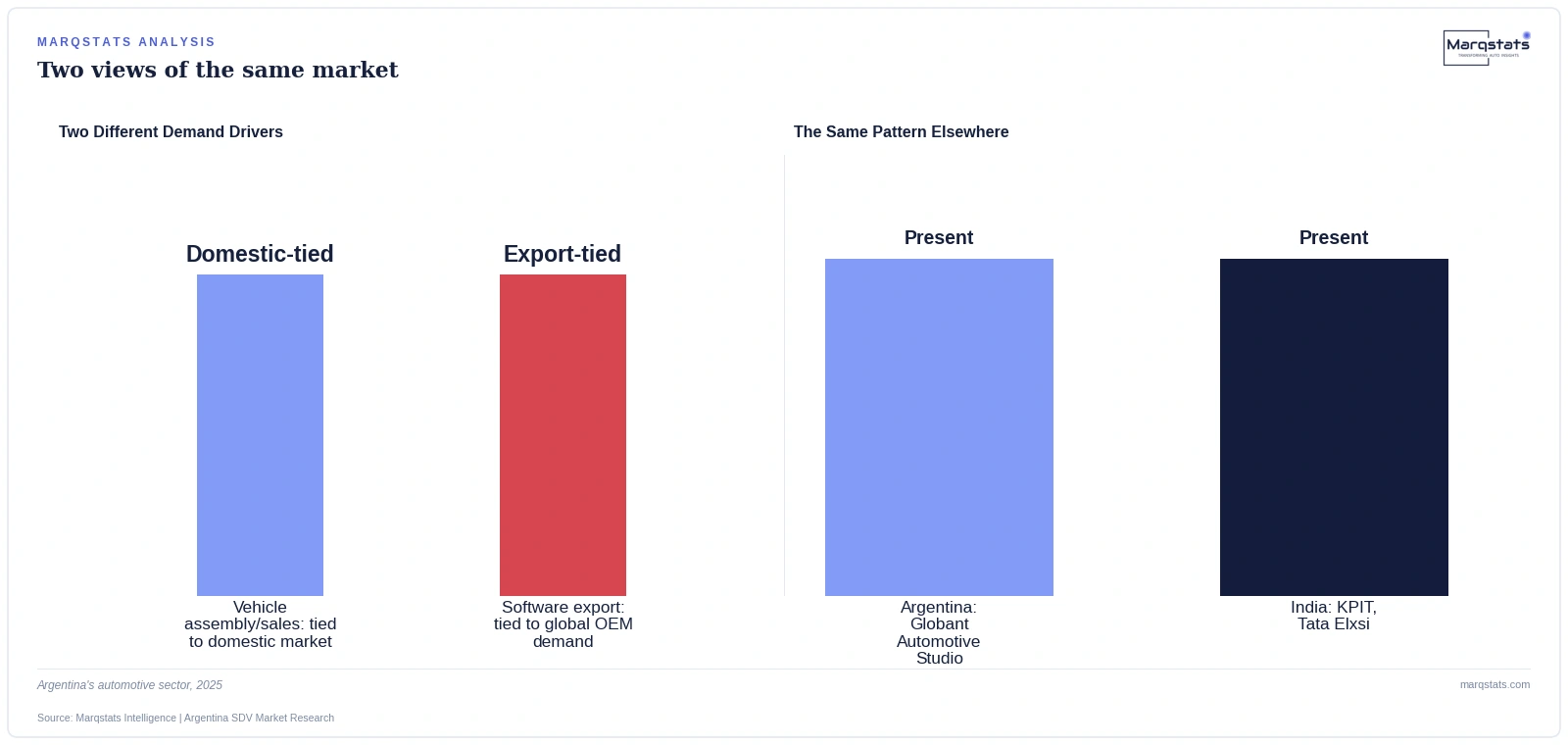
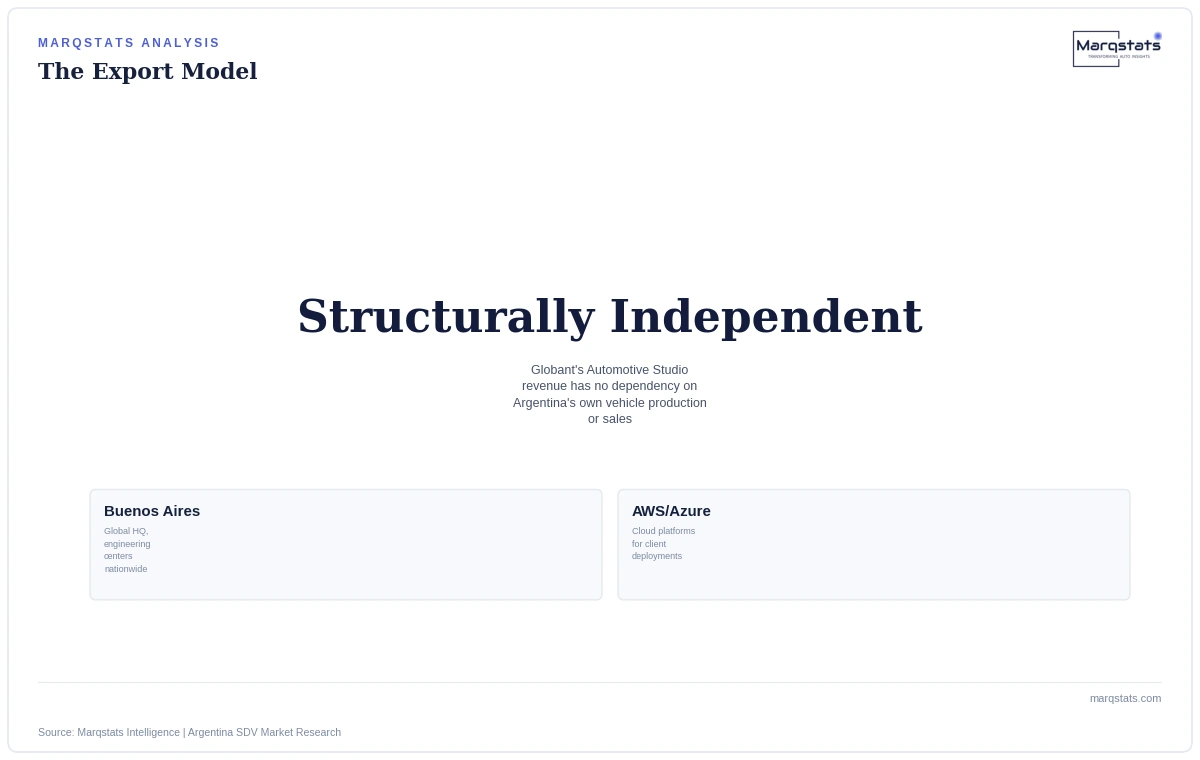
Argentina's software-defined vehicle market is usually described through Buenos Aires registration data, Ford's Pacheco retooling, or GM's OnStar rollout, stories tied directly to how many vehicles Argentina assembles or sells. Globant S.A.'s automotive business runs on an entirely different logic. Headquartered in Buenos Aires with engineering centers nationwide, Globant operates a dedicated Automotive Studio, and its revenue has no structural connection to Argentina's own vehicle production or registration volume at all.
What the Studio Actually Builds
Globant's engineering teams design hardware-independent software architectures, develop Adaptive AUTOSAR middleware components, and build cloud-to-edge data pipelines deployed on Amazon Web Services and Microsoft Azure for international automotive manufacturers. These platforms ingest and process high-volume CAN-FD telemetry streams to support predictive warranty analytics, remote fleet management, and continuous vehicle feature delivery, for OEMs that may never sell a single vehicle inside Argentina itself.
Why This Pattern Keeps Showing Up in Smaller Automotive Markets
Globant's model is not unique to Argentina. The same structural pattern shows up in India, where KPIT Technologies and Tata Elxsi generate the majority of their revenue from global automotive software engineering contracts rather than domestic vehicle sales, and in Poland, where Aptiv's and Volvo's technical centres function as genuine global engineering hubs rather than regional support offices. In each case, a country's software engineering talent base became valuable to the global automotive industry independent of how many vehicles that same country actually manufactures or registers. Software engineering talent, once it reaches sufficient scale and specialization, becomes tradeable on its own terms, detached from the domestic vehicle market that might otherwise seem like its natural anchor.
What This Means for Reading Argentina's SDV Opportunity
The practical implication: anyone sizing Argentina's software-defined vehicle opportunity purely through domestic vehicle production or registration figures is missing a genuine second growth vector sitting alongside it. A software vendor, OEM, or investor evaluating Argentina should treat its automotive engineering services capability as a distinct line of inquiry from its vehicle assembly and sales market, since the two are not tied to the same underlying demand driver.