A Deficit With a Date Attached
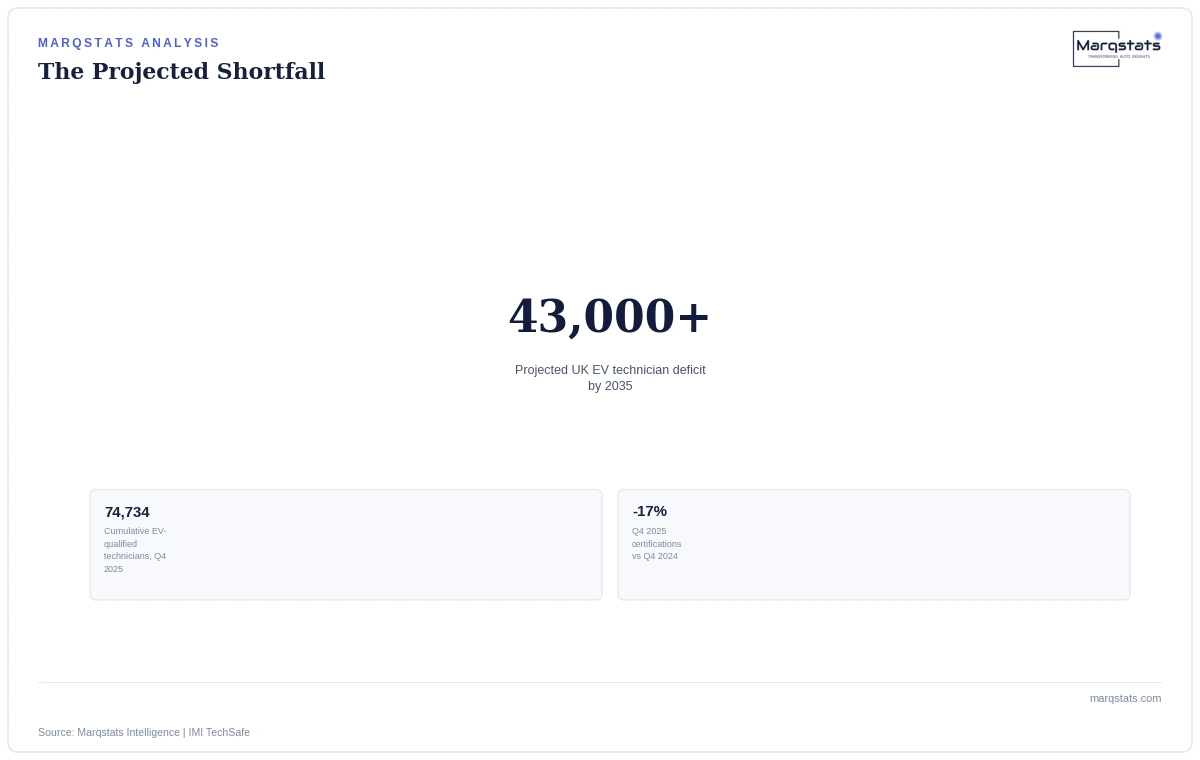
In brief: the Institute of the Motor Industry doesn't just say the UK will face a technician shortage eventually. It puts a number and a year on it: an initial shortfall of 9,615 technicians beginning in 2033, widening past 43,000 by 2035.
The Supply Side Is Actually Slowing Down
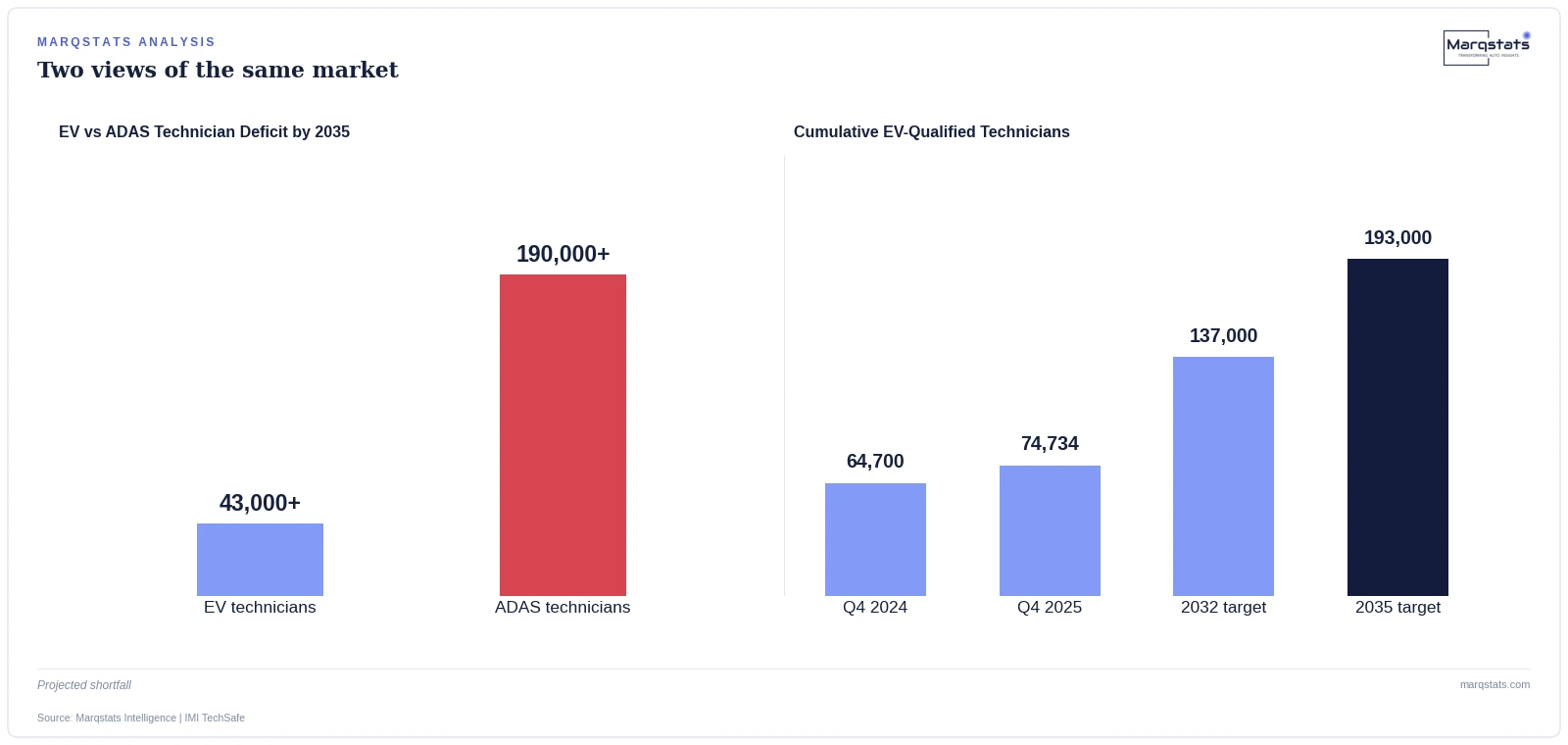
This isn't a forecast built on flat, unchanged training rates suddenly failing to keep pace with demand. IMI's own data shows quarterly certification volume in Q4 2025 fell 17% from Q4 2024, part of a broader 6% full-year decline in automotive vocational certificates issued. Automotive apprenticeship starts fell 1% to 7,424 individuals even as overall UK apprenticeships grew 8% across all sectors — automotive's share of the national apprenticeship pipeline is shrinking, not holding steady, right as EV-specific demand is accelerating.
The Demand Side Is Locked In by Law
The fleet growth driving this shortage isn't a forecast. It's a legal quota.
— Marqstats Analyst Team
Unlike technician training volumes, which move on training-provider and career-choice decisions, the demand side of this equation is set by statute. The UK ZEV Mandate requires zero-emission vehicles to reach 80% of new car registrations by 2030, rising to 100% by 2035 — a binding legal quota, not a market projection that could simply not materialize. The fleet workshops will need to service by 2035 is, in that specific sense, already determined.
Why the ADAS Number Is Worse Than the EV Number
The headline 43,000 EV technician deficit is actually the smaller of the two numbers IMI is tracking. Only 10,695 technicians — roughly 3% of the workforce — currently hold ADAS TechSafe qualifications, and IMI projects a shortfall exceeding 190,000 technicians by 2035, when 85% of the UK parc will feature Level 2 autonomous safety systems requiring calibration after even minor repairs.
A Named Comparison: Why a Supply-Demand Mismatch This Precise Is Unusual
Most labour-shortage forecasts in any industry are genuinely uncertain on both sides -- future hiring and future demand both depend on decisions that haven't been made yet. This one is unusually asymmetric: the demand side is fixed by binding regulation, while the supply side is a training pipeline currently moving in the wrong direction. That combination is what makes IMI's own forecast worth taking at face value rather than treating as one plausible scenario among several.
What This Means for Workshops and Policymakers
The practical takeaway: workshop owners and training providers should treat technician recruitment and certification as a genuine, time-sensitive strategic priority now, not a 2033 problem to solve when it arrives — since the pipeline lead time for producing a fully TechSafe Level 3 or 4 certified technician runs years, not months.