A Trading Hub Advantage With a Genuine Downside
The UAE's position as a regional automotive trading hub is usually framed as a pure positive. Worth understanding where it creates real friction too.
It's worth understanding exactly which vehicles are affected before assuming this is a problem for the whole EV fleet.
The UAE's status as a regional automotive trading hub has facilitated the importation of thousands of Chinese-market and North American-market electric vehicles outside authorized distribution channels. That access is a genuine consumer benefit -- and it creates a genuine servicing problem.
Why These Specific Vehicles Are Harder to Service
This is a concrete technical mismatch, not a general grey-market caution.
Many of these vehicles operate proprietary software firmware and feature GB/T charging hardware that differs from the UAE's CCS2 standard, and lack local parts availability entirely. Independent repair shops frequently face multi-month supply delays when sourcing replacement high-voltage contactors, DC-DC converters, and inverter modules for these platforms.
Why Authorized Dealers Can't Simply Absorb This Demand
The obvious question is why these owners don't just go to a franchised dealer instead -- and the answer is structural, not a matter of convenience.
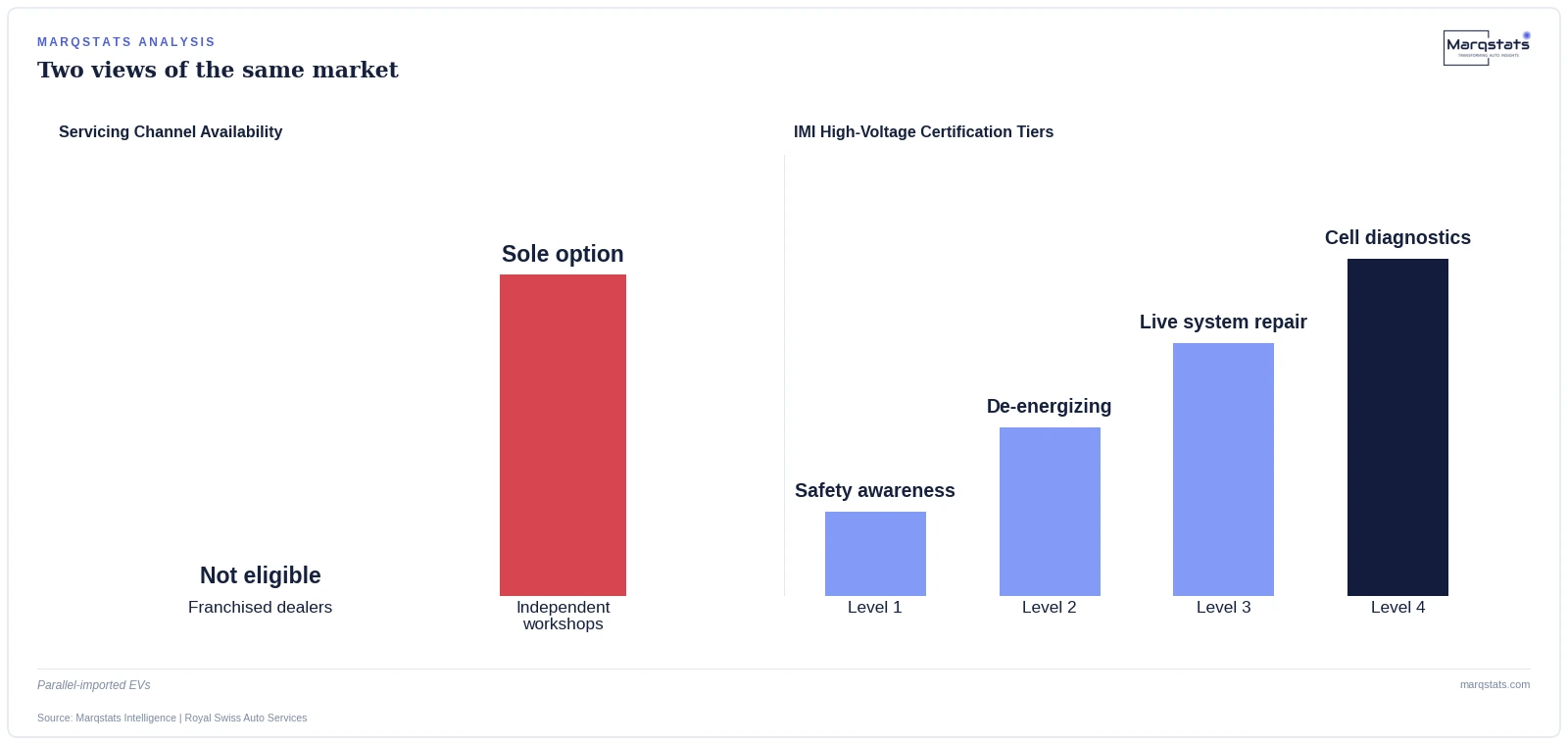
Franchised dealerships service only their own brand's officially distributed vehicles under warranty and parts-supply agreements. A parallel-imported vehicle, by definition, falls outside that distribution relationship, leaving independent multi-brand workshops as the only realistic servicing option -- exactly the segment least equipped with local parts inventory for these specific platforms.
A Named Comparison: Why This Gap Is Unlikely to Close Quickly
Recognizing what would actually need to change here shows why this bottleneck should be expected to persist.
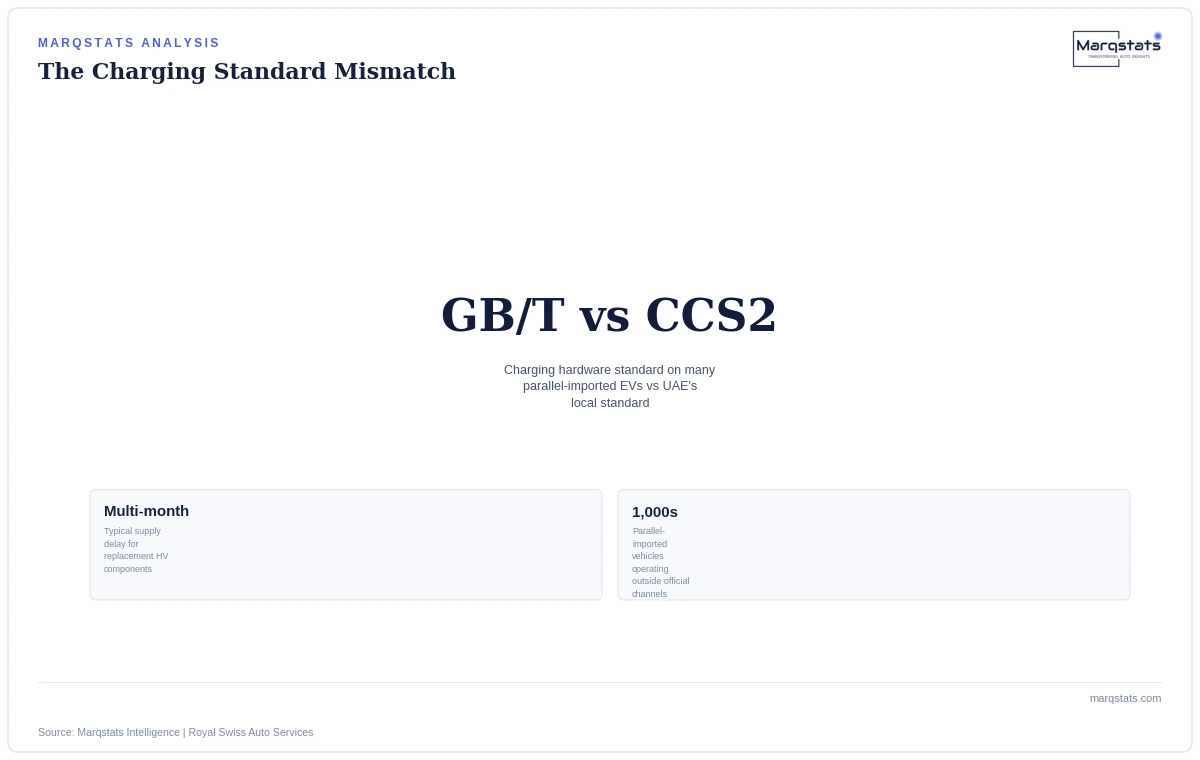
Closing this gap would require either UAE-specific parts distribution agreements from manufacturers who never officially entered the market, or a shift in importer sourcing toward CCS2-compliant hardware from the outset -- neither of which shows signs of happening at scale, since the parallel-import channel's entire value proposition rests on accessing vehicles and pricing unavailable through official channels.
The UAE's regional trading-hub role means this specific mismatch is also unlikely to be unique to any single brand or country of origin -- as importers continue sourcing from whichever overseas market offers the most competitive pricing at a given moment, the population of non-CCS2 vehicles requiring specialized parts sourcing should keep growing in absolute terms even as official CCS2-native EV sales expand in parallel.
What This Means for Independent Workshops
The practical takeaway: independent workshops that invest in stocking common grey-market-specific components and building direct sourcing relationships with overseas suppliers specifically position themselves to capture a servicing niche that authorized dealers structurally cannot address.