The Number That Gets Quoted
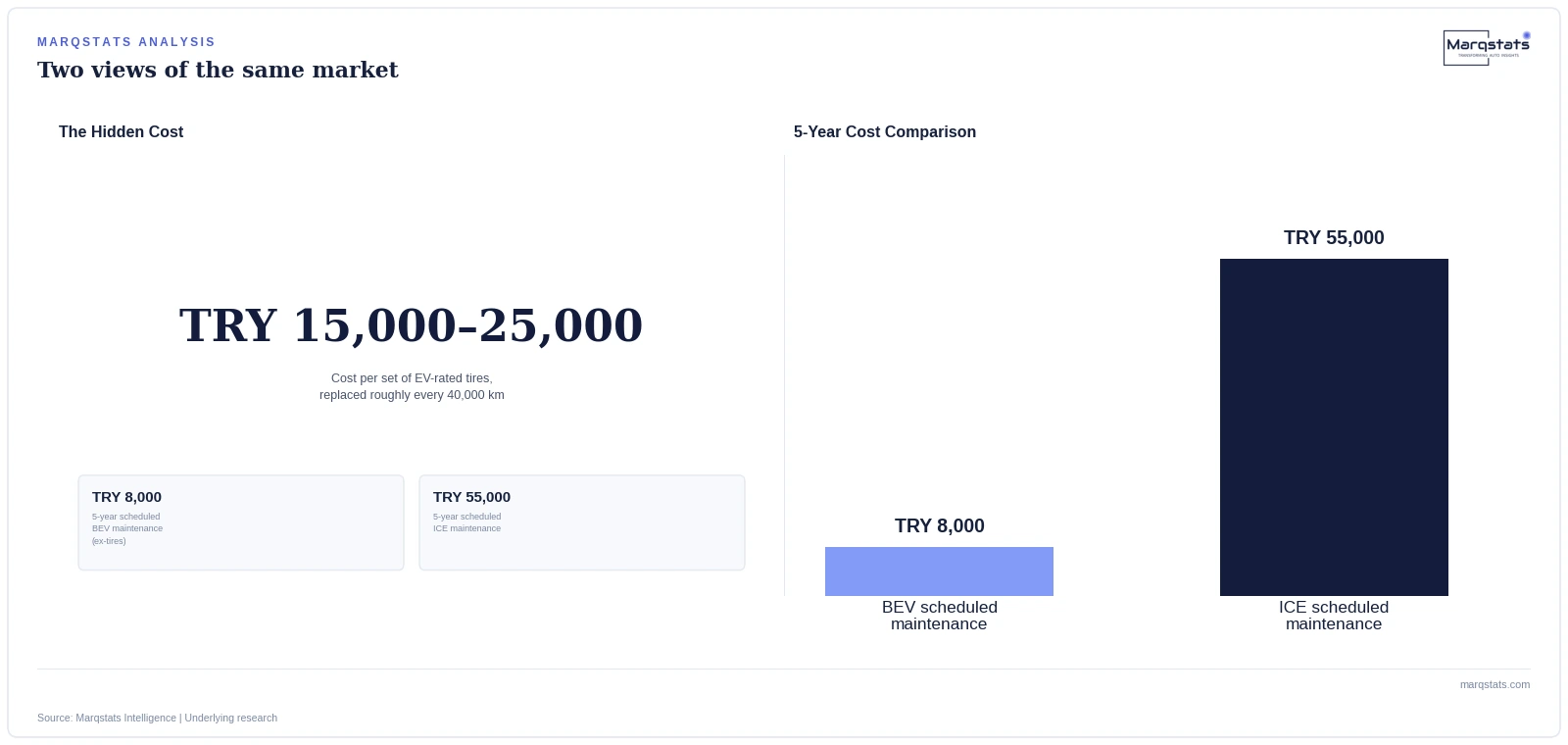
In brief: comparing a Citroen e-C3 against its combustion-engine sibling, the C3 Aircross, over a 5-year, 15,000 km-per-year ownership period, scheduled mechanical maintenance costs TRY 8,000 for the EV against TRY 55,000 for the ICE vehicle. That's an 85.45% reduction. It's also not the number a Turkish EV owner actually experiences at the pump, or rather, at the tire shop.
What the 85% Number Actually Measures
That 85.45% figure covers specifically what changes when you remove an internal combustion engine: no oil changes, no spark plug replacement, no exhaust system repair, no multi-speed transmission service. Those are genuine, substantial savings — and they're real.
What It Leaves Out
Electric vehicles don't have an engine to maintain. They do have heavier bodies and instant torque — and tires notice both.
— Marqstats Analyst Team
What the 85.45% figure doesn't cover is tires. EV curb weight, driven by heavy battery packs, combined with instant motor torque, accelerates tread wear significantly compared to combustion vehicles. Standard EV tires need replacement roughly every 40,000 km at TRY 15,000 to TRY 25,000 per set of four — a genuinely substantial recurring cost most first-time EV buyers don't fully anticipate.
The Number That Actually Matters
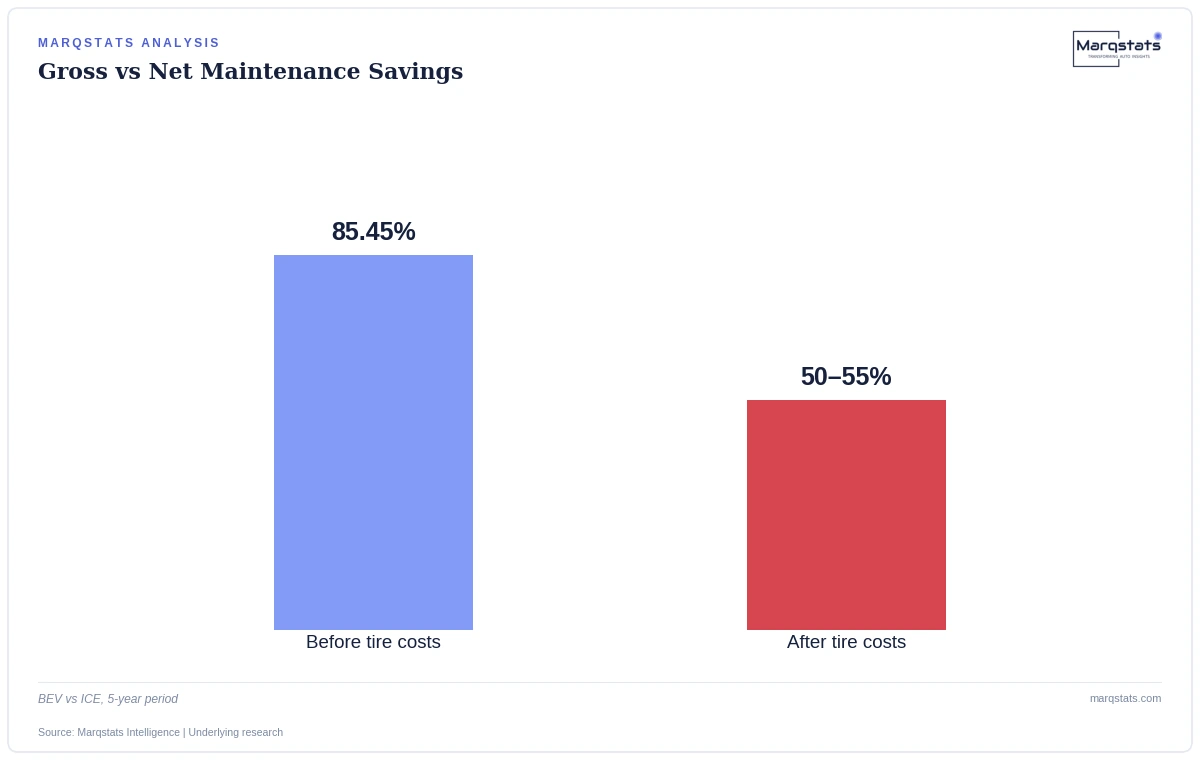
Factor tire costs into the full 5-year picture, and net maintenance savings moderate from 85.45% down to 50% to 55%. Still a genuinely large advantage over combustion vehicles — just roughly half the headline figure most marketing materials and casual comparisons actually cite.
A Named Comparison: Why This Gap Is Bigger in Turkey Specifically
This tire-cost offset shows up in every market with EVs, but Turkey's specific combination of import-tariff-inflated component pricing and a road network that includes both smooth metropolitan corridors and rougher provincial surfaces means the gap between the gross and net savings figures runs meaningfully wider here than in markets with cheaper domestic tire manufacturing or more uniformly smooth road conditions.
Why Brake and Filter Savings Genuinely Are Straightforward
It's worth being clear that not every category in the 85.45% figure has a hidden offset the way tires do. Brake pad and rotor lifespans genuinely extend to 3-4 years thanks to regenerative braking, and the elimination of spark plugs, timing belts and exhaust servicing is a genuinely clean, uncomplicated saving with no comparable EV-specific cost working against it.
What This Means for Anyone Comparing EV and ICE Costs
The practical lesson for prospective Turkish EV buyers and fleet planners: treat any quoted maintenance-savings percentage as incomplete until you know whether tire costs are included. The 85% figure and the 50-55% figure are both accurate — they're just answering different questions, and only one of them reflects what actually leaves an owner's wallet over five years.