
A Registration Figure With a Named Distortion
That the underlying research gives this specific effect a formal name is itself telling -- it's a large enough, recognized enough distortion that it needed a label rather than just a footnote.
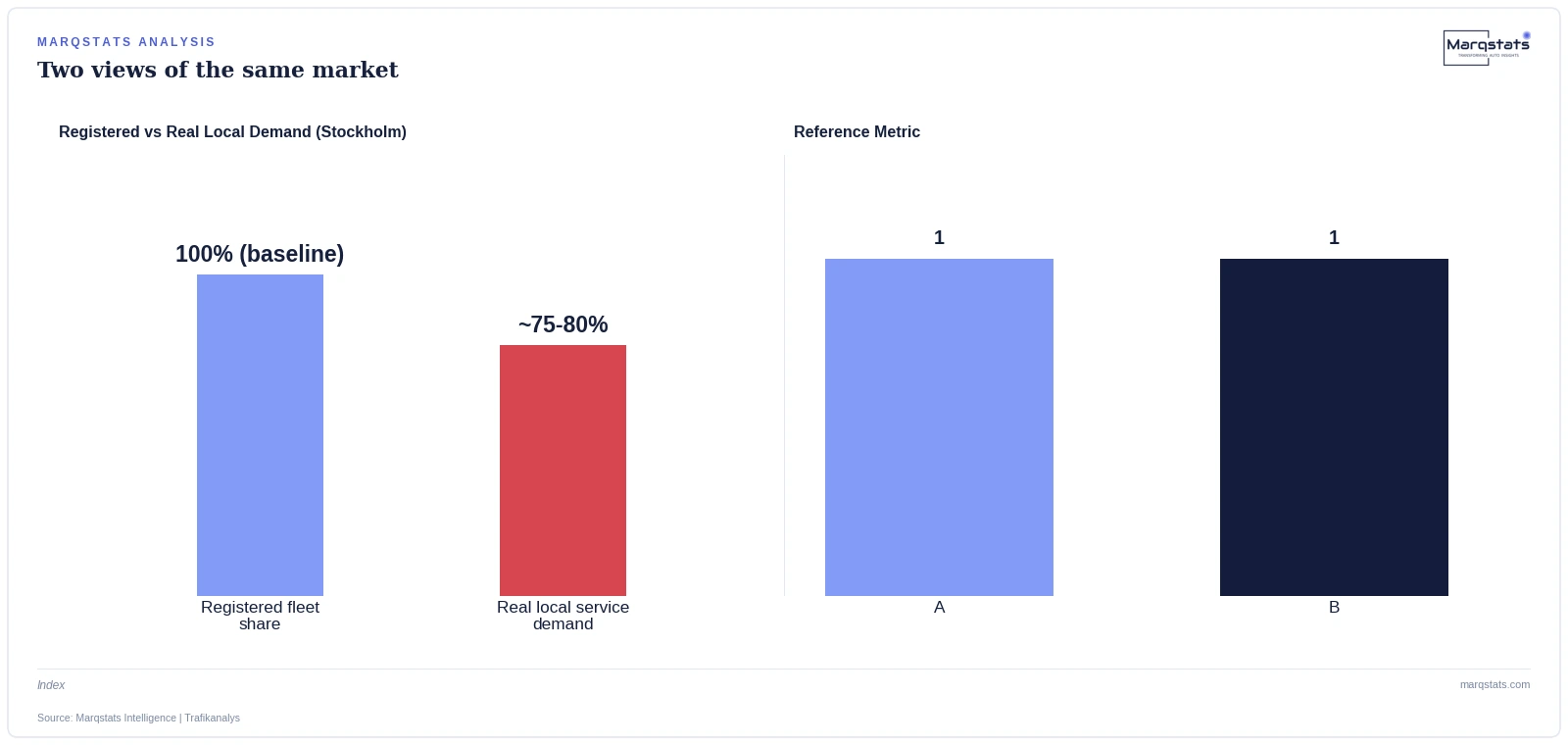
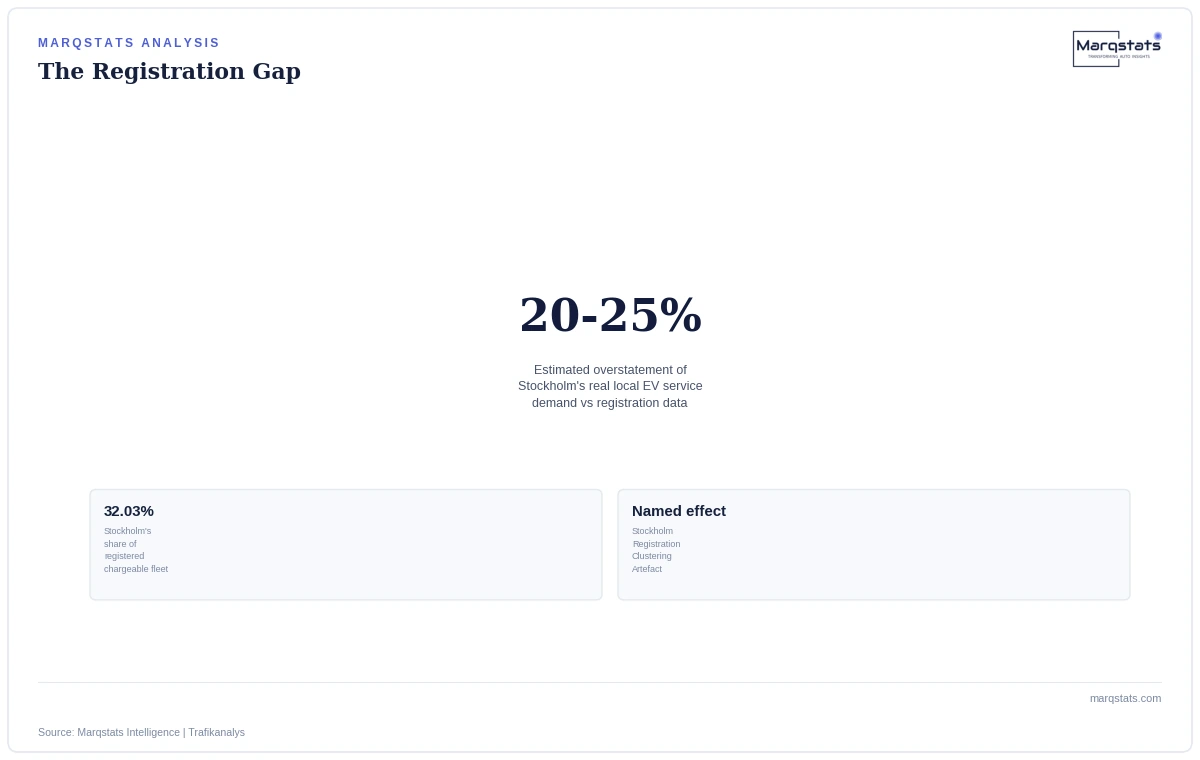
In brief: Trafikanalys data shows Stockholm County holding 32.03% of Sweden's registered chargeable vehicles — the largest share of any region by a wide margin. The underlying research gives this specific distortion a name: the Stockholm Registration Clustering Artefact.
Why the Capital's Numbers Run High
It's a routine business decision with a real downstream statistical consequence.
It's a pattern that repeats across many countries with strong urban corporate presence, but Sweden's own research quantifies it specifically for Stockholm rather than leaving it as an unmeasured assumption.
Major commercial leasing companies, enterprise fleet managers and corporate headquarters register national vehicle pools within Stockholm County — a straightforward administrative and tax decision that has nothing to do with where those vehicles are actually driven and serviced day to day.
Where the Demand Actually Lands
That dispersion pattern shapes which regional workshops actually see the traffic these fleets generate.
The plate is Stockholm. The tire wear is somewhere else entirely.
— Marqstats Analyst Team
Real localized service demand in Stockholm is estimated to run 20% to 25% lower than registration tallies suggest, with maintenance events actually dispersed into surrounding commuter belts and neighboring industrial regions instead.
A Named Comparison: Why This Differs From a Simple Undercount
Understanding the difference matters practically, not just academically.
This isn't a case of Stockholm's numbers being wrong — the registrations are entirely accurate as a legal record of where vehicles are titled. The distortion is specifically between registration and circulation, a gap that's easy to miss if you're reading county-level fleet tables as a direct proxy for where vehicles actually get driven and serviced. Most regional data doesn't need this kind of correction; Sweden's own capital-region figures specifically do.
Why This Pattern Is Unlikely to Reverse
Corporate fleet registration decisions are driven by administrative and tax considerations entirely separate from vehicle servicing logistics, meaning there's little structural reason to expect this specific registration-versus-circulation gap to narrow as Sweden's electrified fleet continues expanding over the coming years.
That predictability is itself useful for anyone willing to build it into their planning.
What This Means for Workshop and Parts Investment
The practical takeaway: anyone siting new high-voltage service capacity or parts inventory based on Stockholm's headline registration share should weight actual commuter circulation patterns into surrounding counties more heavily, since registration data alone will systematically overstate the capital's true share of physical servicing demand.