The Region Nobody Expected to Lead Growth
The assumption feels reasonable at first -- fewer chargers, colder batteries, longer distances between towns should all work against rapid adoption, not for it.
Cold climate is usually treated as an EV adoption headwind — range anxiety gets worse in freezing temperatures, charging infrastructure is sparser in rural areas, and battery degradation accelerates in the cold. Northern Sweden's own 2025 data doesn't follow that script.
The Growth Rate Behind the Surprise
That single-year figure is worth sitting with, given how small the region's starting base actually was.
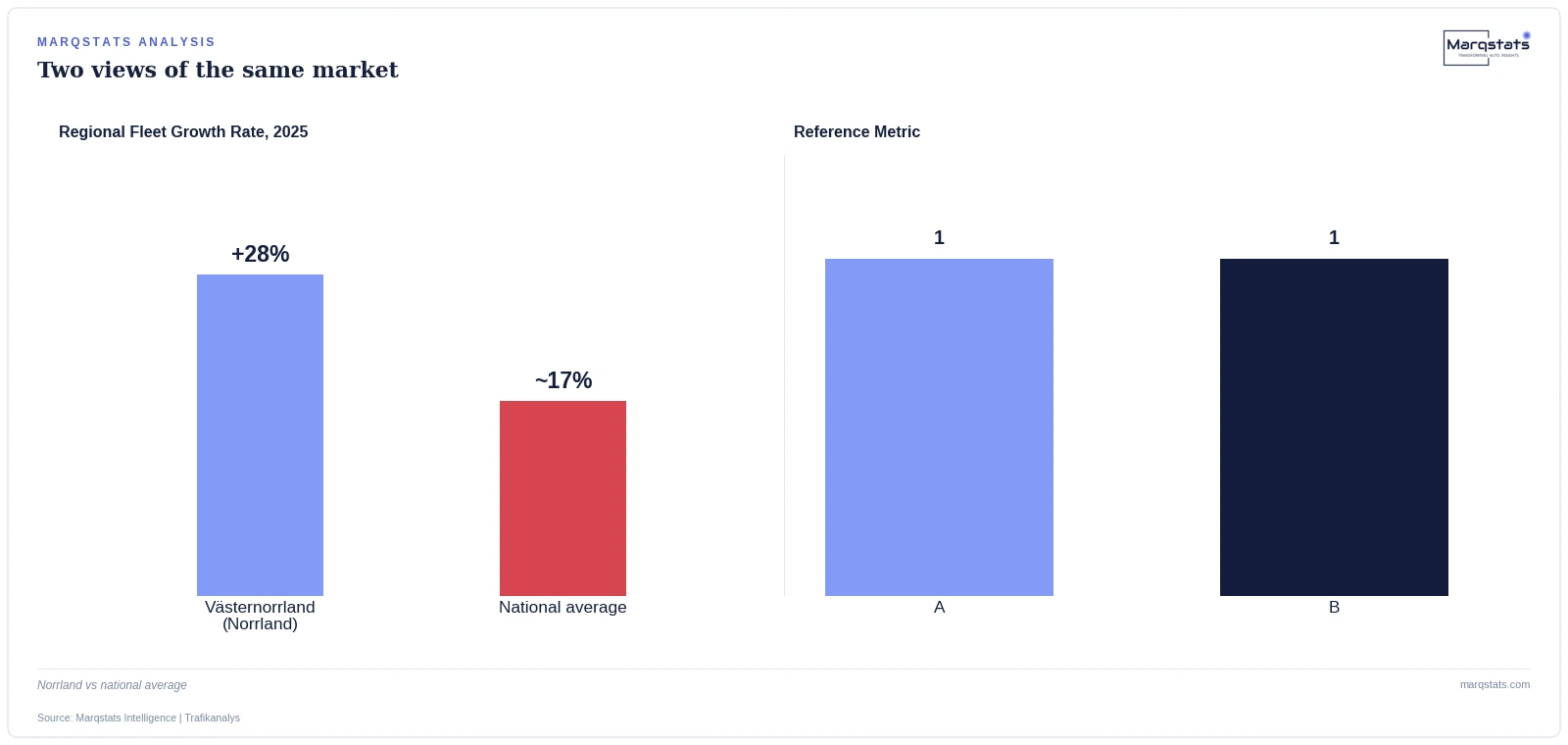
Norrland holds just 6.06% of Sweden's national electrified fleet — a small base. But it registered the fastest year-over-year electrification growth of any region in 2025, with Västernorrland County's chargeable fleet expanding 28% in a single year.
What Cold Climate Actually Does to Maintenance Demand
These aren't hypothetical failure modes either -- they represent genuine, recurring service categories Norrland workshops report handling at meaningfully higher frequency than their counterparts in milder southern regions.
The growth doesn't come without a real maintenance cost, though. Operating in sub-arctic winter conditions creates genuinely unique demands: prolonged cold-soaking accelerates auxiliary 12V lead-acid battery failures, increases thermal management stress on the traction battery, and accelerates chassis rust from winter road treatment.
A Named Comparison: Why Growth and Harsh Climate Aren't Actually in Tension
Both facts belong in the same planning model, not competing narratives, and treating them separately risks missing the full picture.
It's tempting to assume rapid adoption in a harsh climate region means owners are accepting some tradeoff. The more accurate reading is that growth and elevated maintenance demand are simply two separate, compounding facts about the same region — not a contradiction. Norrland genuinely is adopting EVs faster than expected, and those same vehicles genuinely do need more climate-specific maintenance attention than equivalents in milder regions. Both are true simultaneously.
Why This Pattern Is Likely to Continue
None of these underlying drivers show signs of reversing anytime soon.
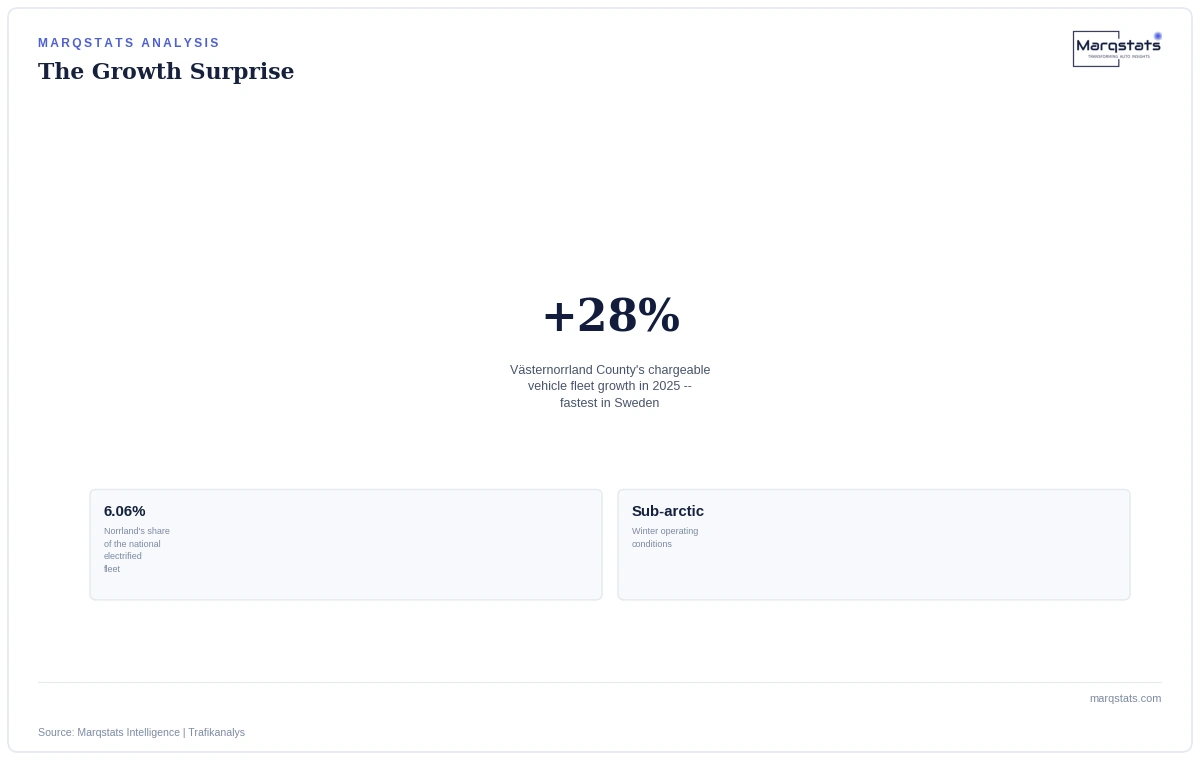
Nothing about the underlying drivers behind Norrland's growth appears temporary -- local government incentives, elevated retail fuel prices relative to electricity costs, and genuinely short average trip distances that minimize range anxiety are all structural features of the region, not one-off conditions likely to fade.
For component suppliers specifically, that stability is worth planning inventory around directly.
What This Means for Workshop Investment in Northern Sweden
The practical takeaway: workshop operators and component suppliers should treat Norrland as a genuinely underweighted opportunity relative to its small current fleet size, given both its unusually fast growth rate and the climate-specific servicing intensity each vehicle there is likely to require over its operating life.