
A Shortage That's Already Here, Not Coming
It's worth being precise about the timing here, since a present-day gap calls for a very different response than a projected future one.
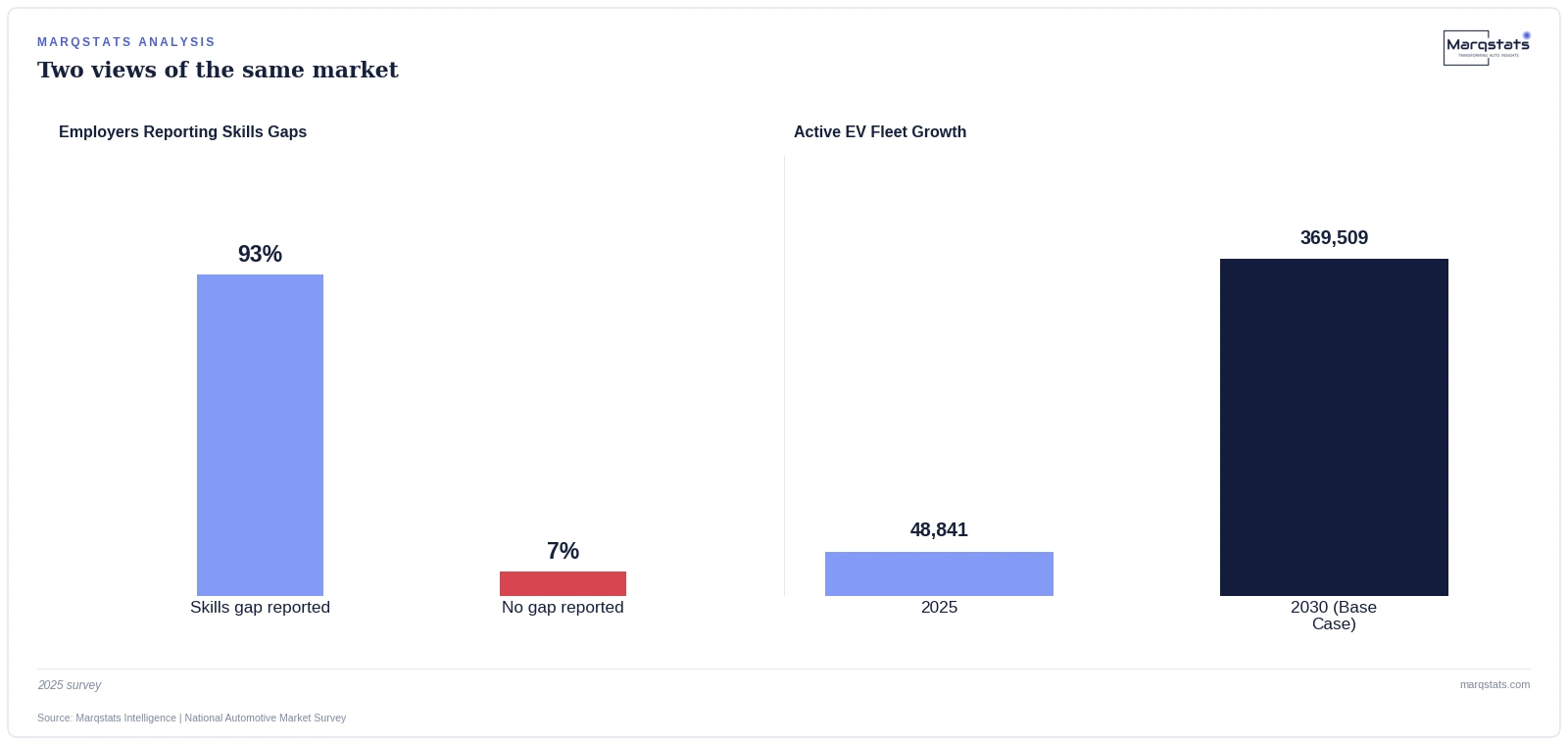
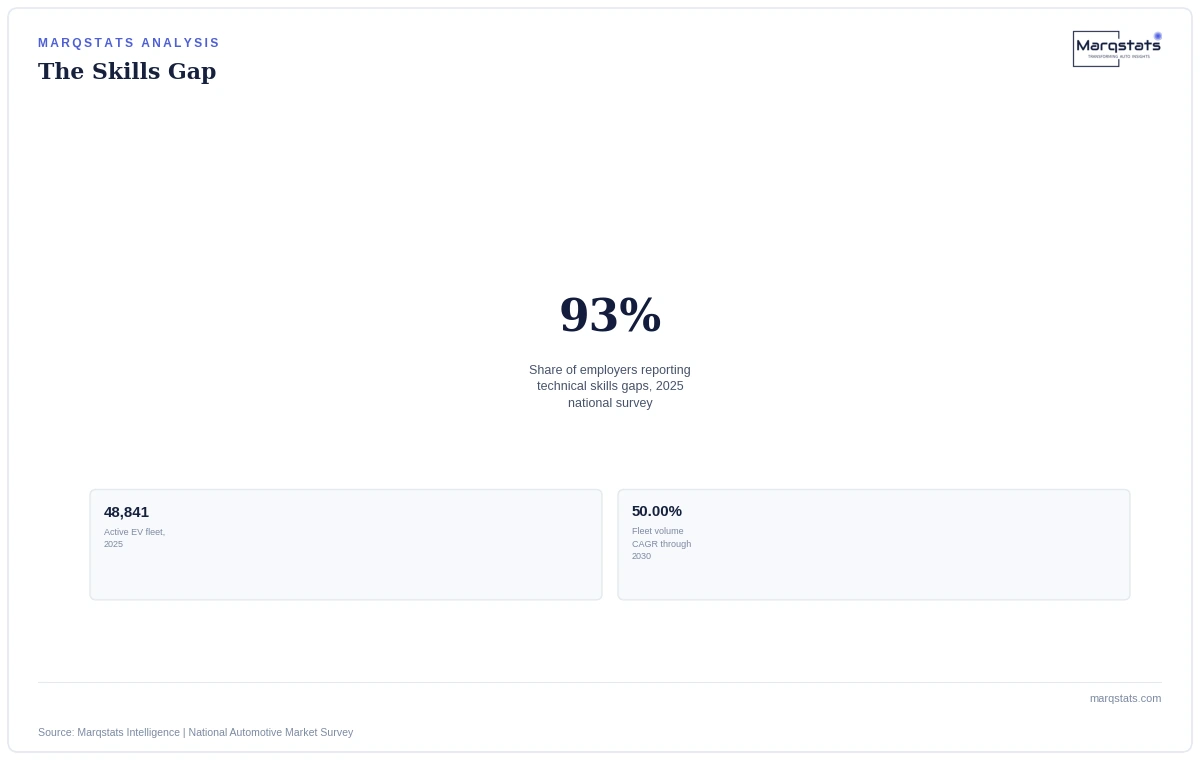
In brief: a survey of the national automotive market found 93% of employers already experiencing technical skills gaps in 2025 -- not a projection of where the labor market might head, but a documented snapshot of where it already stands, while the EV fleet itself is still relatively young.
Why the Timing Makes This Genuinely Dangerous
The real risk isn't the current gap -- it's the trajectory this gap is running against.
The fleet is growing at 50% a year. The workforce isn't.
— Marqstats Analyst Team
Saudi Arabia's active EV fleet is expanding at a 50.00% volume CAGR through 2030 -- meaning the addressable base of vehicles needing certified high-voltage service is set to grow roughly 7.5-fold over the forecast window. A skills gap that's already at 93% today, against a much smaller fleet, has every reason to widen rather than close on its own.
A Named Comparison: The Institutional Response Underway
Recognizing which specific response is actually being built changes how quickly this gap should genuinely be expected to close.
The Saudi government's answer is the National Automotive and Vehicles Academy (NAVA), established at King Abdullah Economic City through a partnership between the Technical and Vocational Training Corporation (TVTC), the Human Resources Development Fund (HRDF), and Lucid Motors. NAVA delivers structured multi-year curricula -- an EV Service Technician Diploma covering high-voltage isolation and battery health analysis, and an EV Industrial Technician Diploma focused on manufacturing and powertrain assembly -- with students completing hands-on training rotations at Lucid's operations in both Arizona and Saudi Arabia.
Why This Gap Won't Close on a Single Training Cycle
Certification pipelines take genuine time to reach scale, regardless of how well-designed the institutional response is.
Training a certified national cohort large enough to meaningfully close a 93% employer-reported gap takes years, not a single graduating class -- meaning this specific labor constraint should be treated as a multi-year structural feature of the Saudi EV maintenance market through at least the early 2030s, not a temporary friction point.
What This Means for Workshops Right Now
The practical takeaway: independent workshops and dealership groups that establish formal NAVA apprenticeship partnerships or leverage HRDF training subsidies specifically position themselves for a genuine first-mover advantage, given how directly certified technician capacity -- not customer demand -- is this market's binding near-term constraint.