
A Fleet Purchase With No Independent-Shop Path
In brief: in February 2026, PJSC AvtoVAZ delivered 33 Lada e-Largus electric commercial vans to Mosgortrans, Moscow's state municipal transit operator. That fleet's maintenance doesn't route through the general independent repair network most private EV owners in Russia would use.
Why Municipal Fleets Operate Differently
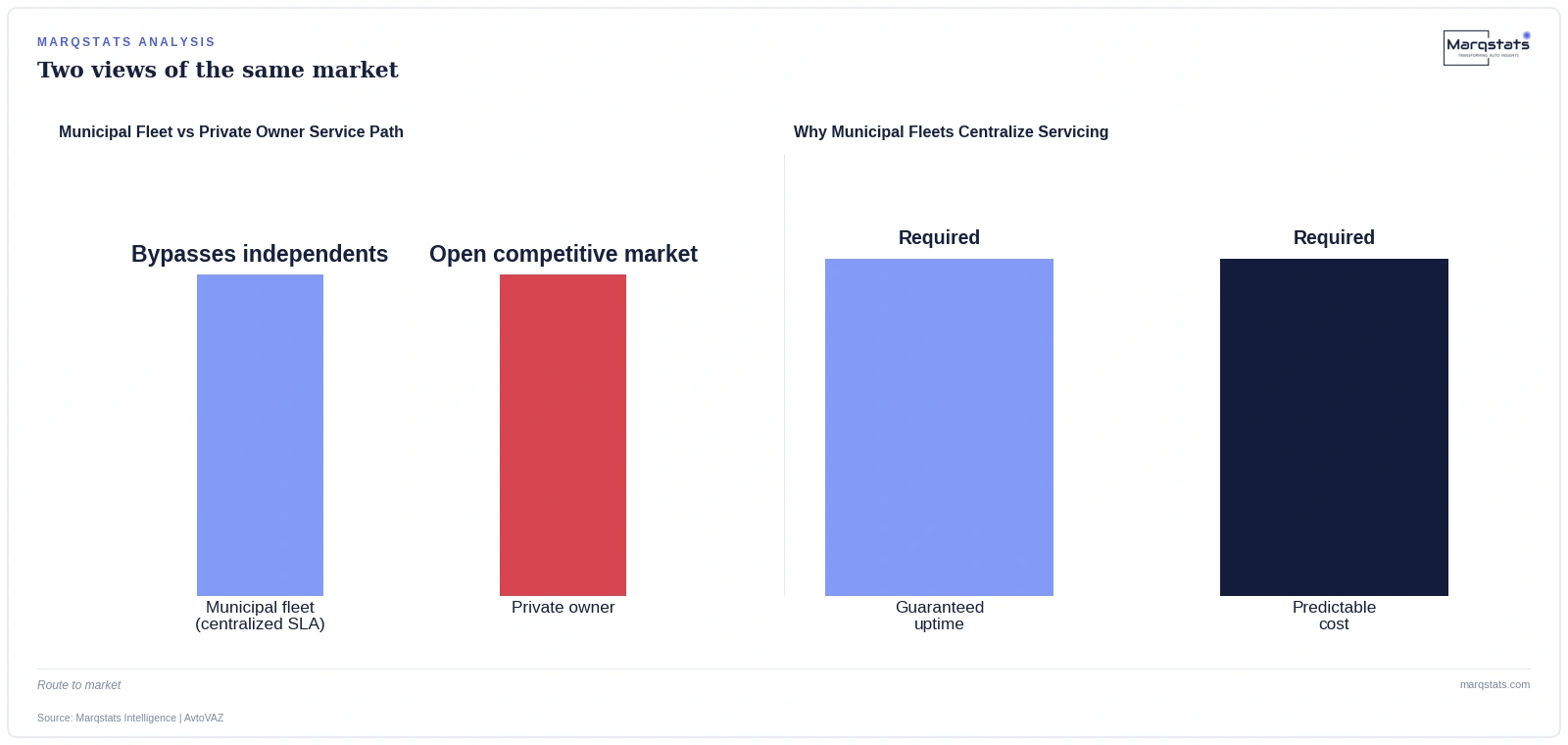
Light commercial electric fleets acquired by municipal operators like Mosgortrans run under centralized service level agreements, negotiated directly between the fleet operator and either the manufacturer or a dedicated maintenance contractor. That structure exists for good reason — a municipal transit operator needs guaranteed uptime, predictable costs, and accountability that a fragmented independent-garage network can't reliably promise at scale.
A Genuinely Separate Market Segment
This demand never enters the competitive market independent garages actually compete in.
— Marqstats Analyst Team
This matters specifically because it means a meaningful and growing share of Russia's commercial EV maintenance demand simply never enters the competitive market independent garages operate in. It's not that independents are losing this business to dealerships or grey-market specialists — it's that the business was never structurally available to them to compete for in the first place.
Why This Segment Will Likely Keep Growing
As Russian cities continue electrifying municipal transit and delivery fleets — a policy direction the underlying research's own regulatory tracking confirms is actively encouraged — more of this centralized-SLA maintenance volume should be expected, not less. Independent garages hoping to capture municipal fleet work will need to pursue direct contractor relationships with fleet operators specifically, rather than assuming this volume will eventually flow through the general independent repair market the way private retail EV maintenance does.

A Named Comparison: Why This Differs From Corporate Fleet Servicing Elsewhere
Corporate fleet servicing in many markets still routes through franchised dealer or independent networks, just negotiated at volume-discount institutional rates. Russia's municipal fleet model is structurally different — a genuinely separate service pathway, not a discounted version of the same one, which is why it's worth tracking as its own distinct market segment rather than folding it into general fleet servicing analysis.
The Scale This Represents Beyond One Fleet
Mosgortrans's own 33-unit order is a small starting point in absolute terms, but it represents a template other Russian municipal operators across dozens of cities could adopt as their own transit and delivery fleets electrify, meaning the actual volume this segment eventually represents could scale well beyond what any single fleet purchase suggests today.
What This Means for Independent Workshops
The practical takeaway: independent garage operators should recognize that municipal fleet maintenance demand is a structurally separate opportunity requiring direct contractor relationships, not a segment that will eventually filter down to them through normal competitive dynamics.