A Majority Fleet Without a Manufacturer Behind It
That absence of formal support isn't a footnote to Russia's EV maintenance market -- for a majority of the active fleet, it is essentially the market, shaping how service actually gets delivered on the ground.
Ask who officially supports most of the electric vehicles on Russian roads today, and the honest answer for a majority of the fleet is: nobody, in any formal sense.
The Number Behind the Gap
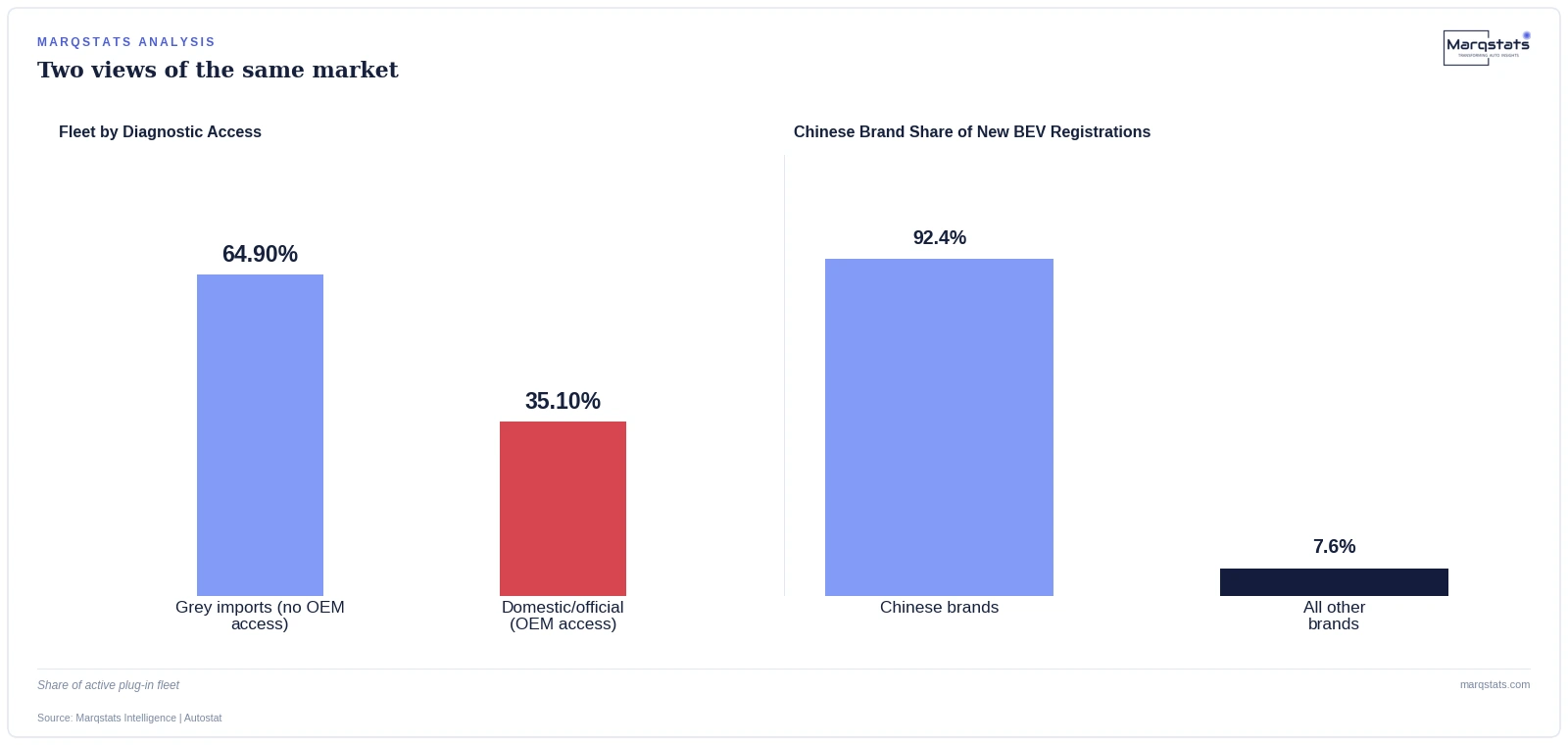
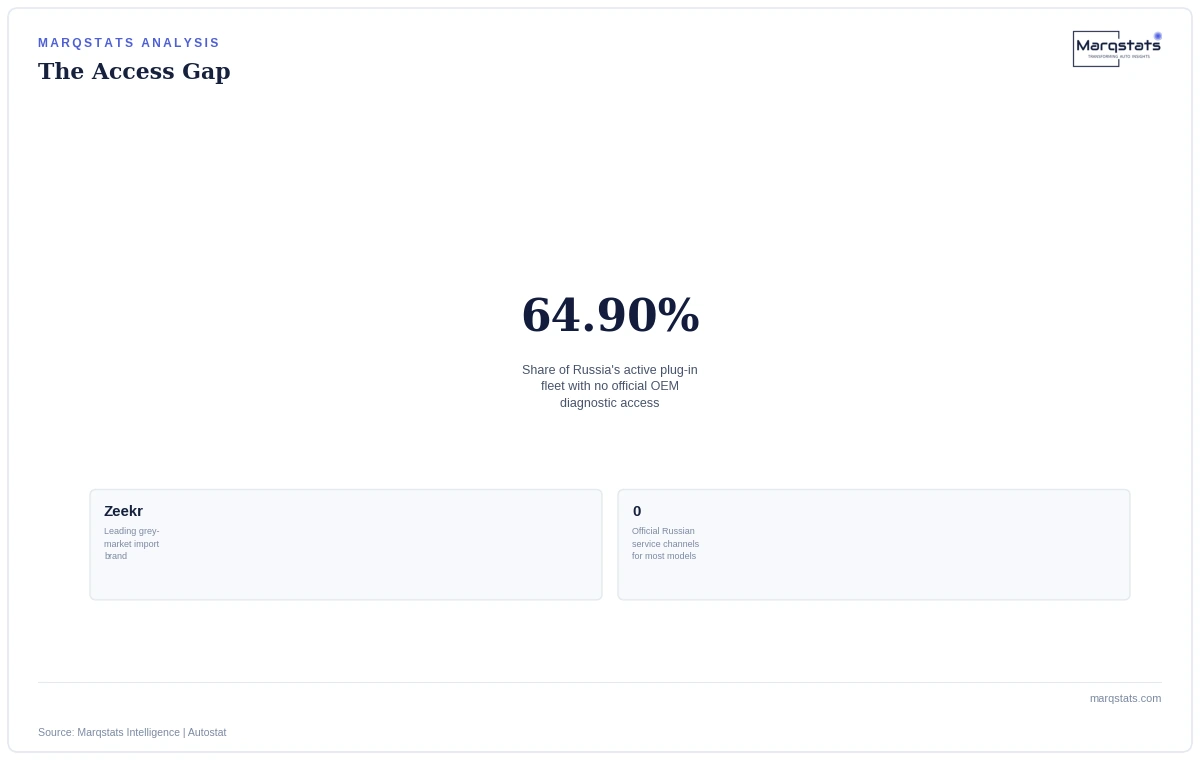
Over 64.90% of Russia's active plug-in fleet consists of parallel-imported Chinese models, led by Zeekr, operating without official OEM warranty coverage, direct cloud diagnostic access, or authorized spare parts channels.
What "No Official Access" Actually Means Day to Day
This isn't a minor inconvenience for workshops. Modern battery management systems require manufacturer-authenticated software to read cell-level diagnostics, clear fault codes, or perform balancing procedures safely. Without that authenticated access, technicians servicing a parallel-imported Zeekr or Avatr are working without the tool the vehicle's own manufacturer would use.
The Workaround Russian Workshops Have Built
Independent service providers rely on reverse-engineered diagnostic scanners and unauthorized software patches to bridge that gap. It works, in the sense that these vehicles do get serviced. It also creates a genuine technical bottleneck specifically around battery management system recalibrations — exactly the procedure that requires the deepest, most manufacturer-specific software access to perform safely and correctly.
A Named Comparison: Why This Differs From Right-to-Repair Fights Elsewhere
In markets with formal right-to-repair legislation, independent access to diagnostic data is a legal entitlement workshops can invoke. Russia's grey-market EV fleet exists entirely outside that framework — there's no manufacturer relationship to legislate access into in the first place, since these vehicles were never sold through an authorized channel in Russia to begin with. The problem isn't restricted access; it's the complete absence of an official channel to restrict.
Why This Gap Isn't Closing Quickly
There's little near-term reason to expect Chinese manufacturers to formalize distribution and diagnostic access in Russia specifically. As long as parallel import remains the dominant channel these vehicles arrive through, the diagnostic access gap that comes with it is likely to persist as a defining feature of this market, not a temporary phase workshops should expect to age out of naturally.
What This Means for Anyone Planning Around This Market
Diagnostic tooling suppliers specifically should treat this as a genuine commercial opportunity rather than purely a compliance headache, since demand for capable, independently-developed multi-brand scanning tools is likely to remain structurally high for years to come.
The practical takeaway: workshops and diagnostic tooling suppliers evaluating the Russian EV market should treat reverse-engineered, multi-brand diagnostic capability as a genuine core competency to build, not a stopgap — given how directly the source's own data shows this segment representing nearly two-thirds of the active fleet, with no clear near-term shift toward official channel dominance.