A Real, Documented Savings Story
This specific comparison matters because EV cost narratives so often collapse into a single headline number, either "EVs are cheaper" or "EVs cost more when things go wrong," when the honest picture genuinely requires holding both figures at once.
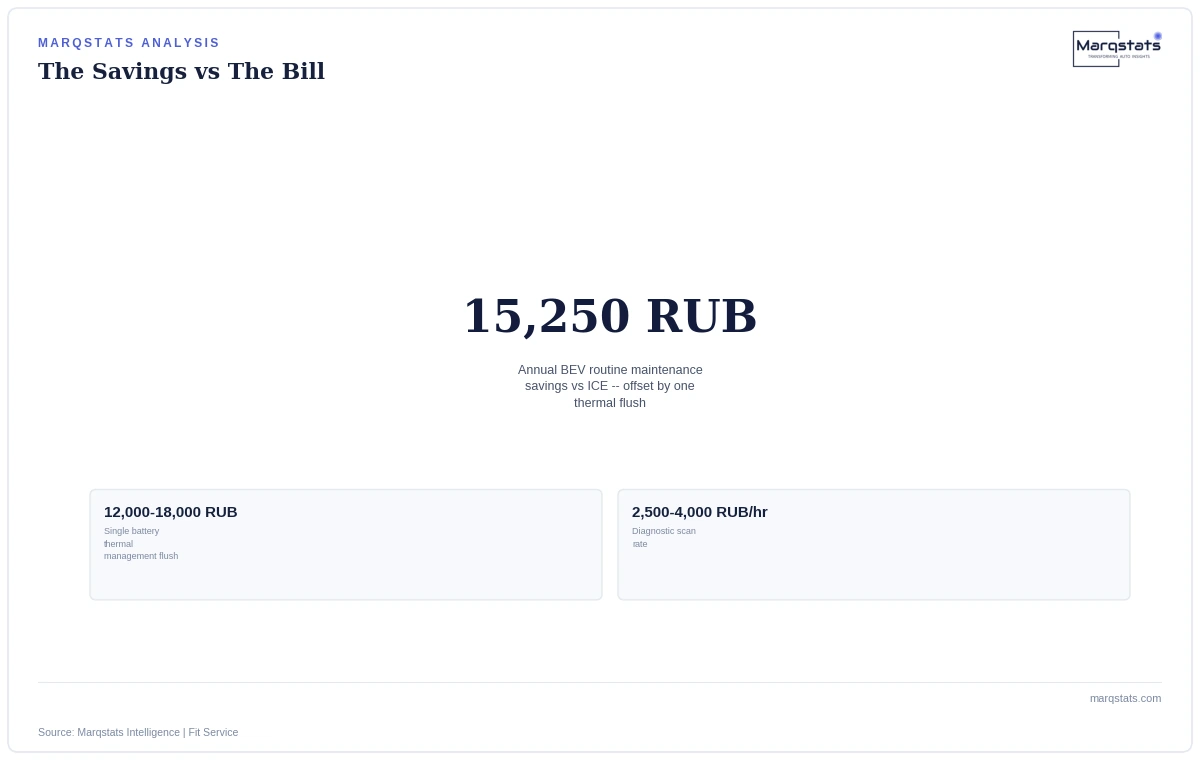
Scheduled annual routine maintenance for a Russian BEV runs 8,820 RUB across two visits. The equivalent for a conventional ICE passenger car runs 24,070 RUB. That's a genuine 15,250 RUB annual savings — not a marketing estimate, but a figure calibrated from actual Fit Service and Auto.ru Business invoice data.
The Bill That Changes the Story
It's worth being specific about what "can offset" means here in practice, since these aren't hypothetical worst-case numbers -- they're the same empirical Fit Service dataset underlying the routine-maintenance figures above, just describing a different service category entirely.
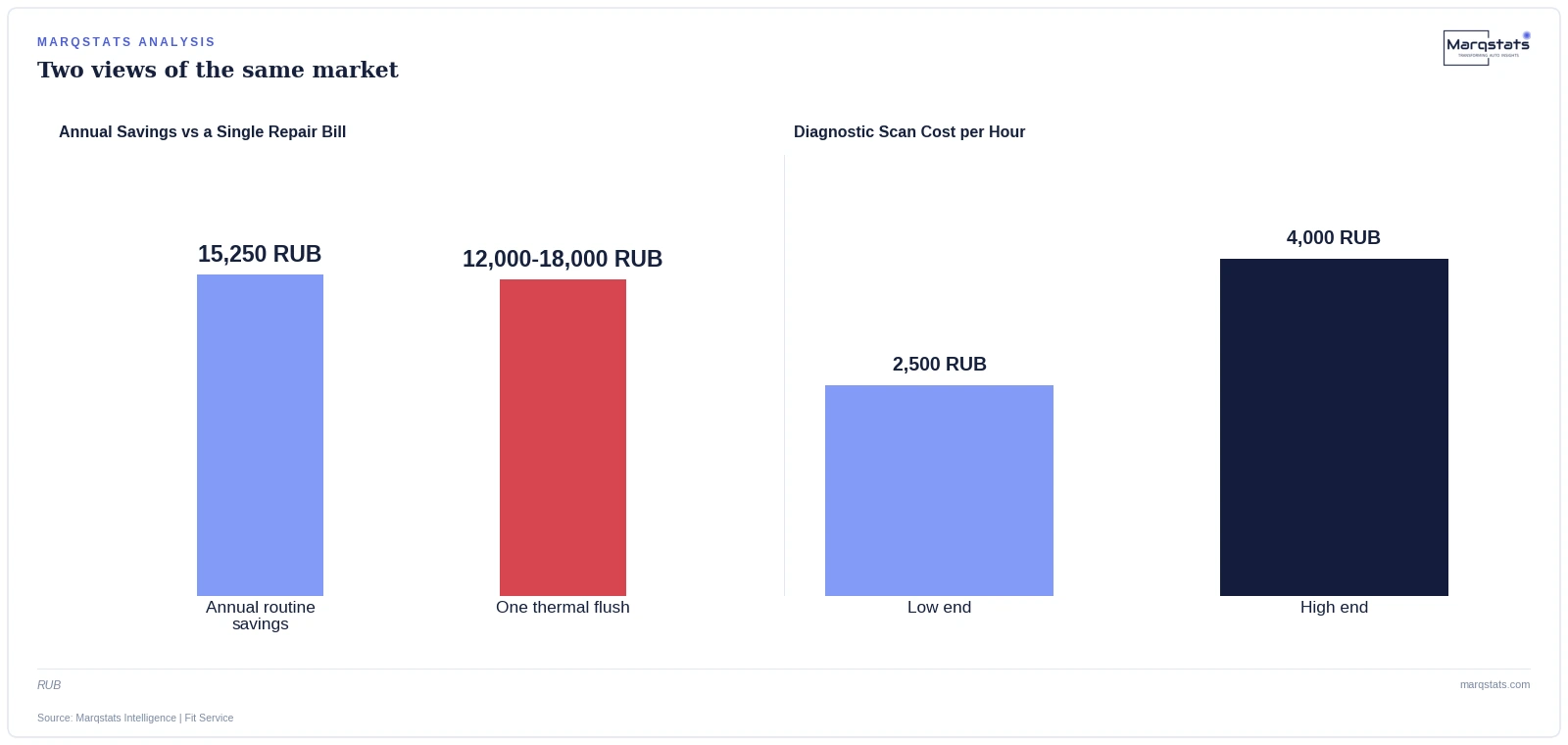
Specialized battery thermal management flushes cost 12,000 to 18,000 RUB. A single diagnostic scan runs 2,500 to 4,000 RUB per hour. Neither of those costs happens every year for every vehicle — but when one does, it can offset most or all of that documented annual savings in a single visit.
Why This Isn't a Contradiction
Both numbers are genuinely true at the same time, because they're answering different questions. The annual routine savings figure describes what a typical year of ownership costs when nothing unusual happens. The thermal flush and diagnostic figures describe what happens when the high-voltage system needs attention — a less frequent, higher-cost event that the routine-savings framing simply doesn't account for.
A Named Comparison: Why This Pattern Shows Up Across Markets
This specific dynamic — lower routine costs, higher specialized-repair costs — isn't unique to Russia; it shows up in EV maintenance data across most markets in this coverage set. What makes the Russian figures worth citing specifically is how directly comparable the two numbers are: a documented 15,250 RUB annual saving against a single 12,000 to 18,000 RUB thermal flush makes the offset easy to see in concrete terms, rather than an abstract percentage.
What This Means for Anyone Budgeting for EV Ownership
Insurers and fleet managers specifically should model these two cost categories separately rather than blending them into one average figure, since the actual financial exposure depends heavily on how often the higher-cost repair category is genuinely triggered across a given vehicle population.
The practical takeaway: anyone budgeting for BEV ownership in Russia should treat the routine-maintenance savings as real but partial, and set aside a separate reserve for the less frequent but genuinely costly specialized repair events — rather than assuming the annual savings figure represents the full picture of what owning an EV actually costs over time.