A Rule That Isn't About Technical Skill at All
It's the kind of regulatory detail easy to overlook in a headline about vehicle safety compliance, but it carries a genuine, measurable consequence for how service revenue actually flows across Portugal's workshop network.
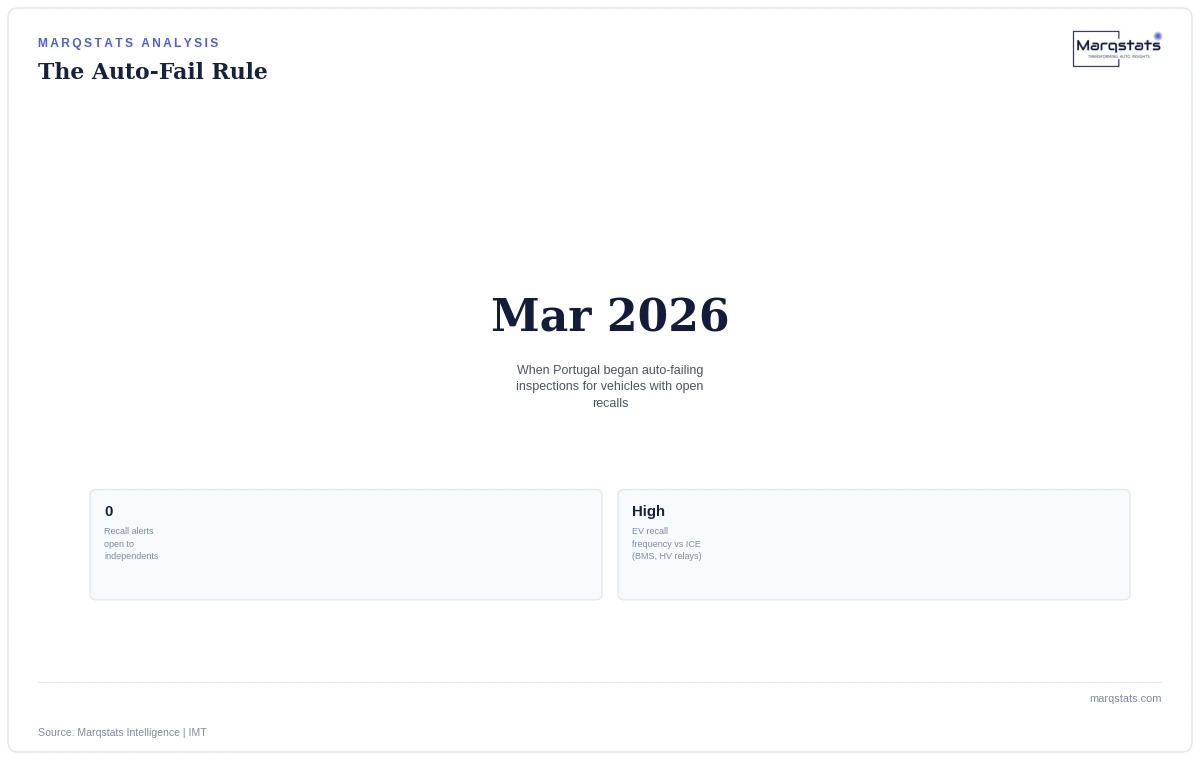
Since March 1, 2026, Portuguese roadworthiness inspection centers automatically fail any vehicle presented with an uncompleted manufacturer safety recall. That sounds like a straightforward safety measure. For the electric vehicle aftermarket specifically, it's quietly reshaping where a meaningful share of service volume ends up.
Why EVs Are Disproportionately Affected
Vehicle recalls happen across every powertrain type, of course. The specific systems EVs introduce -- complex battery management software, high-voltage relay networks -- simply generate more of them, proportionally, than a comparable combustion platform.
Electric vehicles carry documented high recall frequency tied specifically to battery management system firmware updates, high-voltage junction box relays, and power electronics cooling valves. That means EVs are disproportionately likely to have an open recall sitting on file at any given inspection date compared to a comparable ICE vehicle.
The Gap Independent Workshops Can't Close
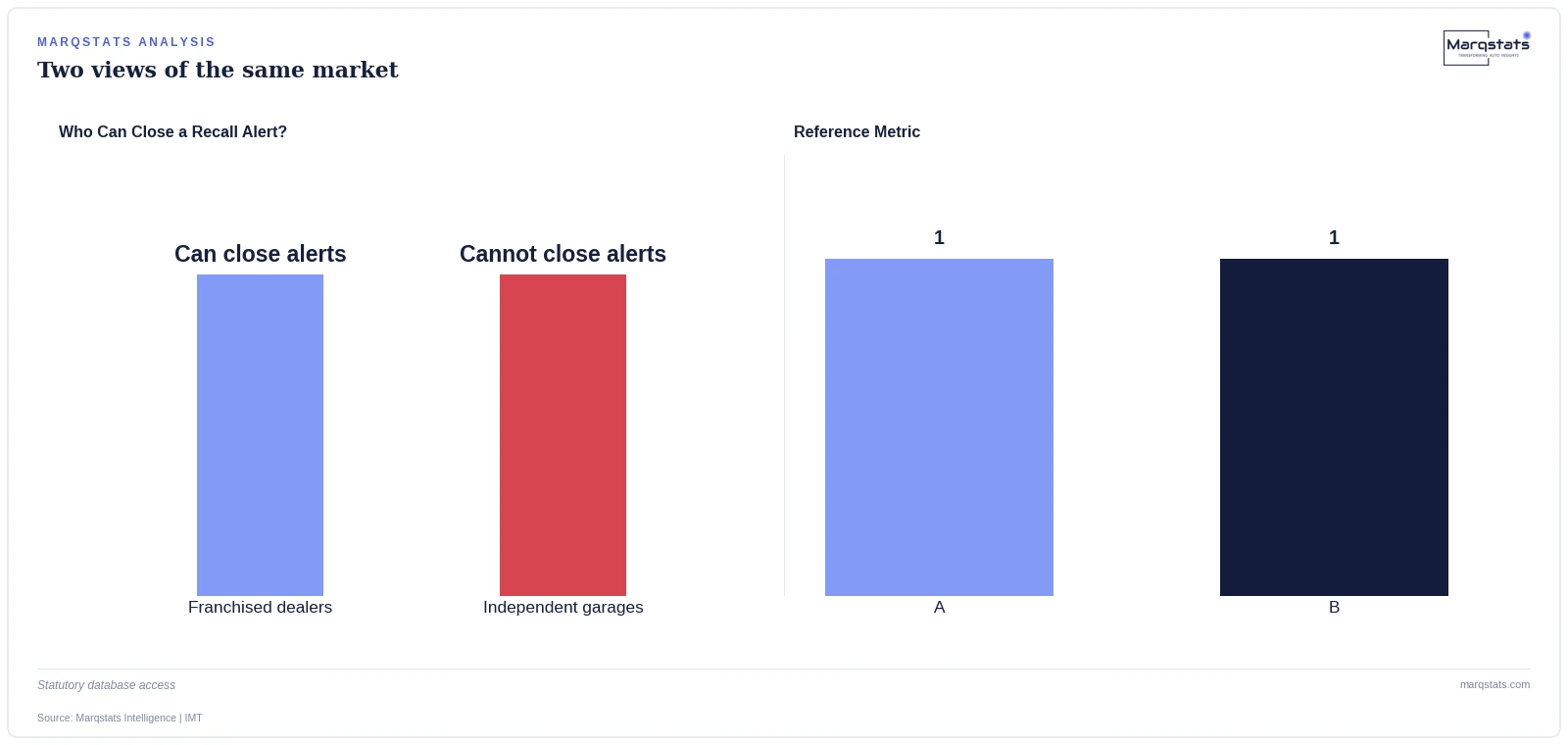
Here's the part that makes this genuinely structural rather than a minor inconvenience: an independent workshop with full SERMI accreditation and a certified high-voltage technician can often perform the actual repair work an open recall requires. What they cannot do is close the recall alert on the statutory vehicle database. That specific administrative action requires authorized OEM diagnostic credentials only franchised dealers hold.
A Named Comparison: Why This Differs From a Typical Warranty Restriction
Most channel-shift dynamics in EV maintenance trace to warranty policy — a manufacturer chooses not to cover independently-serviced vehicles. This one is different: it's not a business choice any manufacturer made. It's a byproduct of how the statutory recall-closure system is architected, applying uniformly regardless of what any individual OEM would prefer. An independent workshop can be fully capable and still lose the job purely on a database permissions issue.
How Long This Dynamic Is Likely to Matter
This isn't a temporary transitional quirk expected to fade as EV recall processes mature. As long as the statutory recall-closure system requires OEM-specific diagnostic credentials that independent garages structurally cannot obtain, this channel-shift mechanism will keep operating exactly as designed, regardless of how skilled independent technicians become at the underlying repair work itself.
What This Means for Independent Workshops and Fleet Managers
The practical takeaway: independent workshops should treat recall-status checking as a standard part of any EV intake process, flagging vehicles with open recalls before investing diagnostic time, while fleet managers should build recall-status monitoring into standard maintenance scheduling to avoid unplanned dealer-network routing during statutory inspection cycles.