A Rule That Has Nothing to Do With Cars
It's worth understanding this specific mechanism before assuming island EV ownership carries the same cost profile as mainland ownership, since the difference shows up specifically in the repair scenarios most owners hope never to face.
International maritime regulations governing dangerous goods prohibit shipping degraded, damaged or defective high-voltage traction batteries by air freight. That's not an automotive-industry rule at all — it's aviation safety policy. But in the Azores and Madeira, it has a very direct automotive consequence.
What It Means in Practice
This isn't a hypothetical scenario either -- as the islands' EV fleet ages and moves further from initial factory warranty coverage, the volume of complex repairs genuinely requiring this kind of cross-water logistics can only grow.
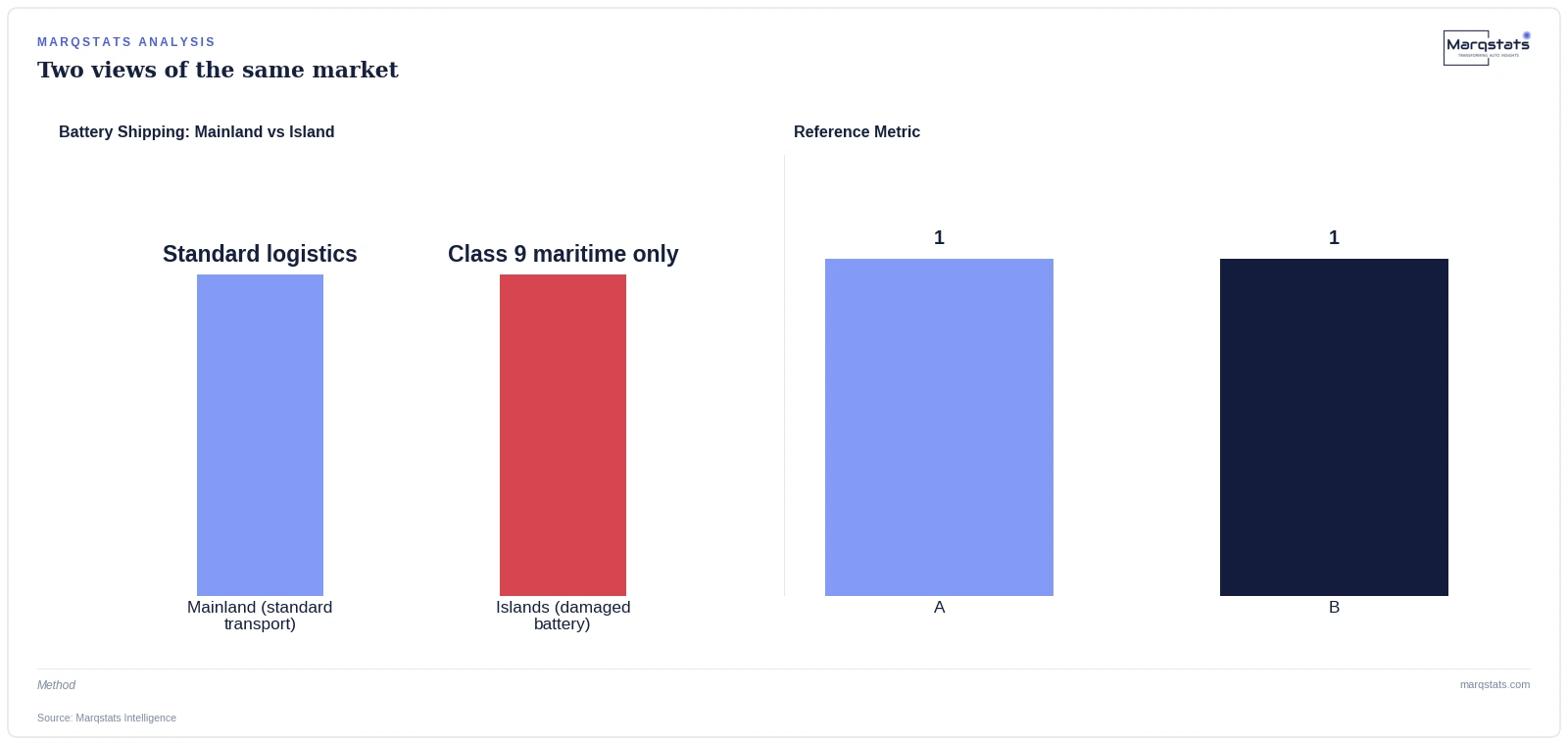
A damaged battery pack that would ship overnight by air from mainland Portugal instead requires Class 9 hazardous maritime cargo transport when it needs to leave the Azores or Madeira for complex repair. That means longer turnaround times and real shipping surcharges added directly to the cost of the repair itself.
Why Island Adoption Is Growing Anyway
That growth pattern is worth noting on its own terms: adoption and repair-cost friction are rising together in the islands, rather than one constraining the other the way it might in a market where logistics concerns actually suppressed purchase decisions.
None of this has slowed EV adoption in the islands — if anything, it's accelerated. Local government purchase incentives, elevated retail fuel prices, and naturally short average trip distances that eliminate range anxiety have made electric vehicles genuinely appealing in island driving conditions. The logistics friction shows up specifically when something goes wrong, not in day-to-day ownership.

A Named Comparison: Why This Differs From Mainland Regional Gaps
Portugal's mainland regions, even the more dispersed Alentejo, face service gaps measured in distance and workshop density — a real constraint, but one a longer drive or a tow truck can solve. The island constraint is categorically different: it's a hard regulatory barrier on how a damaged battery can physically travel at all, not just how far it has to go.
Why This Isn't Likely to Change Soon
International dangerous-goods aviation rules are not something Portuguese automotive policy can unilaterally alter, meaning this specific logistics constraint should be treated as a durable feature of island EV ownership economics rather than a temporary inconvenience awaiting a regulatory fix.
What This Means for Island EV Owners and Workshops
The practical takeaway: island-based workshops and insurers should factor Class 9 maritime shipping timelines and surcharges explicitly into repair estimates and loaner-vehicle planning for complex battery work, rather than quoting mainland-equivalent turnaround times that don't account for this genuine physical constraint.