A Genuine Win That Created a Different Problem
It's worth stating the good news plainly before explaining the twist, since the underlying engineering benefit is completely real.
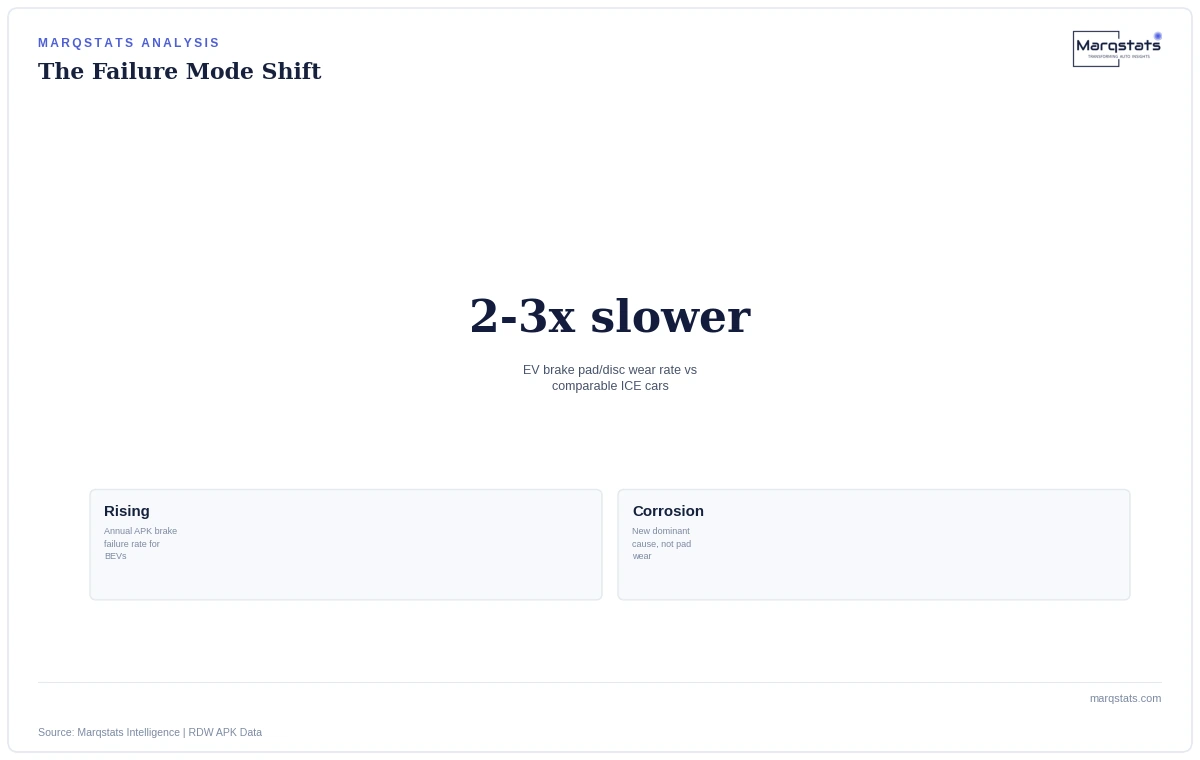
Regenerative braking is a genuine mechanical win for EV owners: by using the electric motor to slow the vehicle and recapture energy, it dramatically reduces how hard the friction brakes actually work. EV brake pads and discs wear out 2 to 3 times slower than on comparable ICE cars.
Why Less Wear Doesn't Mean Fewer Problems
The mechanism that reduces wear introduces a different failure pathway entirely, and it's worth understanding why.
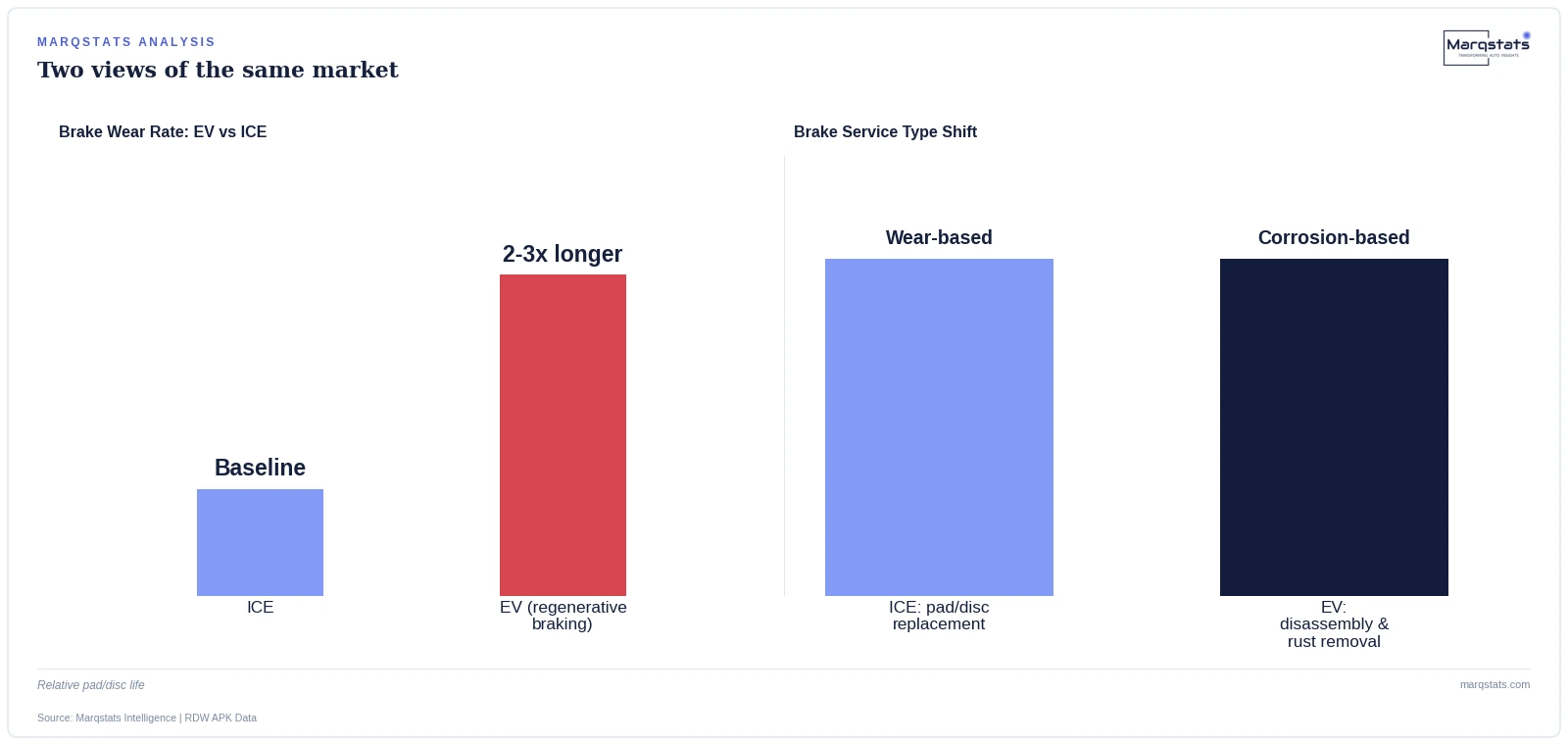
Annual failure rates during APK (statutory roadworthiness) inspections for BEV brake systems are rising -- not because the brakes are wearing out, but because they're barely being used. Surface corrosion on brake discs and caliper seizure from under-use are becoming the dominant failure mode, replacing the pad-wear problems that define brake service on conventional cars.
Why This Requires a Genuinely Different Service Approach
A workshop applying the old playbook to this new failure mode would be solving the wrong problem entirely, since the diagnostic question itself has changed.
A conventional brake job is fundamentally a wear-replacement job: pads and discs reach a minimum thickness and get swapped. A rust-and-seizure problem is a maintenance job instead -- disassembling the caliper, cleaning corrosion from the disc surface and slide pins, and reapplying protective lubricant, often without replacing a single wear component.
A Named Comparison: Why This Failure Mode Is Genuinely Climate-Specific
This isn't a universal EV brake issue -- it's shaped specifically by conditions the Netherlands has in abundance.
The Netherlands' maritime climate, with frequent rain and high humidity, accelerates the exact corrosion process that under-used brake components are newly vulnerable to. A BEV operating in a drier climate would face this exact same reduced-friction-usage pattern but a meaningfully lower corrosion risk from it -- making this specifically a Dutch operating-conditions story layered onto a universal EV engineering characteristic.
Road salt used during winter de-icing compounds this further, since chloride exposure accelerates corrosion on any exposed metal surface, and a brake disc that spends most of its time barely touched by the pad has far less opportunity to self-clean through routine friction than one working hard on a conventional vehicle.
What This Means for Workshops and Fleet Operators
The practical takeaway: Dutch workshops servicing BEVs should build periodic disassembly, cleaning and lubrication into scheduled maintenance specifically, even when pad thickness readings show no wear-based need for a full brake job.