A Massive Battery, an Unexpected Point of Failure
It's the kind of detail that sounds like a contradiction until the actual vehicle architecture is explained.
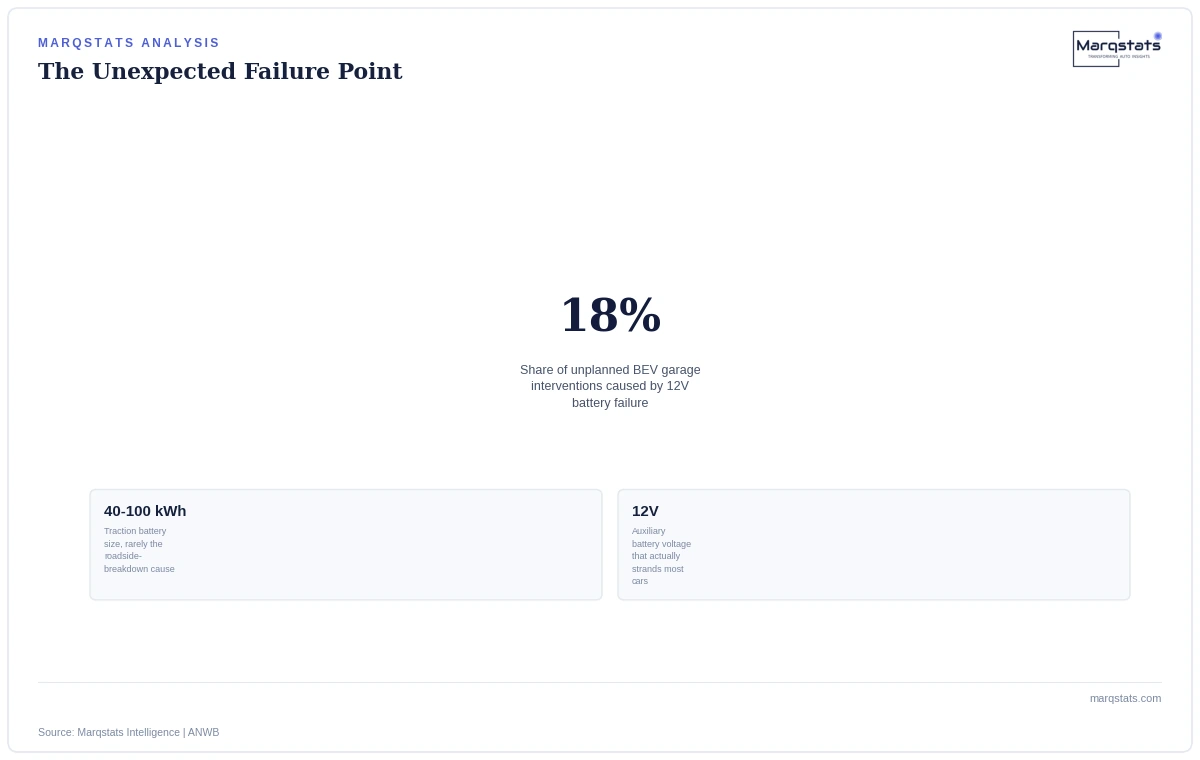
Battery electric vehicles carry traction batteries ranging from 40 to 100 kilowatt-hours -- enough energy to power a house for days. Yet when Dutch BEVs break down unexpectedly at the roadside, the massive battery is rarely the cause. A much smaller, much older piece of technology is.
The Numbers Behind the Paradox
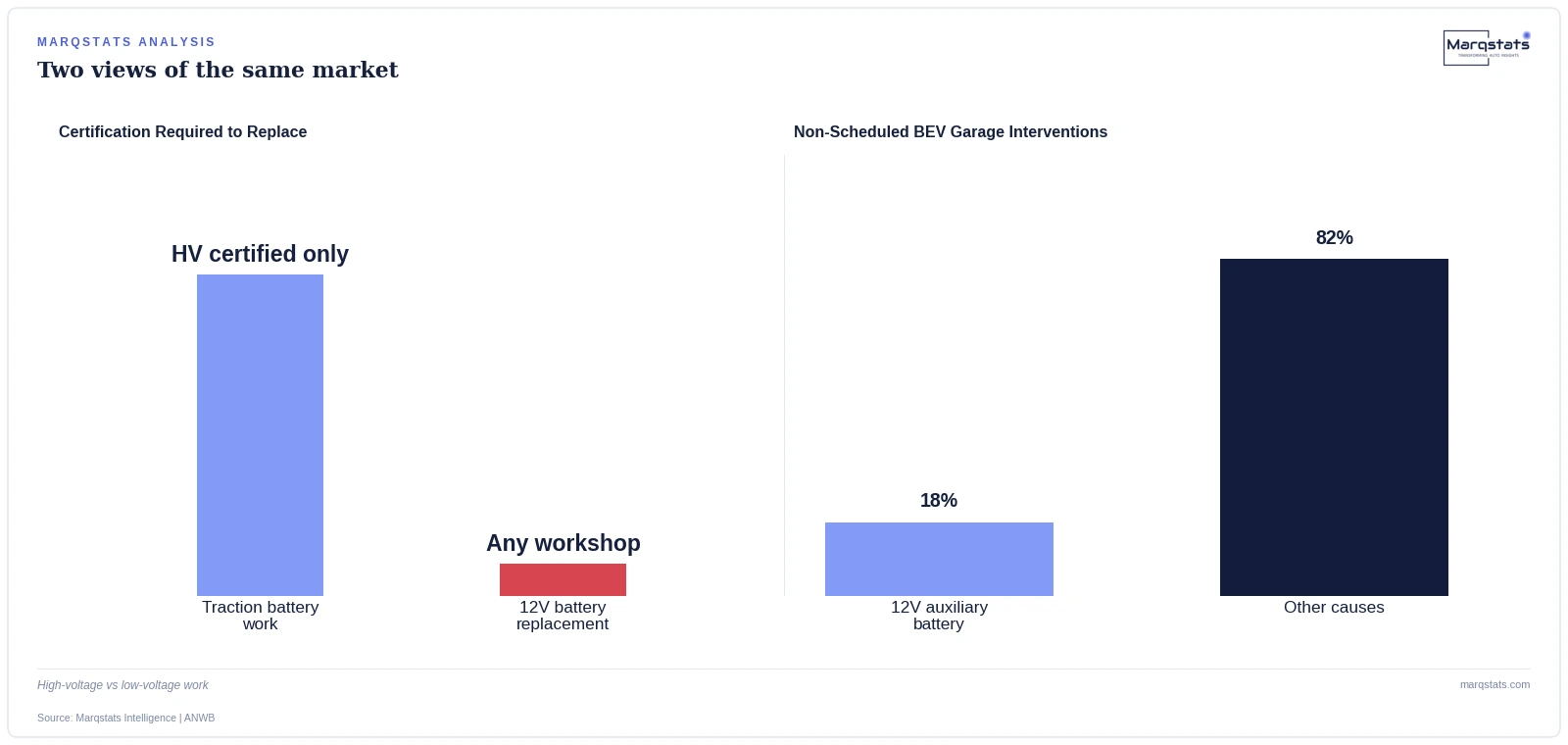
These specific figures trace directly to the underlying research's own workshop billing data, not a rough estimate.
Despite housing high-voltage traction batteries far larger than anything in a conventional car, BEVs suffer 12V lead-acid auxiliary battery failures as their leading cause of roadside breakdown. Workshop data indicates that 12V battery replacements account for 18% of non-scheduled BEV garage interventions in the Netherlands.
Why the Small Battery Still Matters This Much
Understanding the actual electrical architecture explains why this isn't a design flaw so much as an inherited dependency.
The 12V auxiliary battery isn't a legacy afterthought -- it powers the low-voltage systems that bring the entire vehicle to life: the contactors that connect the high-voltage traction battery, the onboard computers, the door locks, and the infotainment system. If that small battery dies, the car's own high-voltage system often can't even wake up to charge it back -- a vehicle with a nearly-full traction battery can still be stranded by a flat 12V cell.
A Named Comparison: Why This Creates an Unexpected Revenue Stream
For fast-fit service centers, this failure mode has turned into a genuinely reliable business line, and it's worth naming why.
Unlike major traction battery work, which requires high-voltage certification, specialized tooling, and often routes customers toward authorized dealers, 12V auxiliary battery replacement is straightforward, low-voltage work that any general workshop can perform. That combination -- a genuinely common failure mode paired with low technical barriers to servicing it -- has created a recurring, accessible revenue stream for fast-fit service centers specifically, in a market where most other EV service categories increasingly require specialized certification.
Why This Should Change How Drivers Think About EV Reliability
The roadside-assistance data reframes what "EV reliability risk" actually means for the average driver.
For a driver worried about EV reliability, the traction battery -- the component most associated with anxiety about electric vehicles -- is statistically not the most likely cause of a roadside breakdown. The unglamorous 12V battery, inherited directly from decades of conventional automotive engineering, is.
What This Means for Workshops and Roadside Assistance Providers
The practical takeaway: workshops and fast-fit chains should treat preventive 12V battery testing as a standard part of any BEV service visit specifically, given how directly this single component drives the largest share of unplanned roadside interventions in this market.