Mexico's four biggest PHEV markets split into two completely different buyer stories
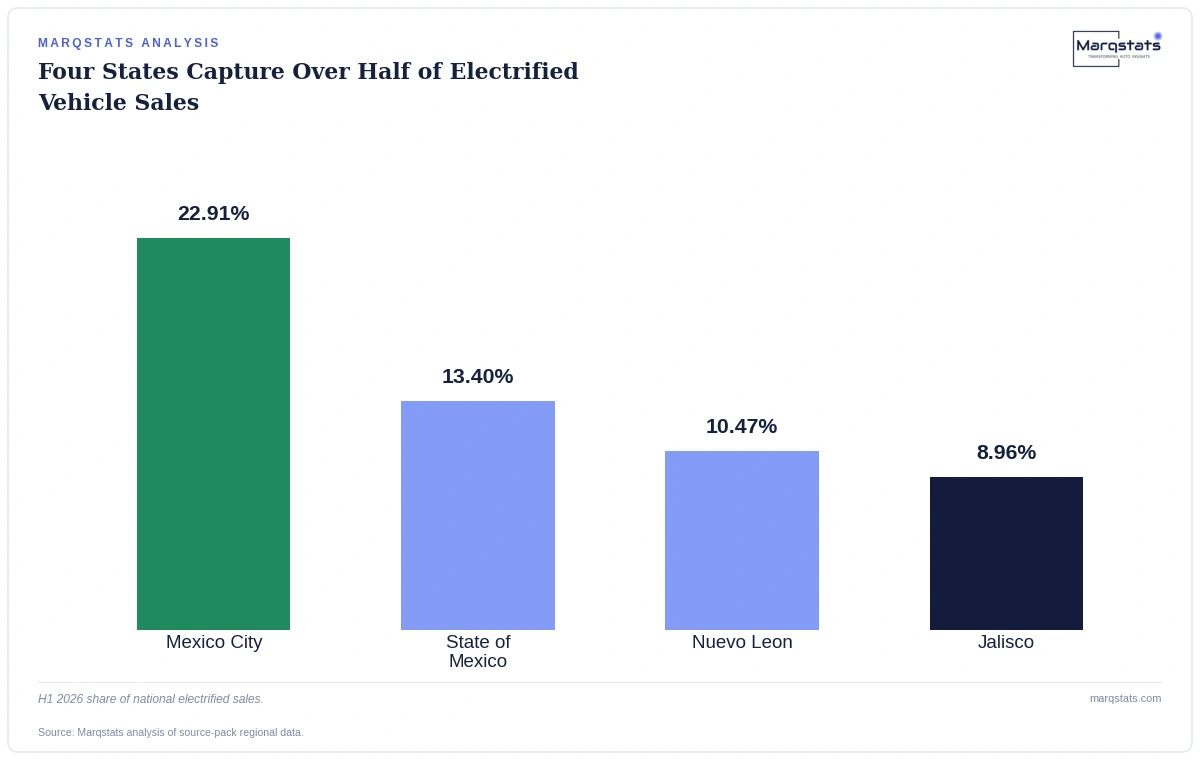
Mexico City and the State of Mexico together capture 36.31% of national electrified vehicle sales. Nuevo Leon and Jalisco capture a further 19.43%. Add them up and four states account for more than half the country's electrified market - but the reason a household in each region buys a plug-in hybrid is not the same reason at all.
In the Megalopolis, the car is a permission slip
In Mexico City and the State of Mexico, a plug-in hybrid buyer is very often solving a specific, recurring problem: the Hoy No Circula vehicle rationing program, which restricts a portion of the fleet from driving on assigned days each week, and the driving bans triggered during air-quality emergencies, when a large share of conventional vehicles are ordered off the road entirely. A vehicle carrying the Megalopolis Environmental Commission's Holograma Exento designation is exempt from both. For an executive commuter or a household with a single primary vehicle, that exemption is not a nice-to-have feature - it is the difference between reliable daily transportation and a car that might simply not be allowed on the road on a given Tuesday.
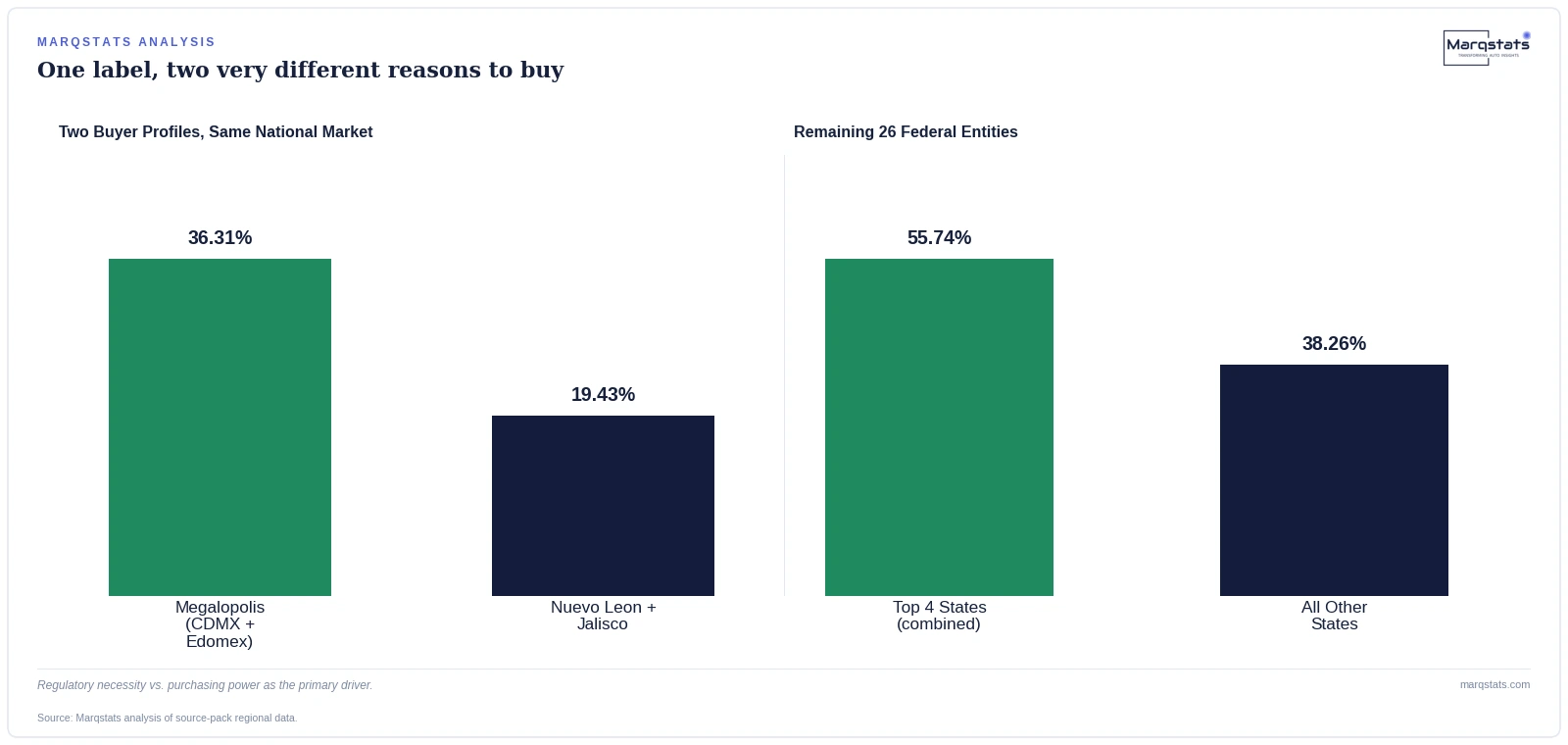
In Mexico City, a plug-in hybrid buyer is often shopping for a green sticker. In Monterrey, they're shopping for a badge.
— Marqstats Analyst Team
In Monterrey, the car is a status statement
Nuevo Leon tells a different story entirely. The Monterrey metropolitan area carries the highest gross domestic product per capita among Mexico's primary urban corridors, and it faces none of the Megalopolis's circulation restrictions. A plug-in hybrid buyer here is not dodging a traffic ban - they are choosing among luxury sport-utility vehicles and high-performance dual-motor pickups, models such as the BYD Shark or the Jeep Grand Cherokee 4xe, for reasons closer to household purchasing power and brand preference than regulatory necessity. This is a private retail acquisition pattern driven by income, not by a specific policy exemption most Nuevo Leon buyers will never need to claim.
Jalisco sits somewhere in between
Guadalajara's technology sector, corporate sustainability programs, and an expanding private charging network place Jalisco closer to a hybrid of both patterns - some corporate fleet adoption resembling the Megalopolis's institutional demand, some private luxury purchasing resembling Nuevo Leon's pattern, without the acute regulatory pressure that defines Mexico City specifically.
The caveat: this is a pattern inference, not a verified buyer survey
No published consumer survey directly asked Mexican PHEV buyers in each region why they made their purchase; this regional split is inferred from the combination of each region's specific regulatory environment, income profile and the vehicle models that sell best there, as described in the underlying market analysis, rather than confirmed through direct buyer-motivation research. It is a reasonable inference given the available evidence, not a measured fact.
What this means for dealer inventory and marketing strategy
A manufacturer or dealer group operating across these regions with a single national marketing message is likely underperforming in at least one of them. A campaign built around Holograma Exento circulation freedom will resonate strongly in Mexico City and the State of Mexico but land flat in Monterrey, where that benefit is simply irrelevant to daily life. Conversely, a campaign built around performance specifications and brand prestige, the kind that moves a BYD Shark or a Jeep Grand Cherokee 4xe in Nuevo Leon, is unlikely to be the deciding factor for a Mexico City buyer whose primary concern is guaranteed daily circulation regardless of air-quality conditions.
Dealer inventory allocation should probably follow the same regional logic. A compact, lower-priced PHEV with strong Holograma Exento eligibility may move faster in Megalopolis showrooms than an equivalently priced but larger, less circulation-optimized model, while Nuevo Leon dealers likely see the opposite pattern, with larger, more powerful models outperforming smaller, more circulation-focused ones regardless of relative price.
The full market picture
Marqstats' complete Mexico PHEV market analysis, including the full regional breakdown and a three-scenario forecast through 2030, is available in the linked report below.
Related reportMexico Plug-in Hybrid Electric Vehicle Market Size, Share & Forecast 2026 – 2030