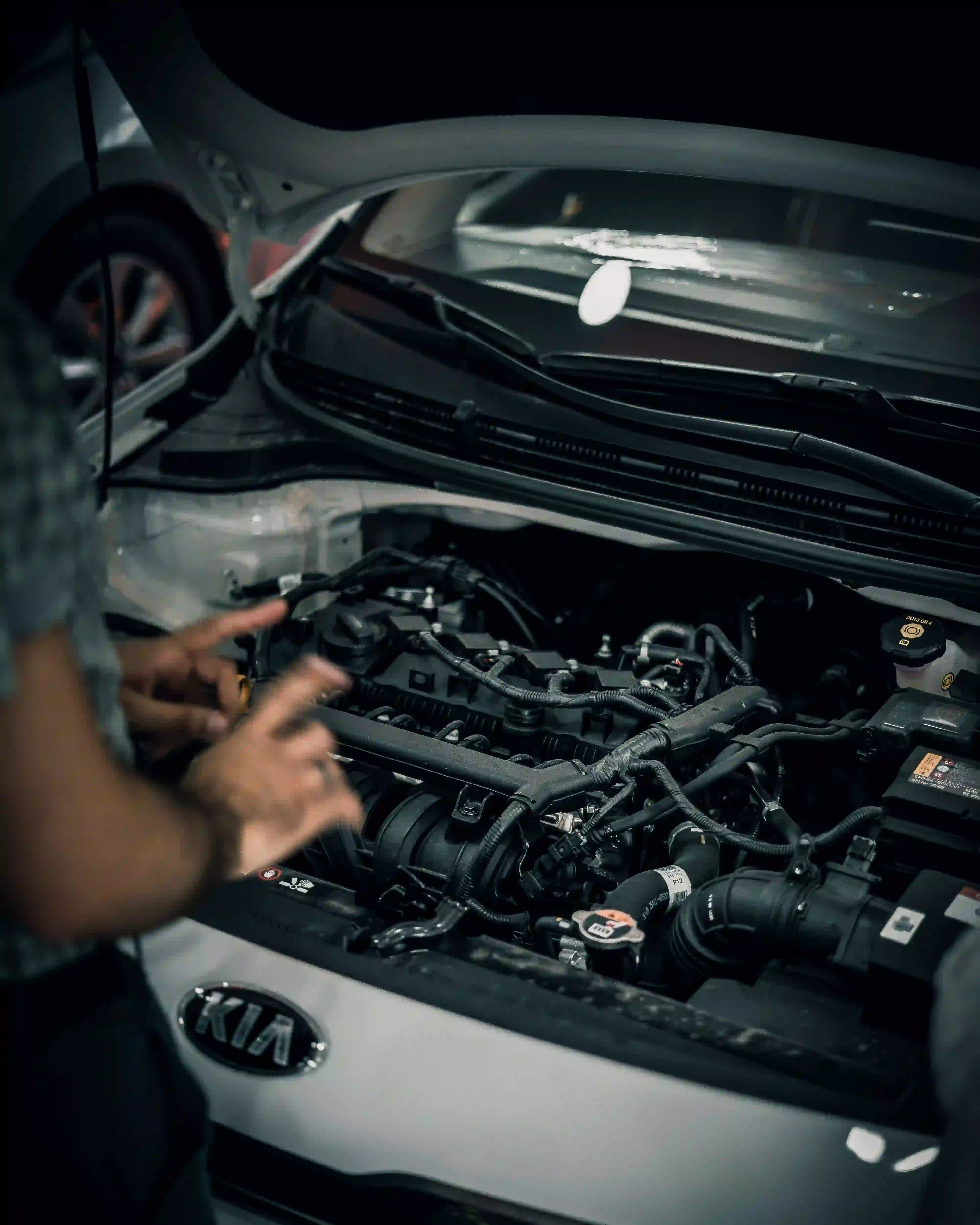
A Damage Type That's Genuinely Hard to Catch by Eye
Before looking at the technology, it's worth understanding exactly why this specific inspection problem needed a new solution.
Underbody casing damage on an electric vehicle isn't like a dented bumper -- it can compromise the structural integrity of a high-voltage battery enclosure without being visually obvious from a standard inspection, and that specific risk is why Malaysia's statutory inspection authority moved to automate detection entirely.
What Puspakom Actually Deployed
This is a genuinely new inspection method, not an upgraded checklist.
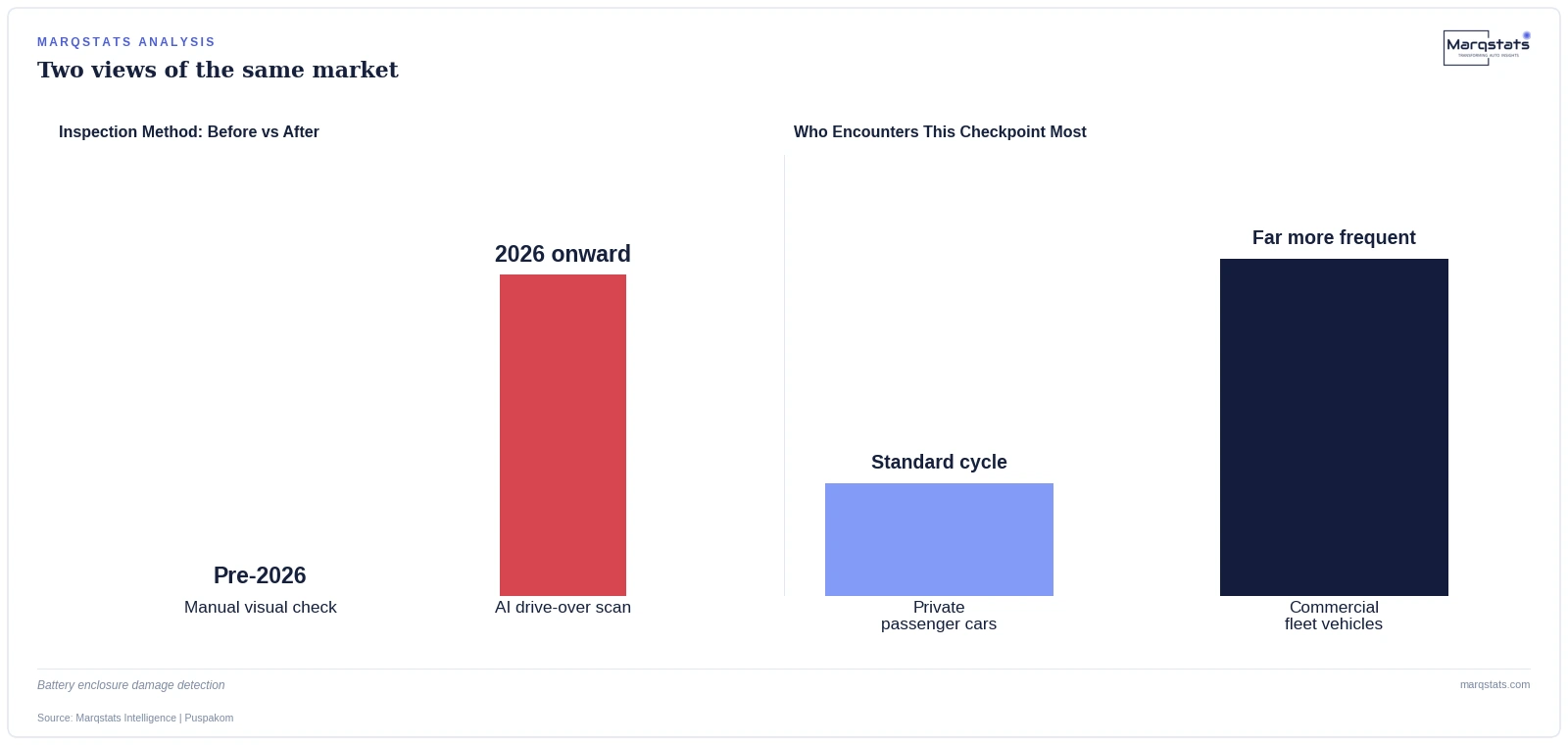
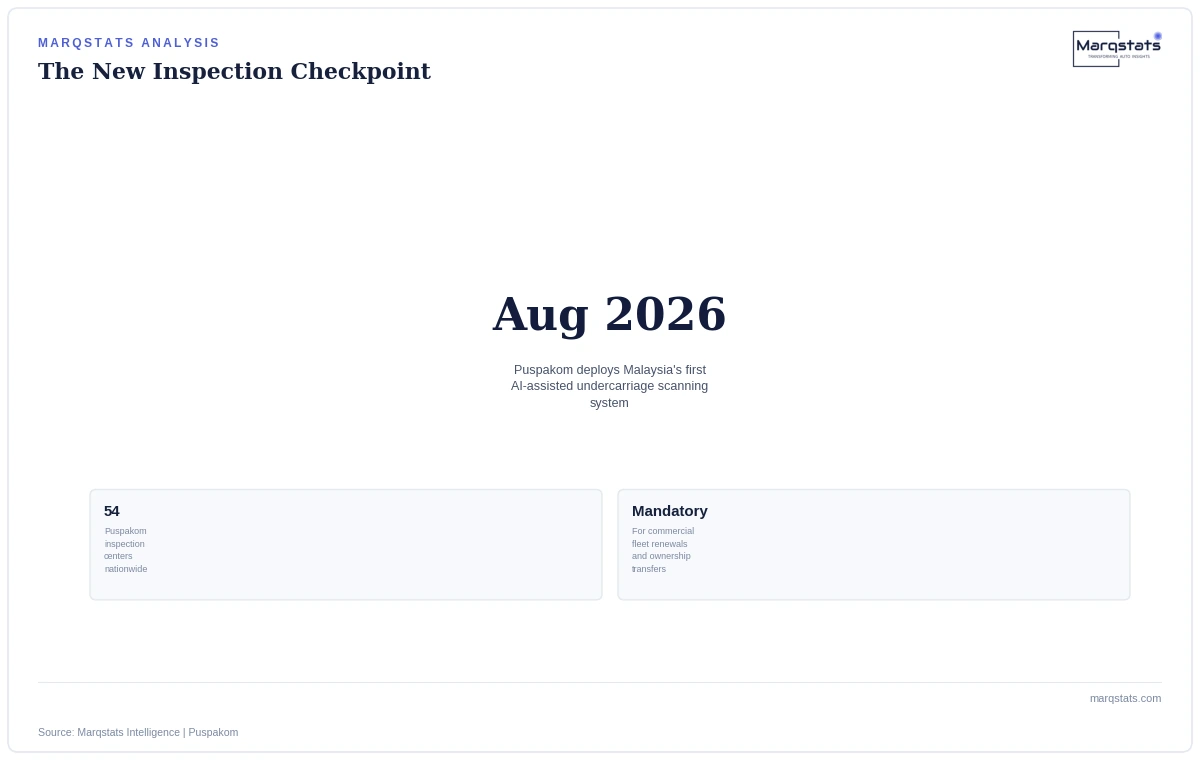
In August 2026, Puspakom deployed Malaysia's first AI-assisted, drive-over undercarriage scanning systems. These sensor arches scan the underside of electric vehicles to detect structural deformities, impact abrasions, or puncture marks on high-voltage battery enclosures as the vehicle passes through -- no manual crawl-under inspection required.
Why This Became a Mandatory Checkpoint
The regulatory logic here traces directly back to a specific safety risk, not a general modernization push.
Because underbody casing damage can compromise battery safety and increase thermal runaway risk, physical undercarriage integrity is now a mandatory inspection checkpoint for commercial fleet renewals and ownership-transfer roadworthiness certifications specifically -- the two situations where an undetected structural issue would otherwise pass silently from one operator or owner to the next.
A Named Comparison: Why Commercial Fleets Feel This First
This checkpoint doesn't apply evenly across all EV owners -- commercial operators face it far more often, and that's worth understanding.
Commercial fleet vehicles undergo far more frequent renewal cycles than private passenger cars, meaning fleet operators -- delivery vans, ride-hailing vehicles, logistics haulers -- will encounter this specific checkpoint substantially more often than an individual private owner. Fleet operators with any history of curb strikes, pothole impacts, or underbody scraping should expect closer scrutiny at their next renewal specifically.
Why This Should Reshape How Workshops Handle Pre-Inspection Work
A newly mandatory checkpoint creates a new pre-inspection service opportunity, and it's worth naming that opportunity explicitly.
Workshops able to offer a pre-inspection underbody assessment ahead of a scheduled Puspakom visit have a genuine opportunity to catch and address minor battery enclosure damage before it becomes a failed inspection -- a service category that essentially didn't exist before this specific scanning technology went live.
What This Means for Fleet Operators and Workshops
The practical takeaway: commercial EV fleet operators and workshops serving them should build underbody condition checks into routine pre-renewal maintenance specifically, given how directly Puspakom's new scanning technology now makes battery enclosure damage a formal, automated inspection checkpoint rather than a discretionary visual check.