
A Concentration Worse Than the Fleet Itself
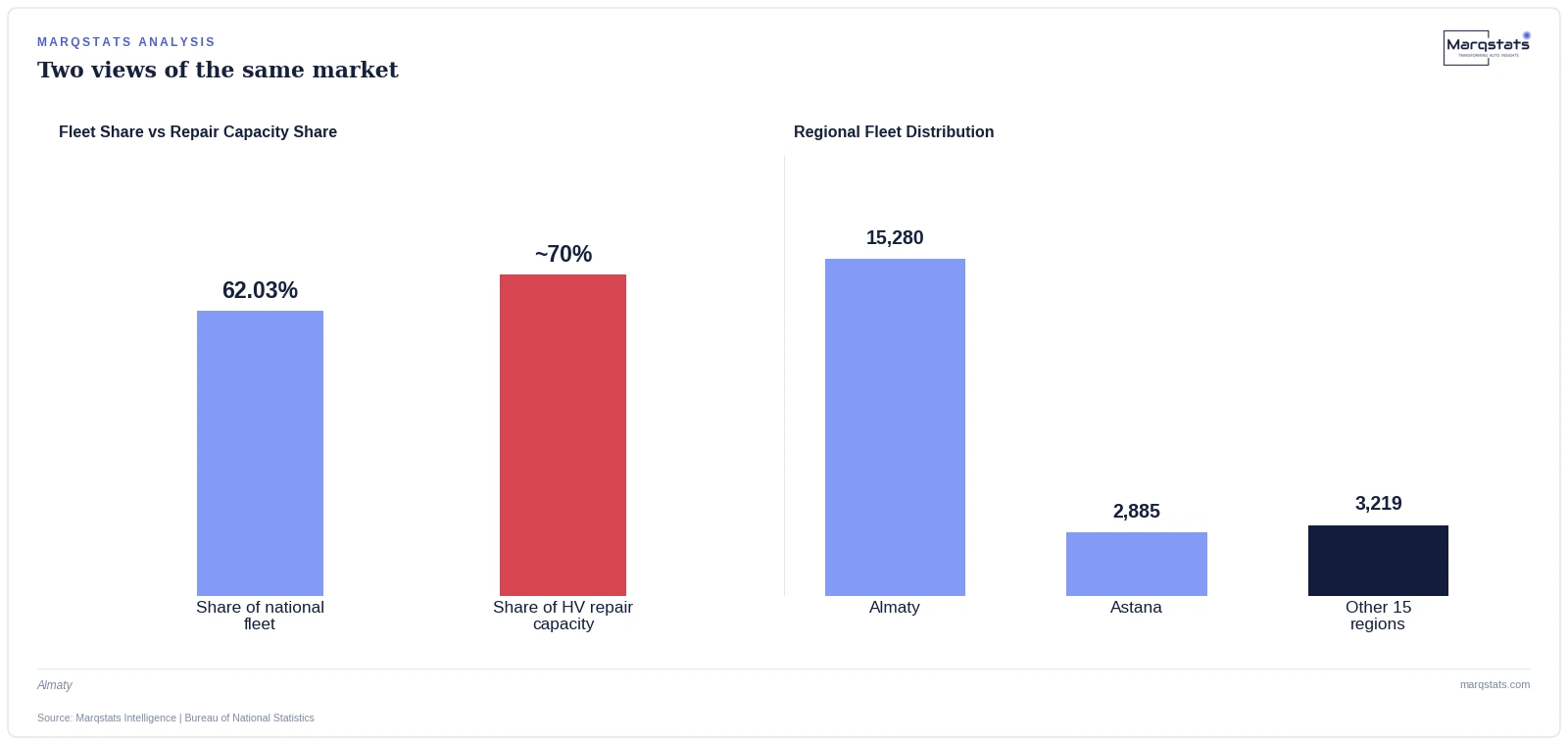
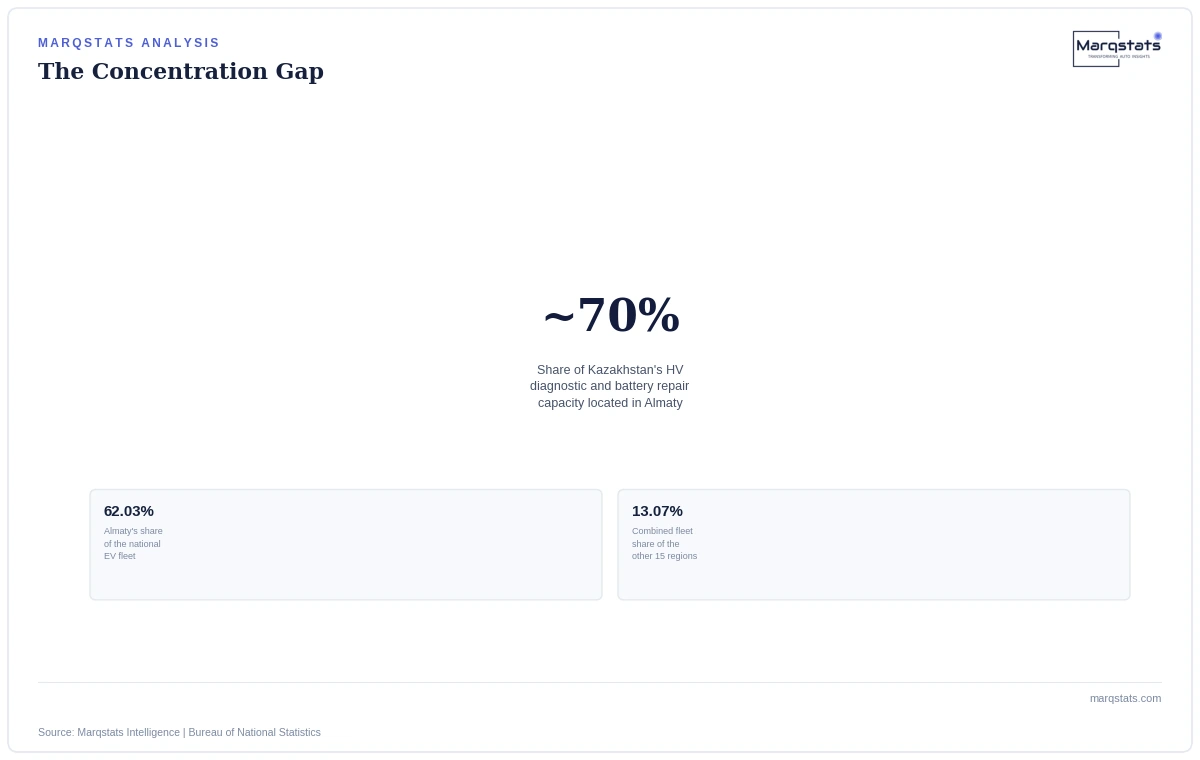
Almaty holds 62.03% of Kazakhstan's registered electric vehicle fleet. That's already a striking concentration for a country of this size. The repair infrastructure serving that fleet is concentrated even further.
The Gap in Numbers
Roughly 70% of the country's specialized high-voltage diagnostic and battery repair capacity sits in Almaty — a larger share than the city's already-dominant fleet position. Independent workshops along the Suyunbay, Raiymbek and Kuldzhinsky transport corridors function as the country's de facto battery-rebuilding hubs.
What This Means When Something Actually Breaks
For an EV owner in any of Kazakhstan's other 15 regions, a serious electrical fault doesn't mean finding a local specialist. It typically means arranging flatbed tow transport to Almaty or Astana for diagnosis and repair. In regions like Ulytau, with just 41 registered units, or Abai, with 78, there's simply no commercial case yet for a dedicated local high-voltage repair shop.
Why This Happened Specifically Here
None of these factors are unique to Almaty individually, but their combination there is: few other Kazakhstani cities offer the same overlap of income, infrastructure, climate and supply-chain proximity all at once.
The concentration traces to a specific combination of advantages: higher median household incomes, denser municipal charging networks, milder temperatures than the north, and direct geographic proximity to Chinese supply routes. Independent workshops that built specialized capability early found themselves serving not just Almaty but, effectively, the whole country.
A Named Comparison: Why This Differs From Ordinary Regional Service Gaps
Most countries with regional EV service imbalances see gaps in wait times or pricing — a driver in a smaller city might wait longer or pay more. Kazakhstan's gap is more absolute: for complex high-voltage work, there is often no qualified option to wait for locally at all. That's a genuinely different kind of service gap than a pricing or queue-length difference, and it changes what "national coverage" actually means for anyone planning around this market.
How Long This Pattern Is Likely to Persist
Nothing in the underlying research suggests this concentration will unwind quickly. Even in the accelerated growth scenario, high commercial fleet utilization is projected to concentrate further within Almaty and Astana specifically, rather than spreading evenly across the country's other fifteen regions, since urban zero-emission mandates target exactly those two cities.
What This Means for Workshop Investment Planning
The practical takeaway: component suppliers and workshop investors should treat Almaty specifically, not the national market broadly, as the priority location for specialized inventory and diagnostic capability — while also recognizing that any operator willing to establish genuine capability in Astana or a secondary city faces relatively limited direct competition for that specific service niche.