A Savings Story With a Very Large Asterisk
It's worth understanding exactly what the headline BEV maintenance savings figures do and don't cover before treating them as the full cost picture.
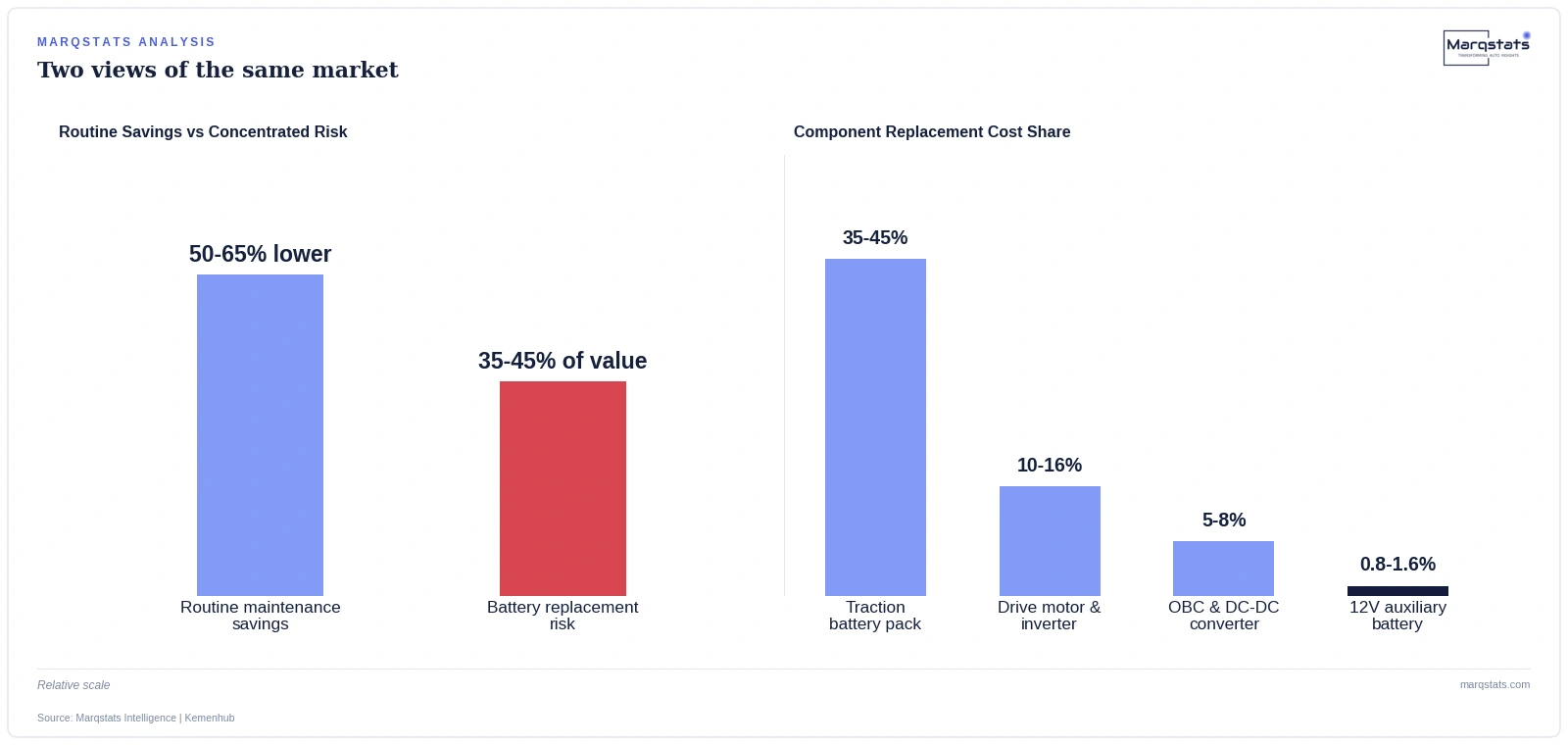
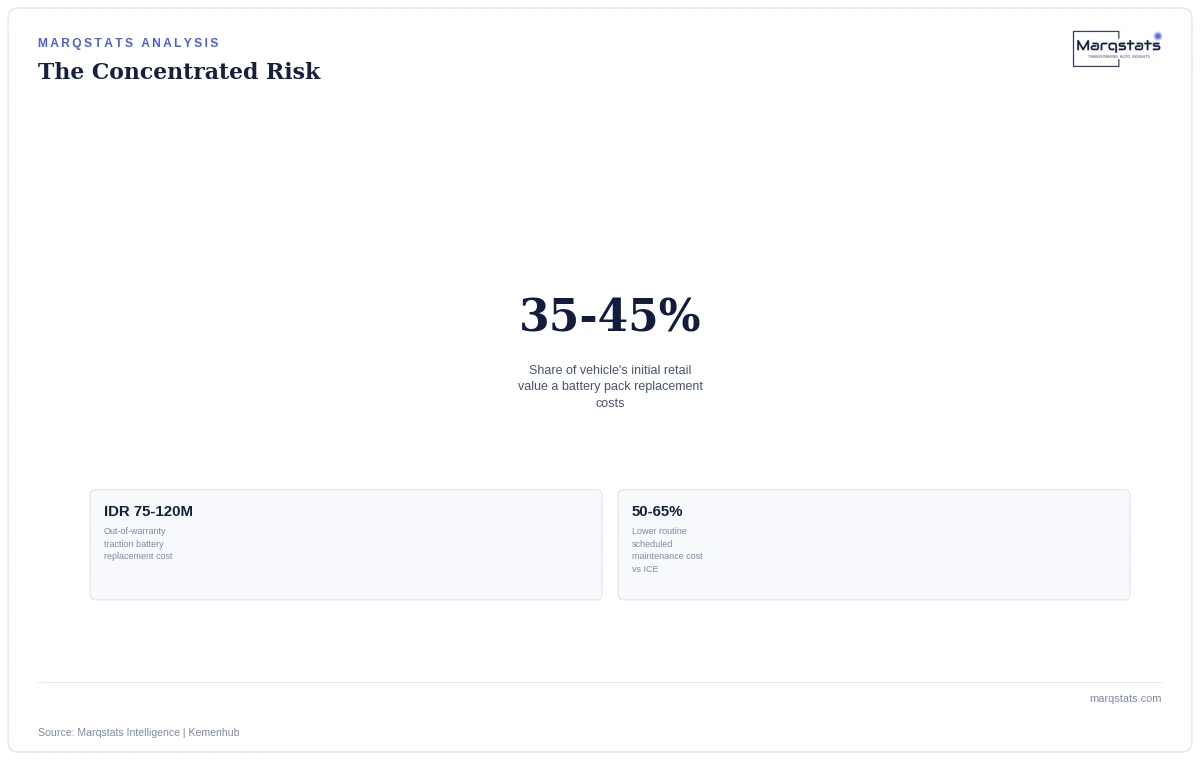
In brief: routine BEV maintenance in Indonesia costs 50% to 65% less than comparable ICE servicing over 100,000 kilometers. That headline number is accurate and real. It also isn't the whole cost picture.
Why This Risk Sits in a Different Category Entirely
Most maintenance costs are routine and predictable. This one is neither, and that distinction matters.
Low probability. High severity. Nearly half the car.
— Marqstats Analyst Team
Complete out-of-warranty replacement of a 30 to 60 kWh traction battery pack costs IDR 75,000,000 to IDR 120,000,000 -- 35% to 45% of the vehicle's initial retail value. That's not a routine service line item like a gearbox flush or a cabin filter; it's a low-probability, high-severity risk concentrated entirely in one component.
A Named Comparison: Why Warranties Exist Specifically for This
The manufacturer response to this risk tells you exactly how seriously the industry itself treats it.
Chinese manufacturers including Wuling, Chery, Neta and GAC Aion offer lifetime warranties on core electric powertrain assemblies for first individual retail owners. BYD and Hyundai guarantee 8 years or 160,000 kilometers with a minimum battery State of Health retention threshold of 70%. These aren't generic goodwill gestures -- they're specifically structured to manage the exact risk this single component represents, because no manufacturer wants a customer facing a bill approaching half the car's value in year six of ownership.
Why This Risk Becomes the Central Question After 2028
The warranty coverage that currently absorbs this risk has an expiration date, and that date is coming for a specific, large cohort of vehicles.
Once warranties expire on the 2022-2025 registration cohort -- the vehicles that drove Indonesia's initial EV adoption wave -- this single risk category becomes the central question shaping independent workshop viability, secondary market vehicle values, and consumer willingness to keep an aging EV on the road rather than trade it in early specifically to avoid the exposure.
What This Means for Buyers, Workshops and Secondary-Market Valuers
The practical takeaway: anyone evaluating a used EV purchase, or pricing independent workshop services for out-of-warranty vehicles, should treat remaining battery warranty coverage as the single most consequential number in the transaction specifically, ahead of routine maintenance cost comparisons.