A Documented, Not Estimated, Gap
This isn't a rough impression pieced together from a handful of anecdotal quotes. It's a structured, apples-to-apples comparison of identical work on identical vehicles, which is exactly what makes the resulting number worth taking seriously rather than dismissing as typical regional noise.
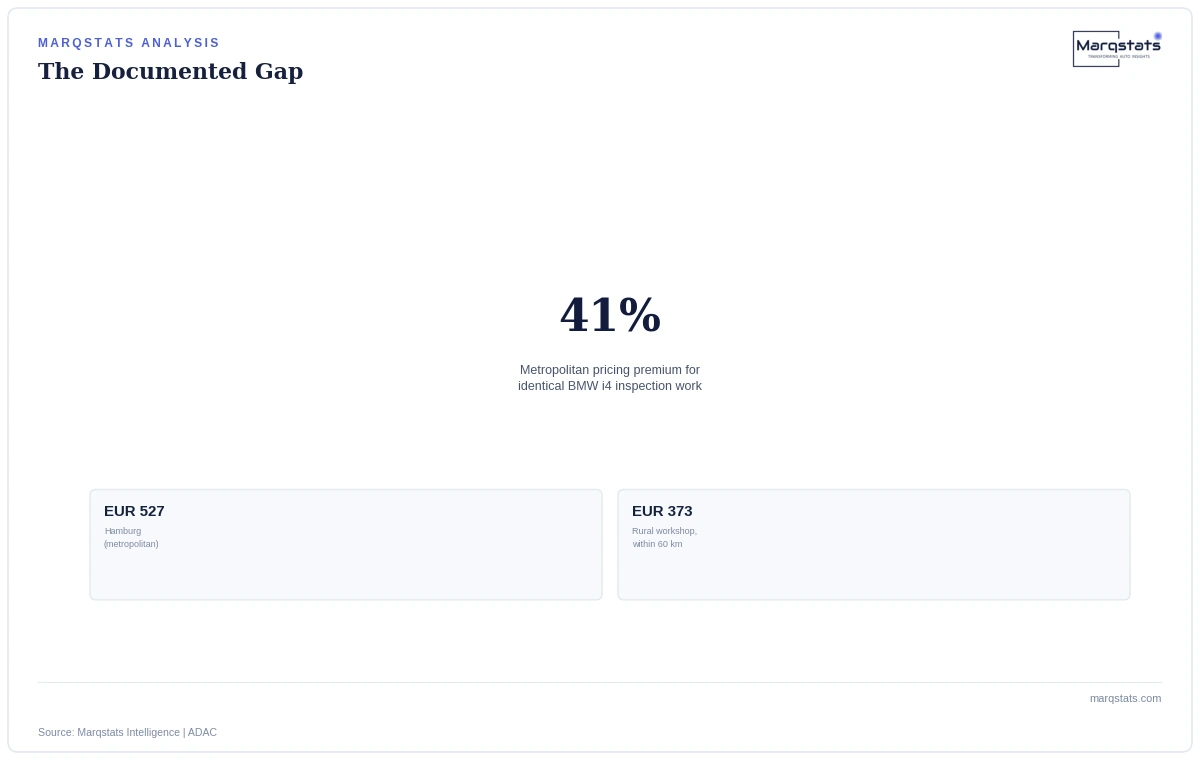
Germany's ADAC ran a genuinely useful experiment: compare the cost of identical routine inspection work on the same vehicle model across different regions. For a BMW i4, the answer was EUR 527 in metropolitan Hamburg against EUR 373 in rural workshops within a 60-kilometer radius.
The Number Behind the Gap
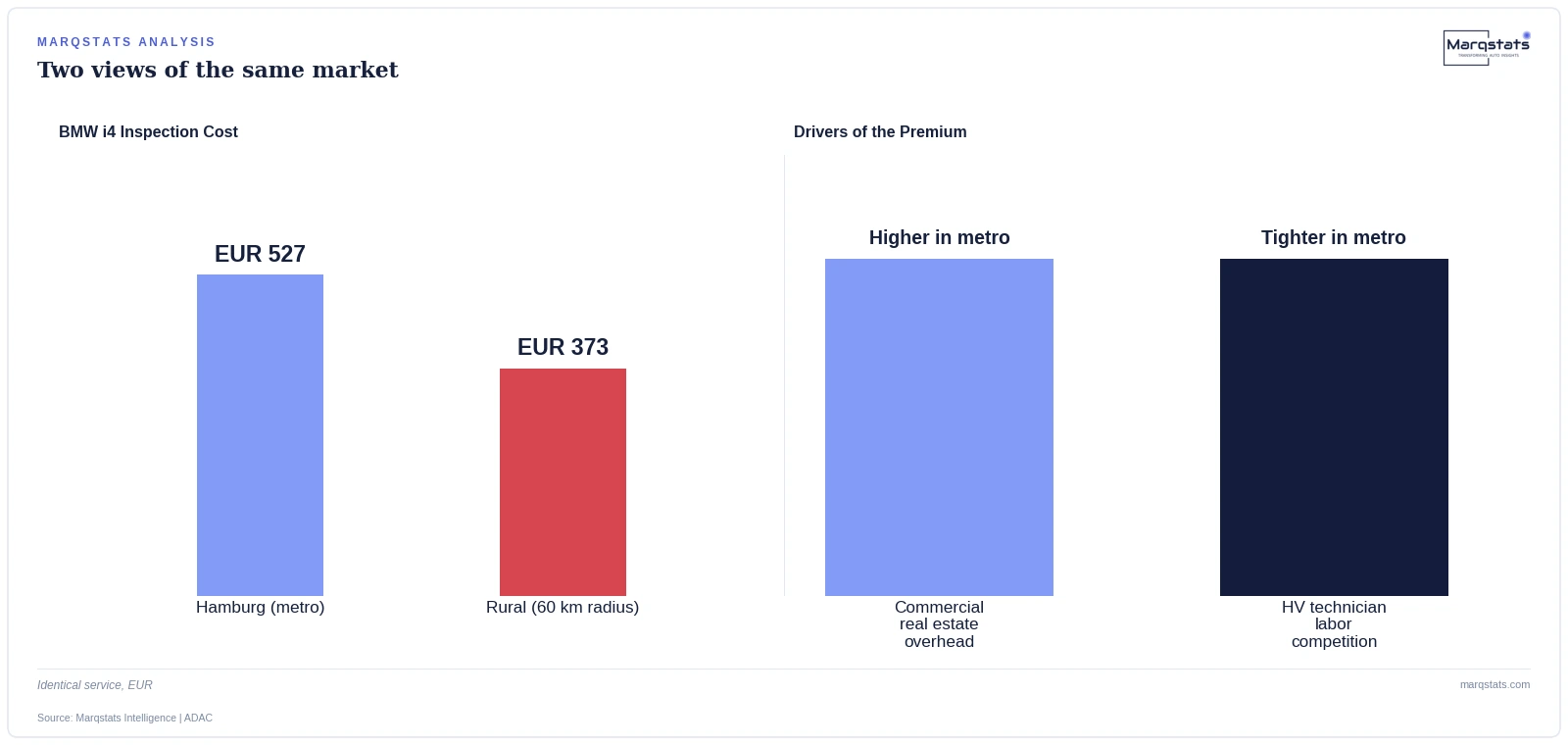
That's a 41% metropolitan premium for literally the same service on literally the same car. Not a different repair, not a different vehicle condition — the same job, priced 41% apart depending on where the workshop happens to be located.
Why the Gap Exists
It would be easy to assume urban pricing premiums are simply a matter of higher rent getting passed through to customers, the way they do in most service industries. Germany's EV-specific gap has a second, more structural driver layered on top of that ordinary explanation.
ADAC's own analysis traces the difference to two specific, identifiable drivers: commercial real estate overhead in dense metro centers, and tighter labor market competition for certified high-voltage technicians in cities where every workshop is competing for the same limited pool of DGUV Stufe 2S certified staff.
A Named Comparison: Why This Gap Is Wider Than Typical Regional Price Variation
Regional service pricing variation exists in most markets to some degree — rent and labor costs differ everywhere. What makes Germany's 41% BMW i4 gap notable is the scale: it's a meaningfully wider spread than typical regional variation for routine ICE vehicle servicing, reflecting how the added scarcity of certified high-voltage technicians compounds the ordinary urban cost premium rather than simply adding to it.
How This Might Play Out as the EV Fleet Ages
As Germany's electrified fleet grows past its current 2.7 million units and more vehicles exit factory warranty coverage, demand for exactly this kind of routine, price-sensitive inspection work should grow too -- which could either widen this urban-rural gap further as metro workshops stay saturated, or gradually narrow it as rural workshops build out more high-voltage capacity to capture that growing demand themselves.
What This Means for Consumers and Workshop Networks
For consumers, the practical lesson is straightforward: a documented 41% price gap for identical work makes traveling even a modest distance outside a major metro area a genuinely worthwhile consideration for routine, non-urgent EV service. For workshop networks and franchise operators, it's a signal that rural and peri-urban locations, despite lower per-visit pricing, may offer a genuinely favorable technician-competition environment worth weighing against the higher achievable pricing in dense metro centers.