A Data Source Few Markets Have
Most countries trying to understand how EVs actually fail in the field have to rely on insurance claims, workshop surveys, or manufacturer disclosures — all useful, all incomplete in different ways. France has something more direct: a mandatory, government-run roadworthiness inspection program covering over 26.6 million light vehicle inspections annually, generating official defect statistics down to the specific failure mode.
Read that data carefully, and it tells a genuinely two-sided story.
The Good News First
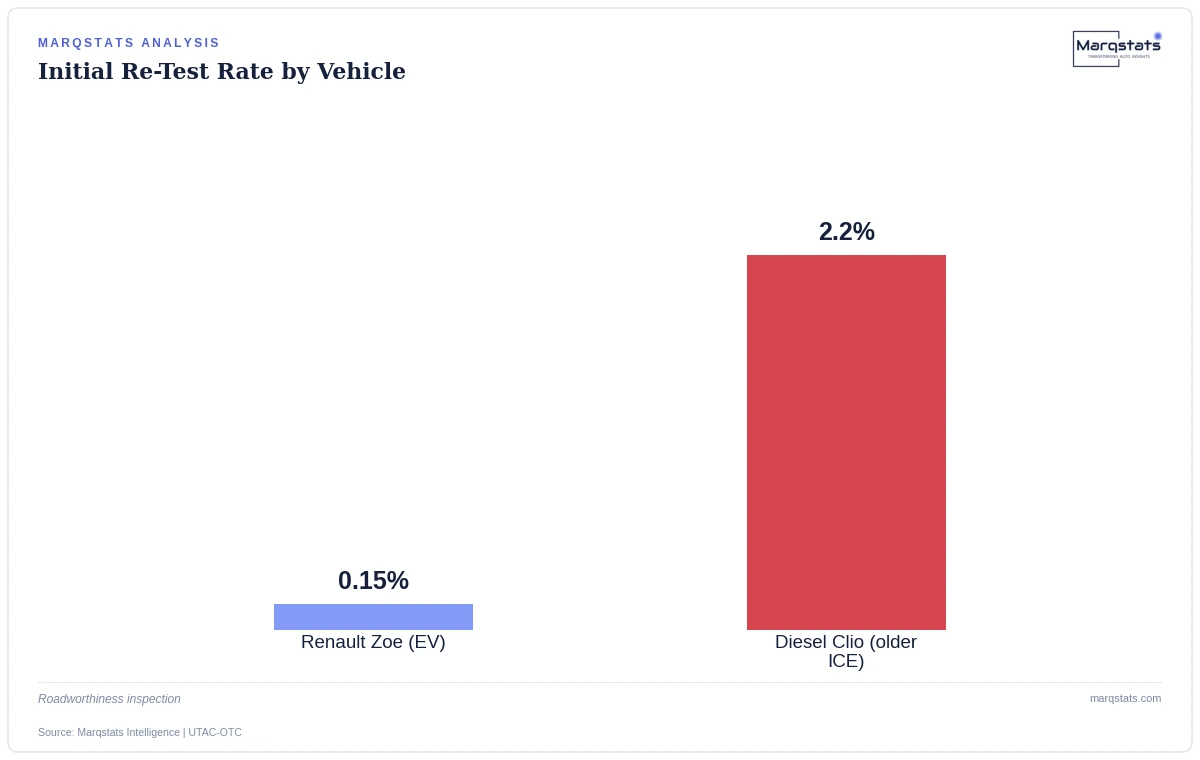
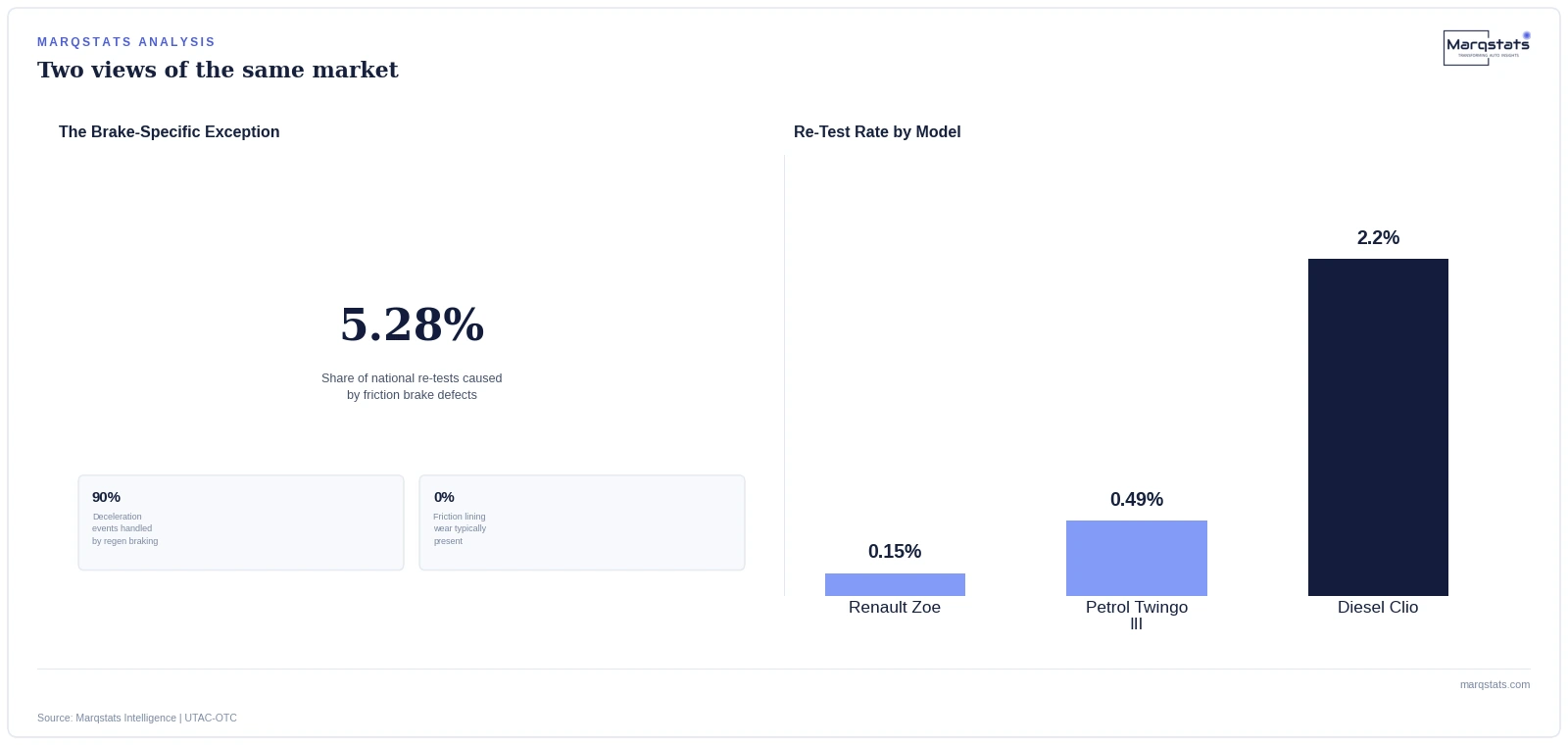
Younger EVs pass French roadworthiness inspection at rates the broader vehicle fleet simply can't match. The Renault Zoe's initial re-test prescription rate sits at just 0.15%, compared to 0.49% for petrol Twingo III models and over 2.2% for older diesel Clio models. That's a dramatic, officially documented gap in favor of electric vehicles.
The Specific Category Where It Reverses
Friction braking system defects don't follow that pattern. UTAC-OTC's own statistics show brake-related issues — disc corrosion, caliper pin seizure — account for 5.28% of national re-tests, a category where EVs show a genuine structural vulnerability.
Why the Mechanism Is Specific to Electric Powertrains
Because electric vehicles use regenerative braking for up to 90% of routine deceleration events, hydraulic friction brakes are rarely engaged with sufficient thermal load to shed road grime and moisture. In regions exposed to winter de-icing salt, that underuse lets cast-iron brake discs oxidize and pit, while sliding caliper pins seize from corrosion — producing brake imbalance failures during dynamometer roller tests despite the friction lining itself remaining unworn.
A Named Comparison: Why This Isn't a Contradiction
It might seem odd that a car can simultaneously pass inspection at industry-leading rates and fail a specific category at an elevated rate. It isn't a contradiction once you separate what's actually being measured: overall pass rate reflects everything from engine condition to emissions to lighting, most of which EVs handle better than ICE vehicles by design. Brake corrosion is a narrow, specific failure mode tied to one particular mechanical side effect of regenerative braking — a genuinely different question than "is this car roadworthy overall."
Why This Level of Detail Matters Beyond France
Most markets can only guess at this kind of category-specific failure pattern from smaller, less representative samples. France's mandatory nationwide inspection program, covering essentially the entire circulating fleet every two years, gives it a genuinely rare advantage: the ability to separate a headline safety statistic from the one specific mechanical failure mode hiding underneath it.
What This Means for Anyone Reading EV Inspection Data
The practical takeaway: France's inspection data is precise enough to support both claims at once, and workshops, insurers and fleet operators should read it at that level of granularity — not collapse it into a single "EVs are safer" or "EVs have more problems" headline, since the actual data supports a more specific and more useful story than either simplification.