A Timing Belt That Runs in Oil
Some engines use a rubber timing belt that runs inside the engine, bathed in oil. In France, that design has changed which oils the whole aftermarket can sell.
The research names two Stellantis engines: the 1.2L PureTech petrol (EB2) and the 1.5L BlueHDi diesel (DV5R). It reports that the elastomer of the belt degraded and shed particles. Those particles clogged oil-pump strainers and led to loss of oil pressure and engine failures.
Stellantis Responded With a Specification
The fix was chemical as well as mechanical.
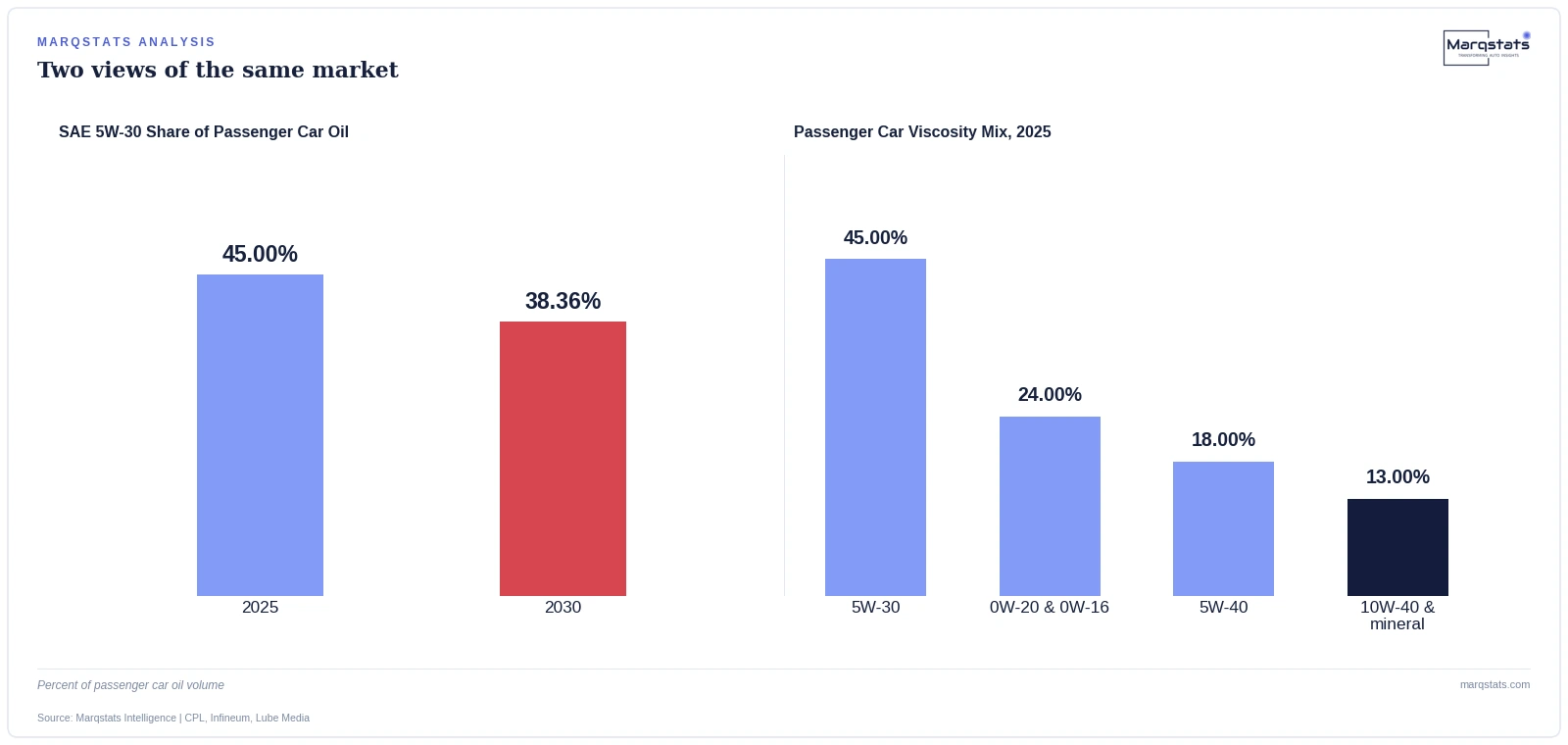
Stellantis mandated a specification, FPW9.55535/03, for SAE 5W-30 oil, which replaced older PSA specifications B71 2010 and B71 2290 across millions of vehicles in the French parc. Oil companies then began to claim their products met it. In 2025 the independent Verification of Lubricant Specifications body investigated those aftermarket claims, and ruled that claims against Version 1 would expire on 30 June 2026. Blenders must now re-homologate to Version 2 or Version 3.
A Named Comparison: Who Can Now Sell a Compliant Oil
Approval, not price, decides who can serve this engine family.
In April 2026 additive maker Infineum announced that its P6895 package had secured official Stellantis approval, which the research describes as an open-market pathway for independent blenders to produce certified oils. Fuchs sells Titan GT1 PRO FPW03 5W-30 for Stellantis engines, and the Eurorepar range added the specification in April 2025.
Why It Matters for the Market
A single specification is now shaping demand in a large slice of the passenger car oil market.
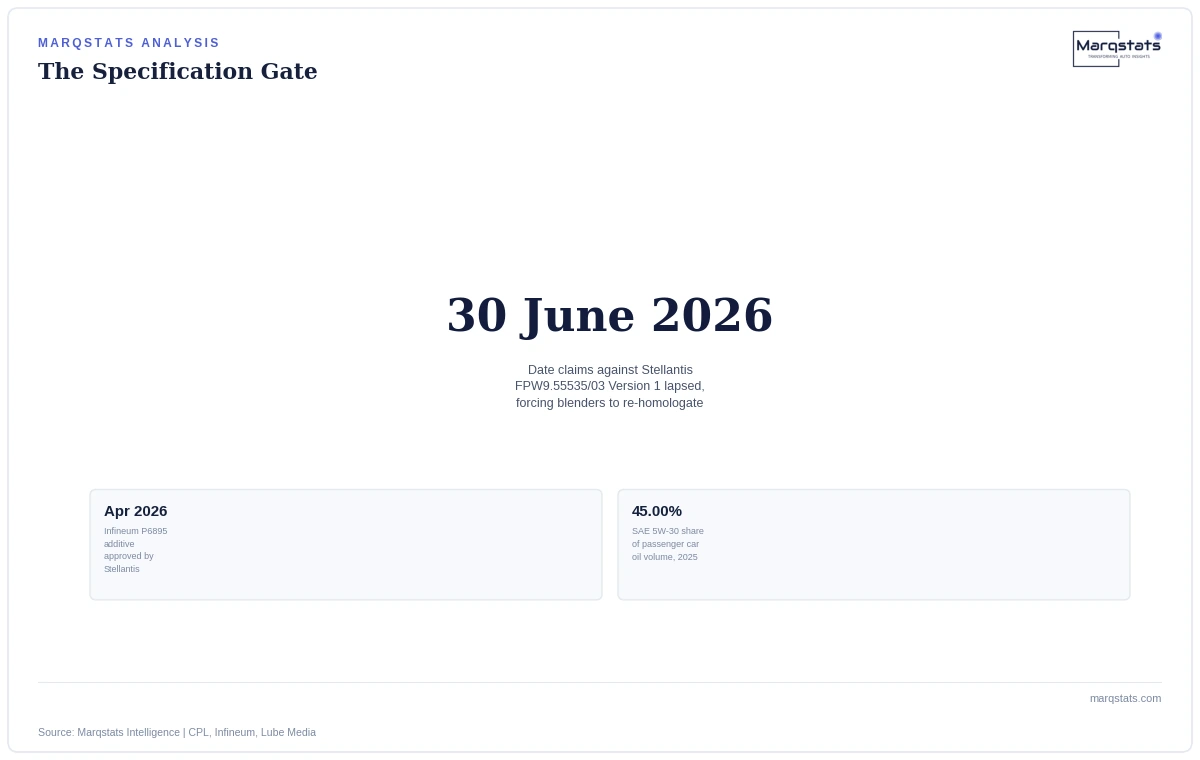
SAE 5W-30 is the leading passenger car grade at 45.00% of volume, or 68,100 tonnes, in 2025, although the research projects it to fall to 38.36% by 2030 as 0W-20 and 0W-16 grow from 24.00% to 34.97%. The specification is one reason installed value is expected to rise 1.72% a year to USD 2,898.72 million while volume falls 1.82% a year to 227,200 tonnes: workshops are billing more for approved fluids on fewer visits, with the average invoice up 2.70% to EUR 402.60.
What This Means for Workshops and Blenders
The practical takeaway: independent workshops should check that any 5W-30 they use on PureTech and BlueHDi engines carries the current FPW9.55535/03 approval, and blenders that want this service fill should secure Version 2 or Version 3 homologation, for example through the Infineum P6895 route.