A Number That Looks Bigger Than It Is
This isn't a small technical footnote buried in a methodology appendix. It's the kind of distortion that could genuinely mislead a workshop chain or parts distributor deciding where to open its next high-voltage-equipped service bay, if they read the headline regional share without digging into how it was actually compiled.
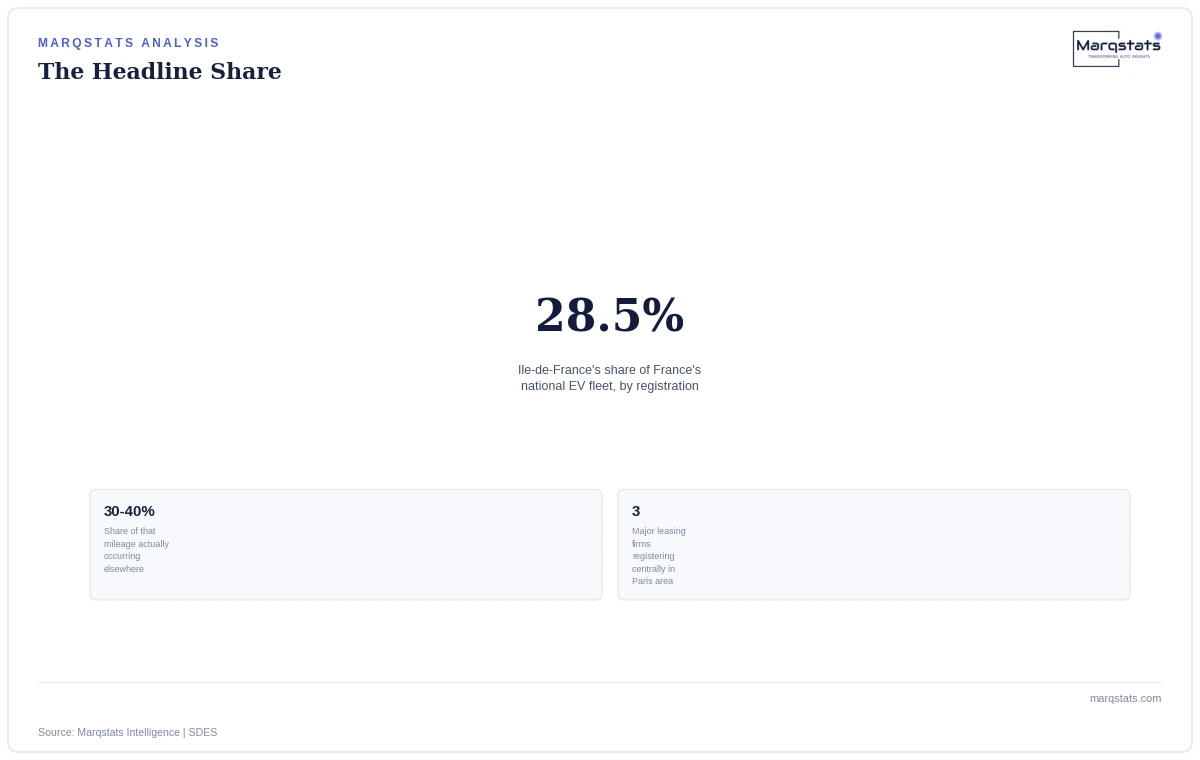
Île-de-France holds 28.5% of France's national EV fleet, by far the largest single regional share in the country. Read only that number, and it's easy to conclude nearly a third of French EV maintenance demand sits in and around Paris.
The Registration Quirk Behind the Number
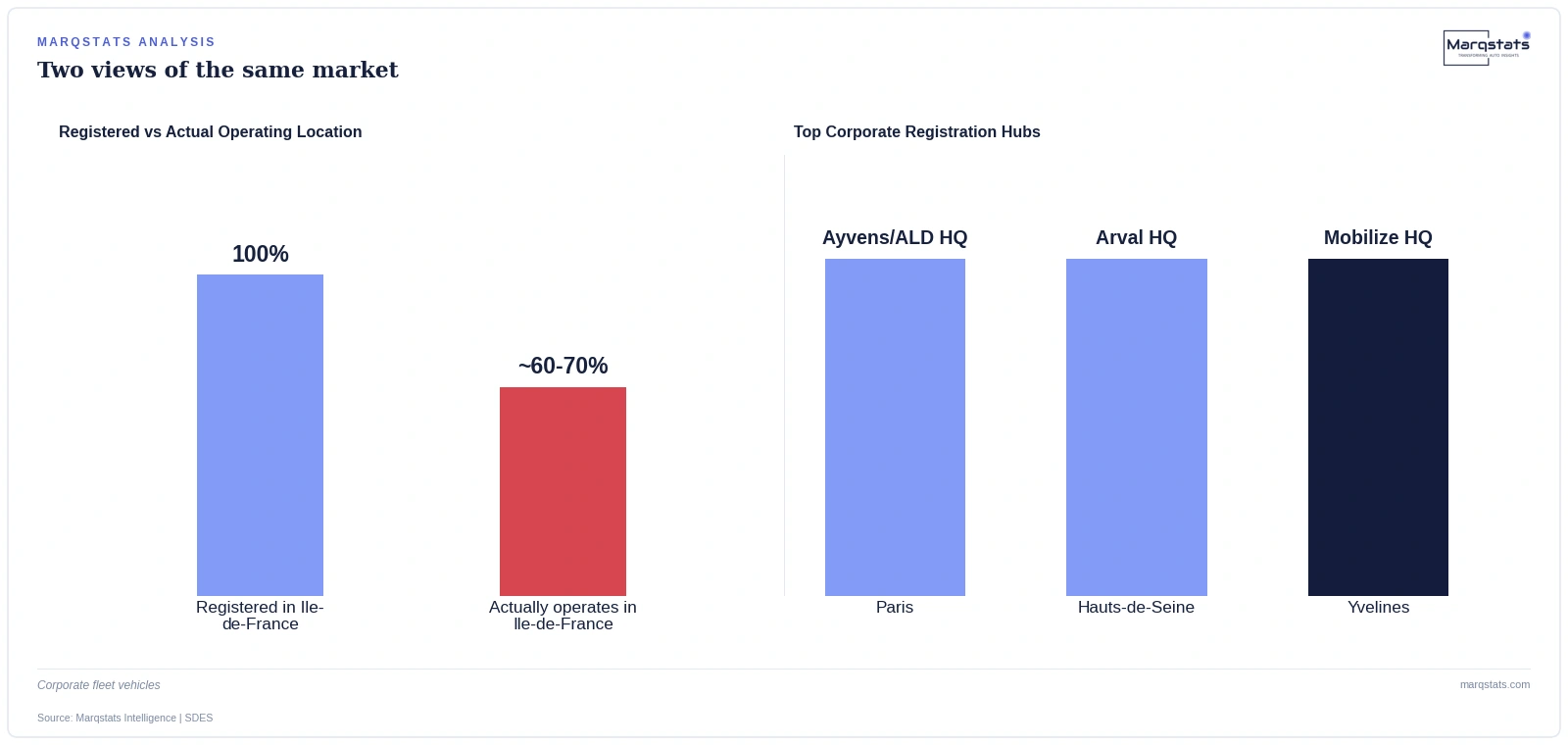
Major leasing companies and financial captives — Ayvens/ALD Automotive, Arval, Mobilize — register their corporate vehicle fleets through central administrative offices located in Paris, Hauts-de-Seine and Yvelines. Every one of those vehicles counts fully toward Île-de-France's statistical share, regardless of where the vehicle actually spends its working life.
Where Those Vehicles Actually Drive
An estimated 30% to 40% of those centrally-registered vehicles' actual operational mileage, and the maintenance intervals that follow directly from it, happen across provincial distribution centers, regional hubs, and peri-urban corridors throughout the rest of France — not in Île-de-France at all.
A Named Comparison: Why This Matters More Than a Minor Statistical Footnote
This isn't a small rounding difference. If even the low end of that 30% to 40% estimate holds, a meaningful share of what looks like Île-de-France's maintenance demand is actually distributed across other regions entirely — provinces whose own registration shares understate the real service volume happening within their borders because the vehicles generating that demand are administratively counted somewhere else.
How This Compares to Other Regions in the Data
Auvergne-Rhône-Alpes, the second-largest regional share at 15.2%, doesn't carry the same corporate-registration distortion to nearly the same degree, since it lacks the concentration of national leasing-company headquarters that Paris and its surrounding departments host. That makes it a genuinely more reliable read of where regional EV maintenance demand actually sits.
What Workshops and Suppliers Should Actually Do With This
The practical implication: a workshop network or parts distributor using raw regional registration data to plan capacity should treat Île-de-France's headline share as a meaningful overstatement, and should weight provincial hub locations — where corporate fleet vehicles actually spend their operating hours — more heavily than registration statistics alone would suggest.
Why This Pattern Is Unlikely to Disappear
Corporate fleet registration through centralized administrative offices is a durable structural feature of how leasing companies operate, not a temporary reporting quirk. Anyone planning multi-year EV service infrastructure investment around French regional data should build this distortion into their model as a standing feature, not a one-time correction.