A Number That Explains Why Independent Garages Are Consolidating
It's worth breaking this figure into its actual components before treating it as a single abstract barrier to entry.
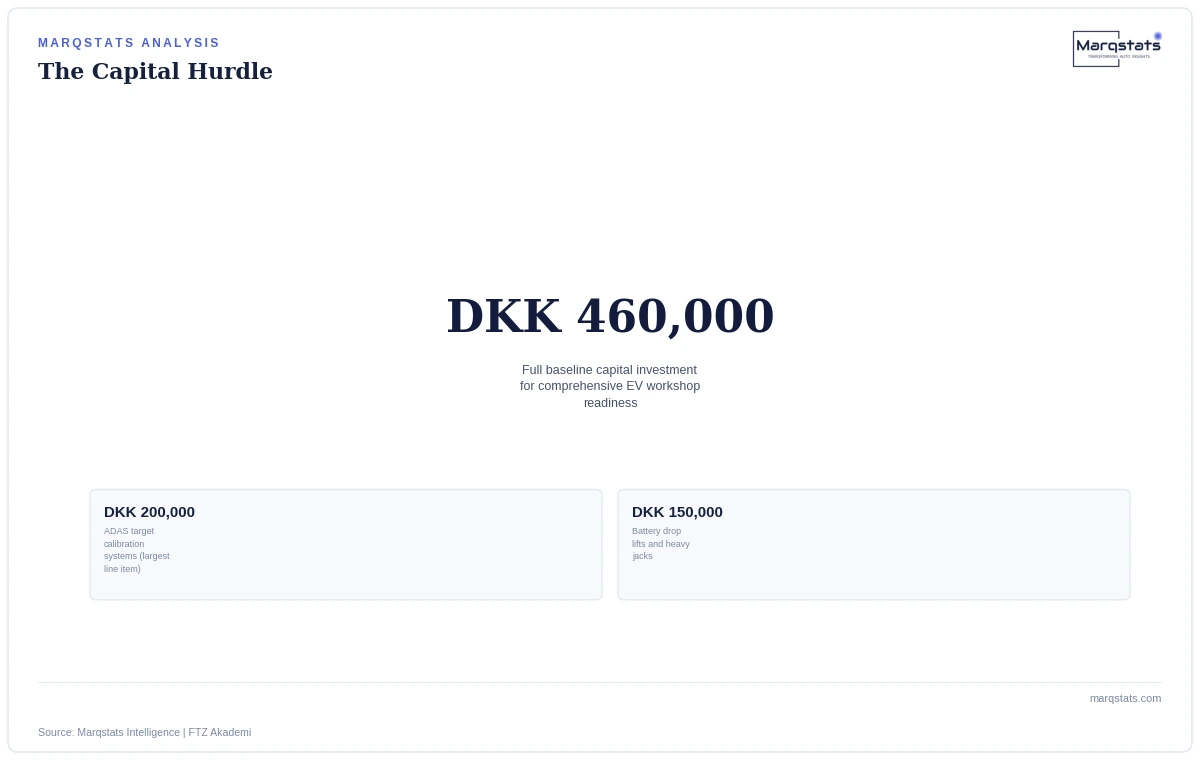
Independent workshops in Denmark face a genuine capital hurdle to offer comprehensive electric vehicle servicing -- not a vague investment, but a specific, itemized total that helps explain why smaller garages are increasingly folding into formal workshop networks rather than upgrading independently.
The Four Line Items That Add Up
None of these categories is optional if a workshop wants to service the full range of EV repair work rather than a narrow subset.
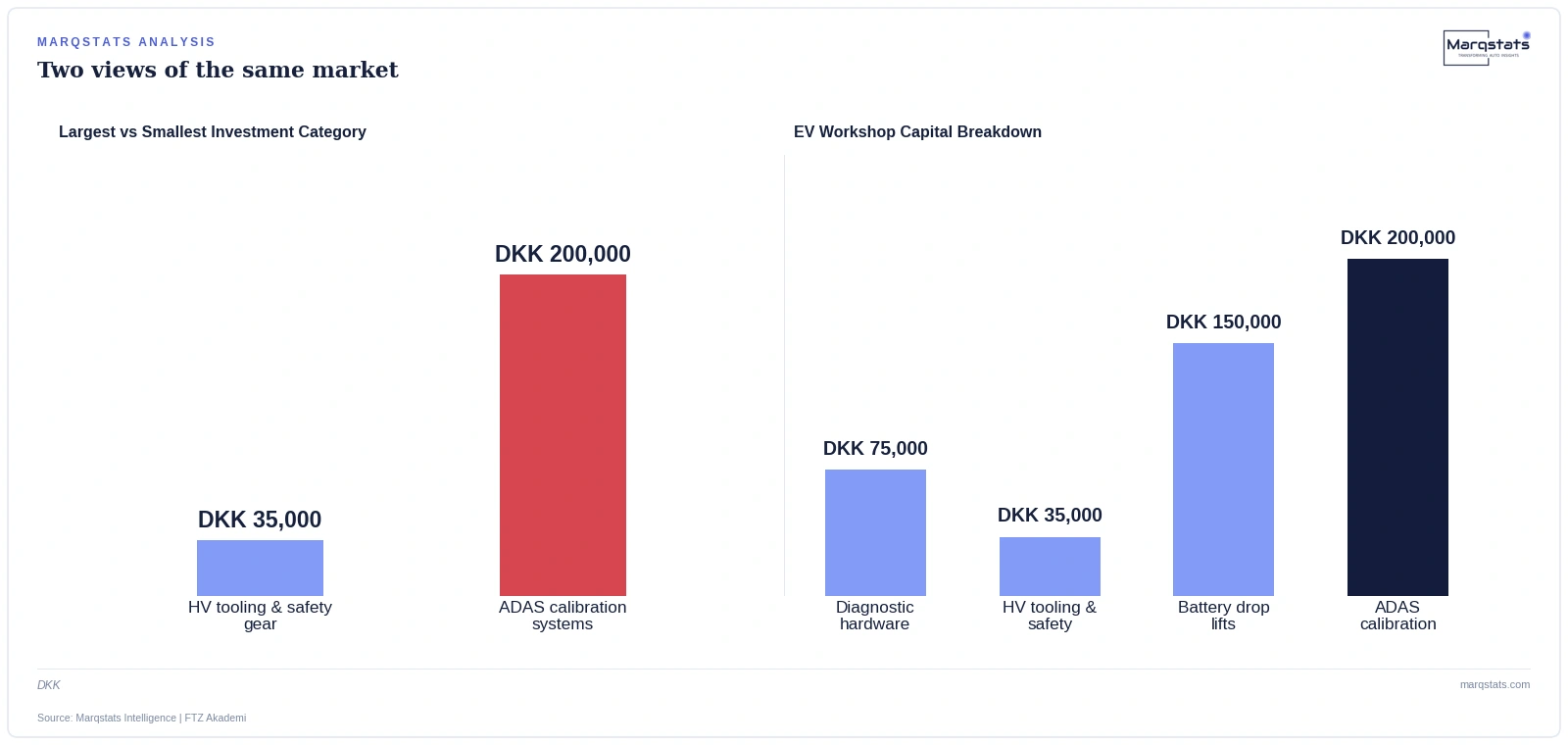
Diagnostic hardware and OEM access -- multi-brand scan tools and secure gateway access -- runs DKK 75,000. High-voltage tooling and safety gear, including IEC 60900 insulated hand tools and 1,000V-rated multimeters, adds DKK 35,000. Battery drop lifts and heavy jacks for underfloor high-voltage battery removal run DKK 150,000. ADAS target calibration systems -- digital calibration frames and radar reflector targets needed to recalibrate sensors after any suspension or steering work -- are the single largest line item at DKK 200,000.
Why the ADAS Requirement Catches Workshops Off Guard
This is the category that surprises garages evaluating the investment for the first time, since it isn't obviously connected to 'EV servicing' at first glance.
Replacing suspension or steering components -- exactly the repair category this market's own inspection data shows is disproportionately common on certain EV platforms -- requires recalibrating forward-facing cameras and radar sensors before a vehicle can legally return to the road. A workshop that invests in high-voltage tooling but skips ADAS calibration capability still can't complete a large share of routine EV chassis repair work.
A Named Comparison: Why This Investment Increasingly Concentrates in Networks
The scale of this hurdle explains a specific structural shift already visible in the competitive landscape.
A DKK 460,000 hurdle is a genuinely different proposition for a single independent garage than for a workshop network able to spread that cost across dozens of affiliated locations. That's precisely why FTZ's 1,000-plus affiliated workshop model and franchise networks like AutoMester E+ have scaled so effectively -- they let individual garages access certified EV capability without each one independently clearing the full capital bar alone.
Why This Barrier Should Persist Rather Than Fall
Nothing about the underlying equipment categories suggests this cost structure will ease meaningfully as the technology matures further.
These aren't early-technology costs likely to fall sharply as EVs become more common -- diagnostic hardware, high-voltage safety equipment, and ADAS calibration systems are all tied to genuine physical and regulatory requirements that scale with vehicle complexity, not with market maturity.
What This Means for Independent Garages
The practical takeaway: independent workshop owners should evaluate joining an established franchise or wholesale-distributor network specifically before attempting to clear this capital hurdle alone, given how directly the economics favor shared infrastructure over individual investment at this scale.