A Right That Should Open the Market
It's the kind of gap between legal theory and market reality that's easy to miss unless you look specifically for the domestic rule sitting underneath the EU-level protection.
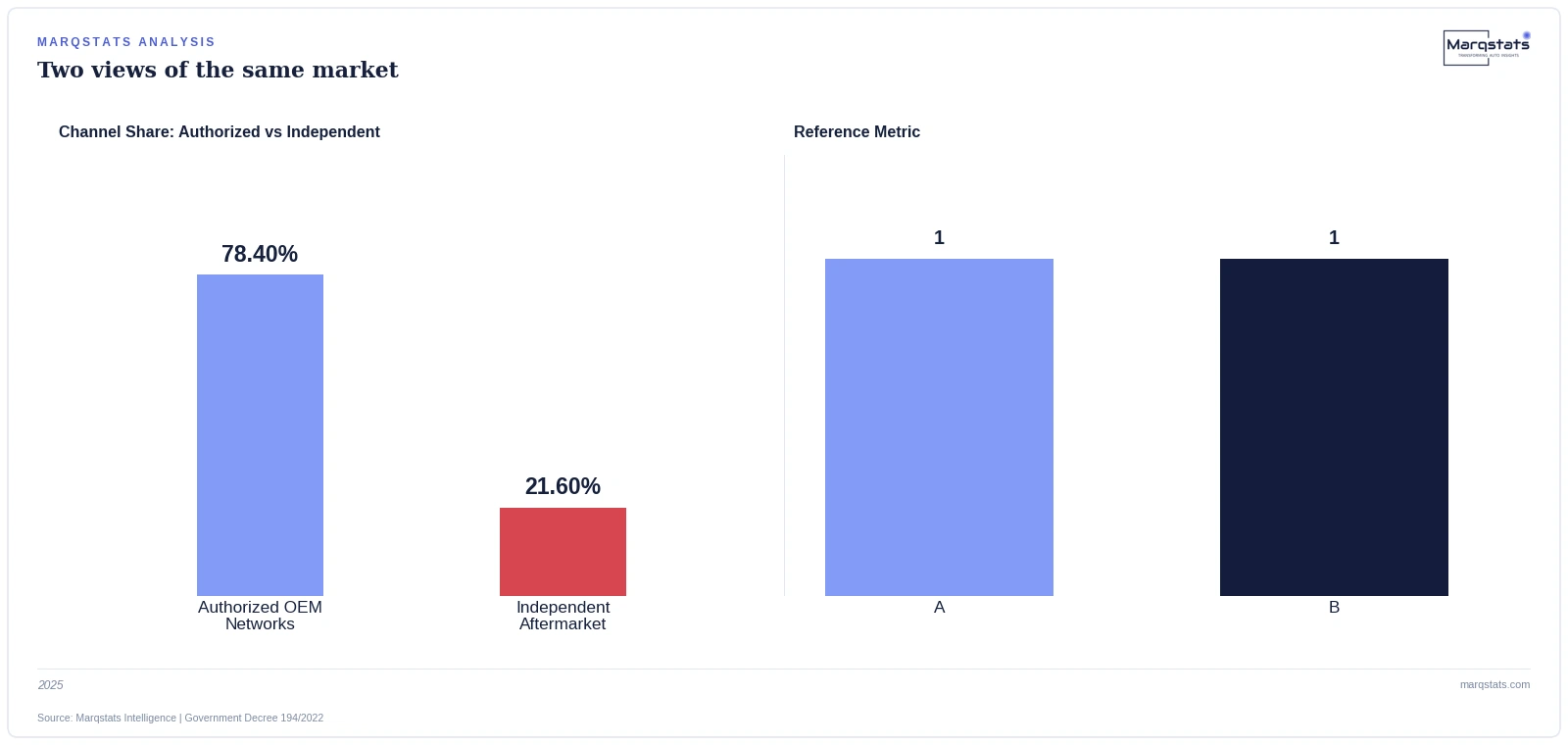
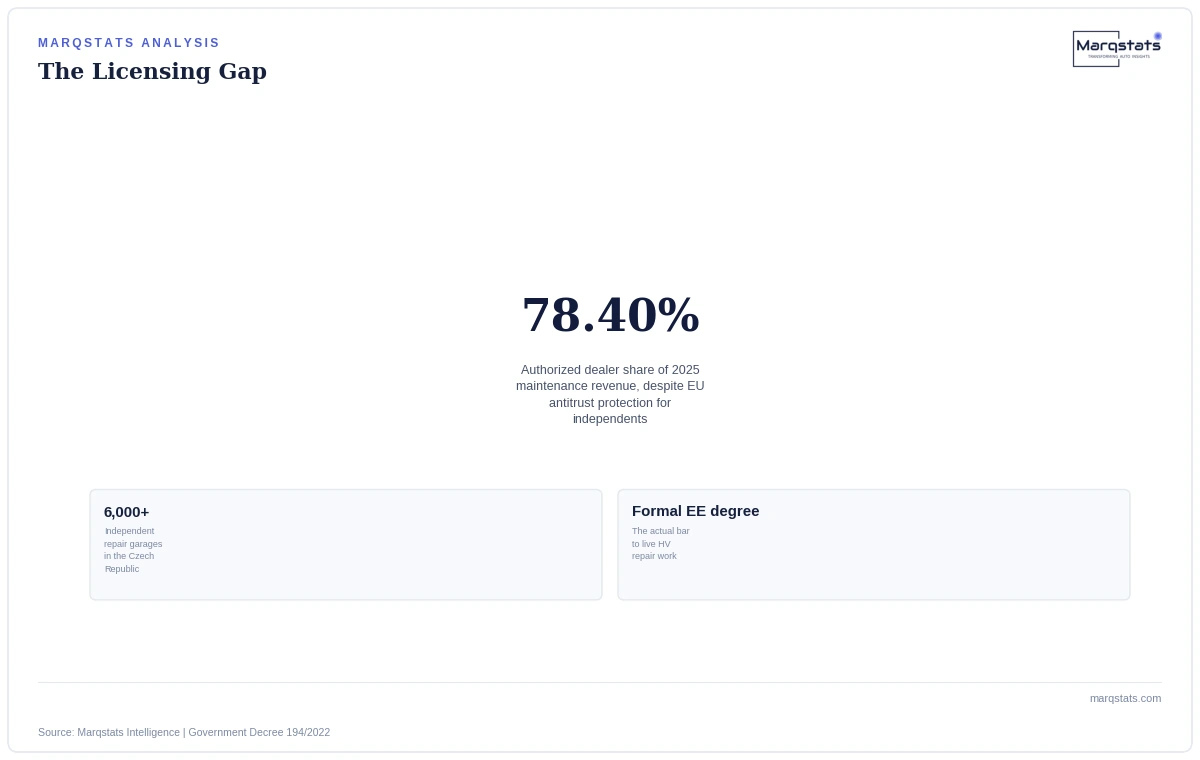
In brief: the EU's Motor Vehicle Block Exemption Regulation gives independent Czech workshops a clear legal right to service in-warranty electric vehicles, protecting them from manufacturers who might otherwise lock all warranty work inside dealer networks. That right exists. Authorized dealers still control 78.40% of the market anyway.
The Domestic Rule Doing the Real Work
This is the rule that actually determines market share on the ground.
Government Decree No. 194/2022 Coll. requires anyone performing live high-voltage repair work -- de-energizing systems, opening battery enclosures, replacing internal modules -- to hold Section 6 "Qualified Electrician" certification. That credential demands formal vocational education in electrical engineering, not just automotive training.
Why That's a Genuinely Different Bar
Recognizing this distinction changes how independent workshops should actually plan their certification investment.
The EU protects your right to choose independent repair. Domestic law decides who's qualified to actually do it.
— Marqstats Analyst Team
Most automotive certifications build on top of existing mechanical training -- additional hours, an additional exam. Section 6 asks for a separate professional credential most practicing mechanics were never on a path toward. That's not a training gap workshops can close with a weekend course; it's a career-track gap.
A Named Comparison: Why EU Antitrust Protection Can't Fix This
The Motor Vehicle Block Exemption Regulation solves a specific problem: manufacturers using warranty terms to lock out independent competition. It has no mechanism to solve a genuinely different problem: independent workshops lacking the domestic professional credential to legally perform the work in the first place. The two regulations operate on entirely different layers, and only one of them is actually constraining independent market share today.
Why This Bottleneck Won't Resolve Quickly
Formal electrical engineering education takes years, not weeks, meaning this specific constraint is likely to persist well past the 2028 window when the underlying research shows the first major wave of vehicles exiting factory warranty and independent demand genuinely accelerating.
That gap between legal theory and licensing reality is the core takeaway here.
What This Means for Independent Workshops
The practical takeaway, put plainly: independent workshops serious about capturing EV service volume need to budget for at least one technician's path to Section 6 certification as a genuine strategic investment, not a routine training line item -- and should expect this specific bottleneck, not warranty policy, to be the real constraint on growth through 2028.