
A Dominant Share That's Actually Understated
That's an unusual direction for a regional distortion to run, and it's worth understanding exactly why before drawing conclusions from the headline number alone.
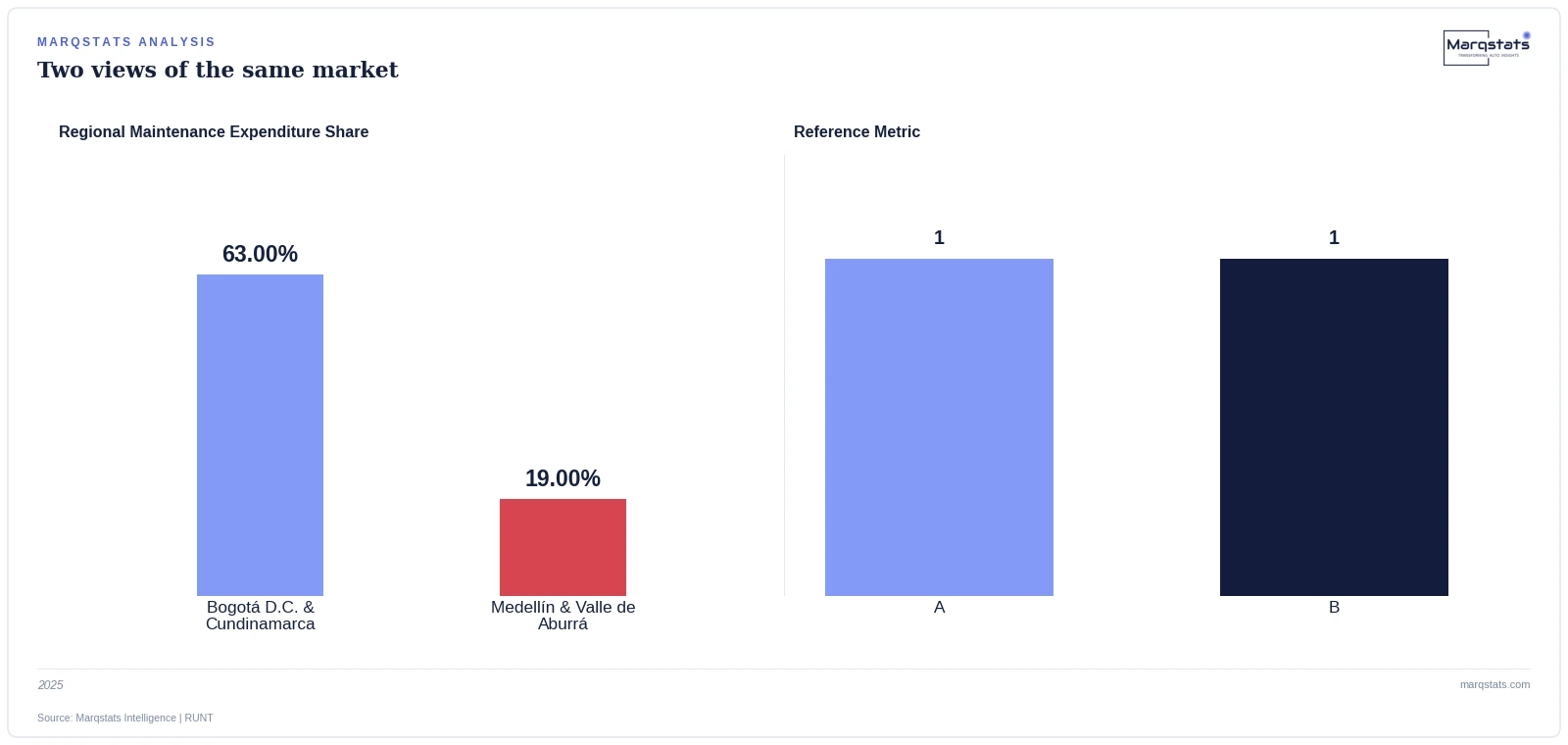
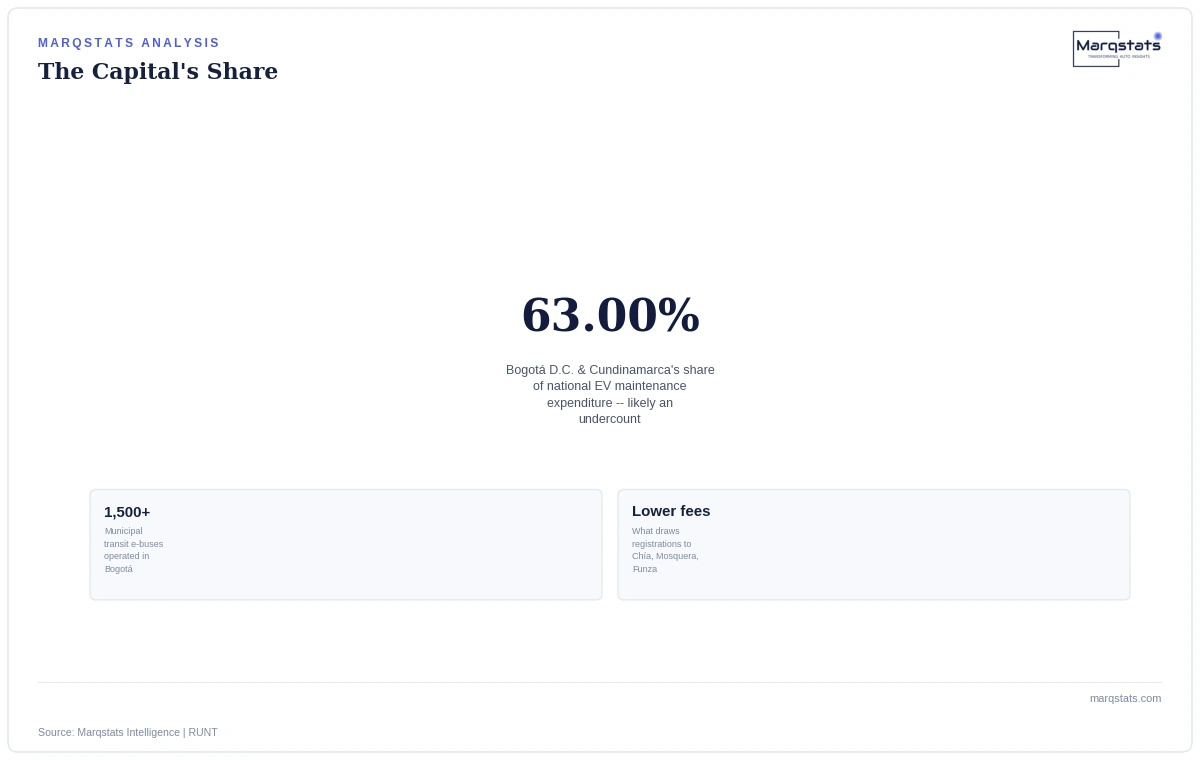
In brief: Bogotá D.C. and the Cundinamarca corridor already capture 63.00% of Colombia's national EV maintenance expenditure -- the clear national leader by a wide margin. And the underlying research indicates even that dominant figure understates the capital's true share of actual servicing activity.
Why Neighboring Municipalities Pull Registrations Away
This is an entirely ordinary business decision at the individual company level, with a genuine cumulative effect on national statistics.
Municipalities bordering Bogotá -- Chía, Mosquera, Funza and La Calera among them -- charge substantially lower vehicle registration fees and municipal property taxes than Bogotá D.C. itself. Corporate leasing providers and commercial fleet managers register vehicles in these lower-cost municipalities as a routine cost-saving decision.
Where the Cars Actually Get Serviced
That distinction between where a vehicle is registered and where it is actually driven and repaired matters enormously here.
Registered in Chía. Serviced in Bogotá.
— Marqstats Analyst Team
Despite the Cundinamarca registration, these vehicles operate and get maintained primarily within the Bogotá capital district -- meaning Bogotá's true maintenance demand runs even higher than its already-dominant 63.00% national share suggests.
A Named Comparison: Why This Compounds Rather Than Just Duplicates Other Markets' Patterns
Recognizing which direction a given market's distortion runs changes how the headline number should actually be read.
Many countries in this coverage set show a capital-city registration distortion where corporate leasing headquarters inflate one region's figures. Bogotá's case is structurally the reverse of that same mechanism: instead of vehicles registering in the capital while operating elsewhere, they're registering just outside the capital while actually operating inside it. The effect on the data is the opposite direction -- it means Bogotá's own already-leading number is an undercount, not an overcount.
Why This Effect Is Unlikely to Reverse
That structural stability is worth planning around directly.
Municipal fee-setting decisions in neighboring Cundinamarca towns are made independently of any single national policy, meaning there is little structural reason to expect this registration-versus-circulation gap to narrow as the fleet continues expanding through 2030.
What This Means for Workshop and Capacity Planning
The practical takeaway: workshop investors and parts distributors should treat Bogotá's 63.00% figure as a conservative floor rather than a precise ceiling, and should weight actual depot and dealership site planning toward the capital district itself even more heavily than the headline regional data alone would suggest.