The Company That Made the Battery, Now Fixing It Too
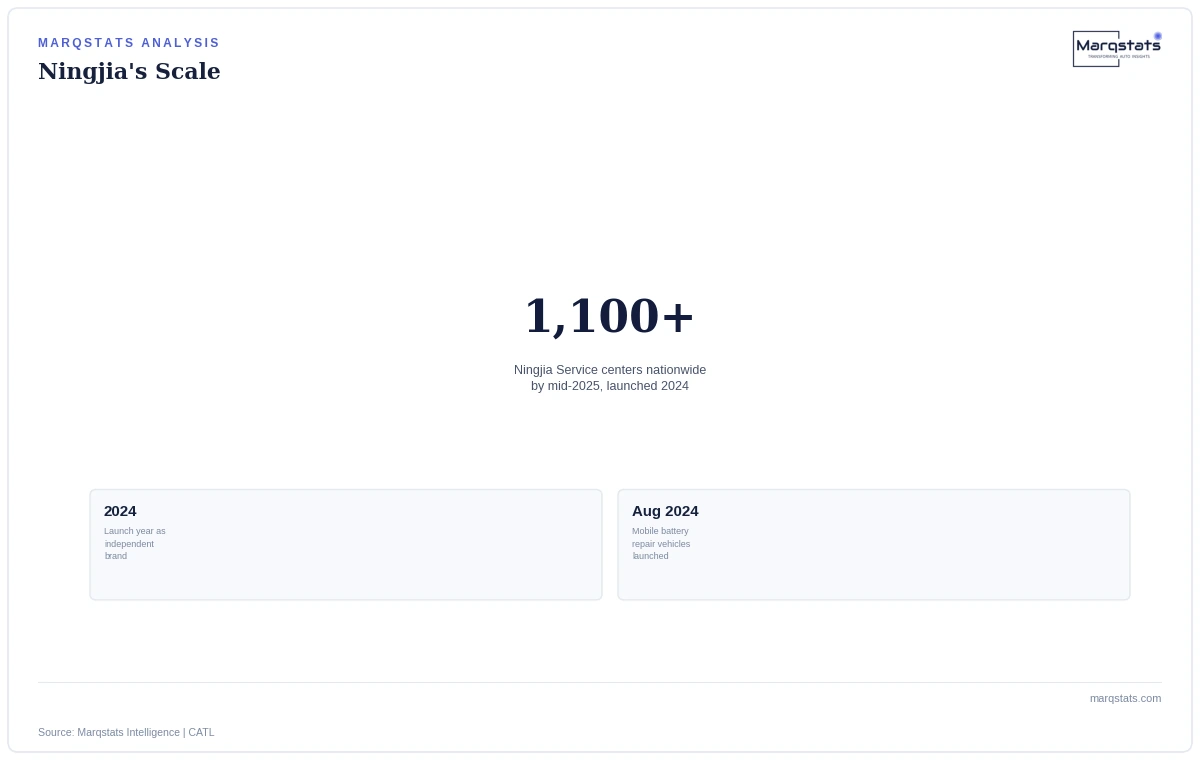
This isn't a minor pilot program either — 1,100-plus centers nationwide in under two years represents genuinely serious capital commitment and operational scale, the kind of buildout that signals CATL sees this as a durable business line, not an experiment.
Contemporary Amperex Technology Co., Ltd. — CATL, the battery manufacturer supplying much of China's EV fleet — launched Ningjia Service in 2024 as an independent aftersales brand. By mid-2025, it had built out more than 1,100 service centers nationwide.
That's a genuinely unusual move. Battery manufacturers typically sell cells to automakers and stop there. CATL didn't stop there.
What Ningjia Actually Does
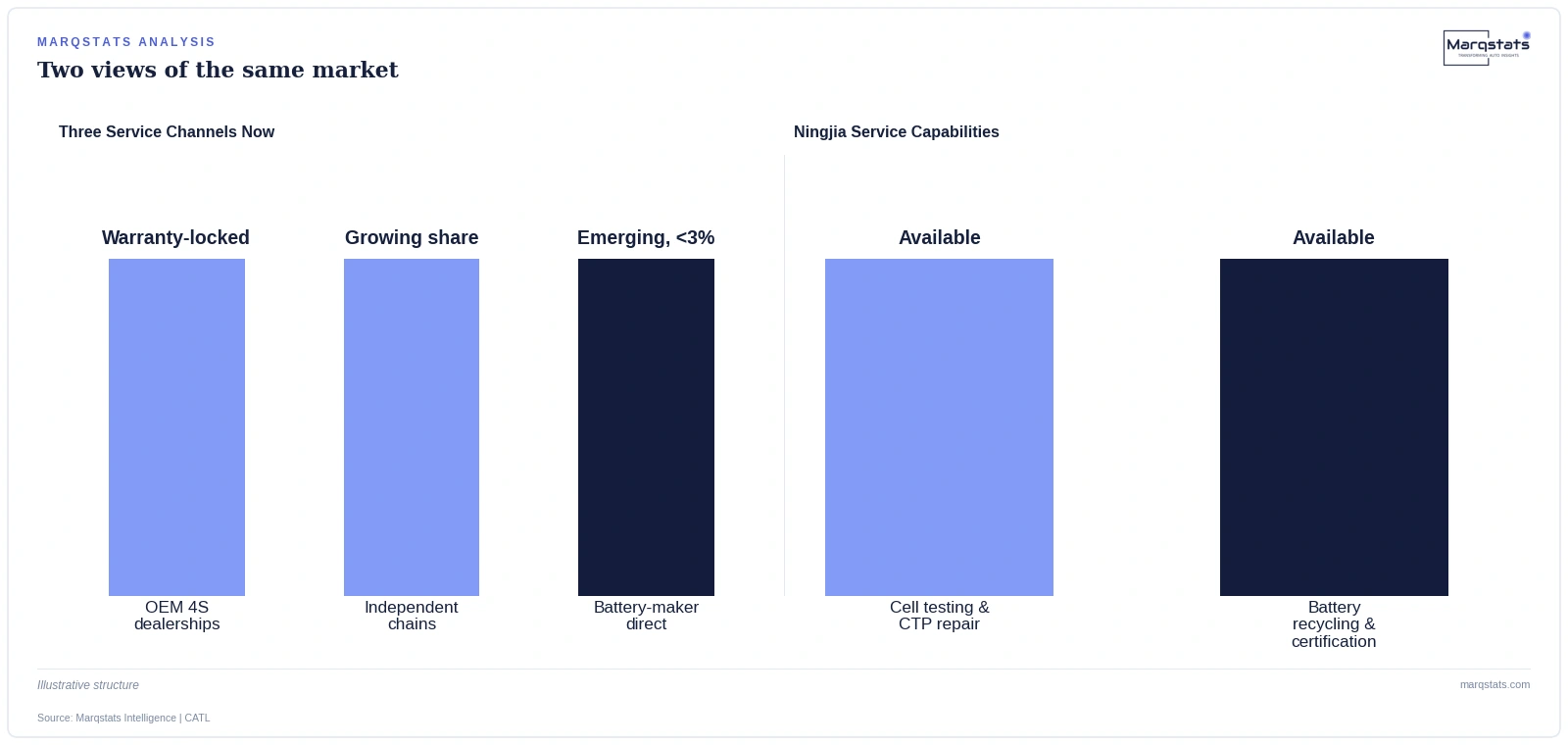
Ningjia operates a multi-brand battery diagnostic and component repair network, offering cell testing, Cell-to-Pack structural repair, battery recycling, and secondary safety certification. In August 2024, it went further, launching mobile commercial EV battery repair vehicles to service municipal bus fleets and logistics hubs directly on site.
Why This Matters for EV Owners Specifically
For an EV owner, this creates a genuine alternative that didn't really exist before: access to certified battery maintenance outside franchised 4S dealerships entirely, while still maintaining the safety certifications and operational integrity a battery system needs. Previously, meaningful battery service essentially meant going back to the OEM dealer network — CATL-equipped vehicles now have a credible independent-adjacent option.
A Named Comparison: How This Differs From Tuhu's Independent Model
Independent platform Tuhu Car Care built its battery repair capability by negotiating direct technical authorizations with individual automakers and reverse-engineering what it couldn't get authorized. CATL doesn't need to negotiate that access at all — it manufactured the battery in the first place, so it already holds the deepest possible technical knowledge of the product it's now servicing. That's a structurally different, arguably stronger starting position than any independent platform can replicate.
Why Other Battery Makers Are Likely to Follow
CATL's Ningjia is currently the clearest example of this pattern, but the underlying logic — a battery manufacturer already holds unmatched product knowledge, existing manufacturing relationships, and genuine incentive to protect its brand's reputation for safety — applies just as well to other major Chinese battery suppliers. This looks like a genuinely replicable structural shift, not a one-company anomaly.
What This Means for the Broader Service Market
The practical implication: China's EV service market is no longer a clean two-way split between OEM dealerships and independent chains. A third category — battery-manufacturer-direct service — is emerging with a genuinely distinct competitive advantage neither existing channel can easily match, and it's worth tracking as its own category rather than folding it into "independent aftermarket" statistics that could otherwise obscure its own distinct competitive dynamics.