A Recycling Rule Struck Down Before It Started
Chile was weeks from starting a national used-oil collection scheme. Then its environmental court cancelled the rule that created it.
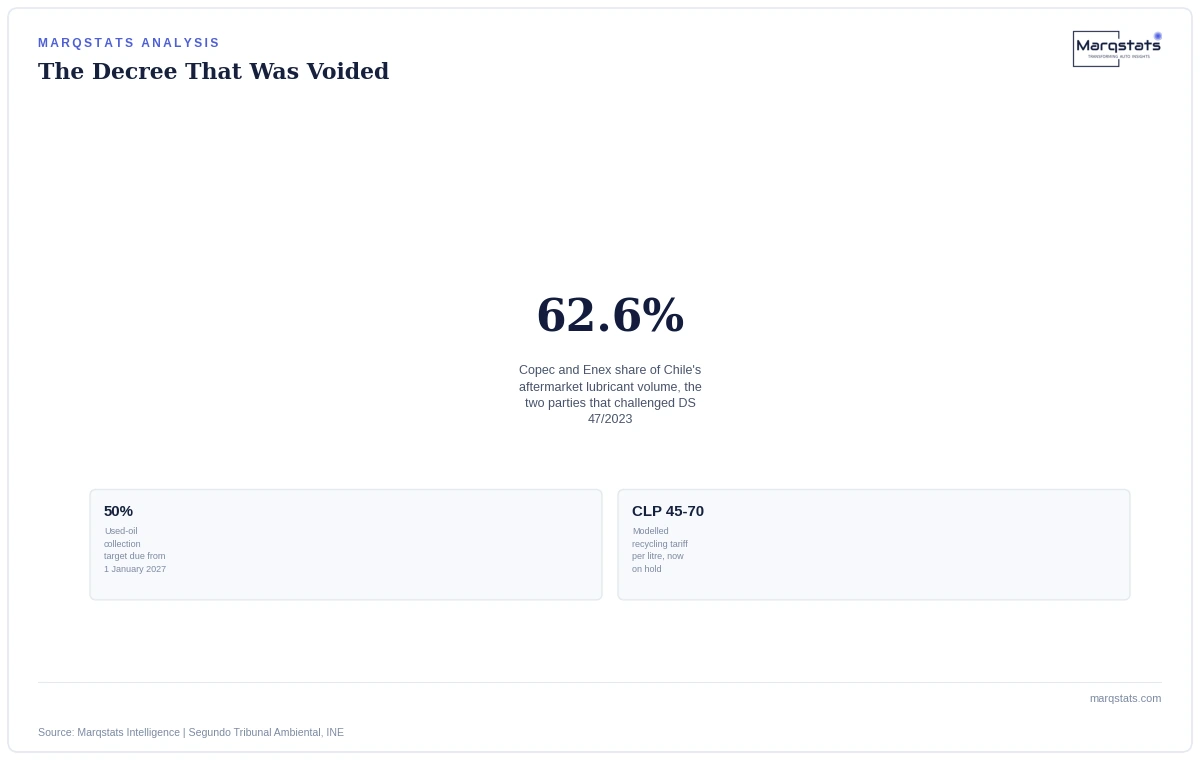
On 7 August 2026 the Segundo Tribunal Ambiental declared Decreto Supremo 47/2023 entirely void. The decree, published on 11 November 2024, set collection and recovery targets for used lubricating oil under Chile's Extended Producer Responsibility law. The first target, 50% of used oil, was due from 1 January 2027, rising to 90% by Year 12.
Who Brought the Challenge
The challengers were the two biggest names in the lubricants business.
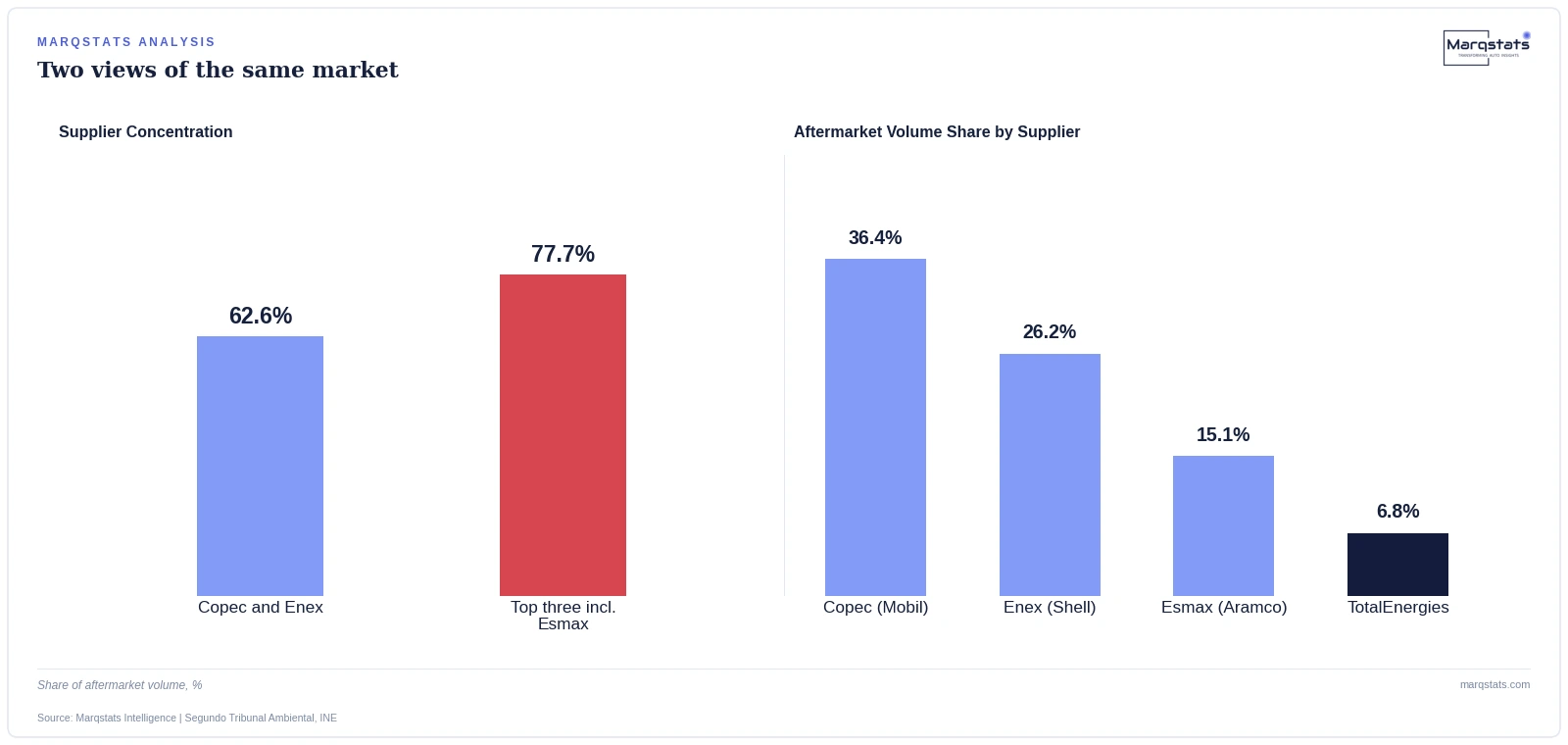
Copec, with 36.4% of aftermarket volume, and Enex, the Shell distributor with 26.2%, filed the legal challenges. Together they supply 62.6% of the oil sold in Chile after a vehicle is bought, and they sit inside a top three, with Esmax, that holds 77.7%.
What the Court Found
The ruling turned on structure, not on the size of the targets.
The tribunal found that the decree's tracking rules made individual compliance systems practically impossible, although the law gives producers a right to choose between collective and individual systems. It also found that the decree gave downstream parts distributors and retailers the power to recover used oil independently, in conflict with the underlying law. The Environment Ministry must now redraft the decree. The source does not confirm whether the ruling has been appealed.
A Named Comparison: How Much Money Was at Stake per Litre
The modelled recycling tariff was small compared with the price of the product.
The research modelled a charge of 45 to 70 pesos per litre of virgin lubricant. At 939.85 pesos per dollar, that is about USD 0.05 to 0.07 a litre, or roughly 0.7% to 1.1% of the USD 6.97 average price (Marqstats arithmetic). The fee is small. The court's reasoning was about who may organise and run collection, and that is a question of control.
What Happens Next
The rules are paused, not abandoned.
The Base Scenario expects a revised decree by mid-2027 with calibrated targets from early 2028. In Accelerated Transformation, a replacement decree arrives in early 2027 and restores the 50% baseline. In Macroeconomic Stagnation, the gap runs past 2028. Those paths lead to 2030 values of USD 1,387.50 million, USD 1,448.95 million and USD 1,280.10 million.
What This Means for Blenders and Workshops
The practical takeaway: blenders should use the pause to build traceable collection with certified hazardous-waste handlers, since any redraft will still require it, and lubricentro owners should formalise disposal agreements now.