A Well-Documented Advantage, Almost Everywhere
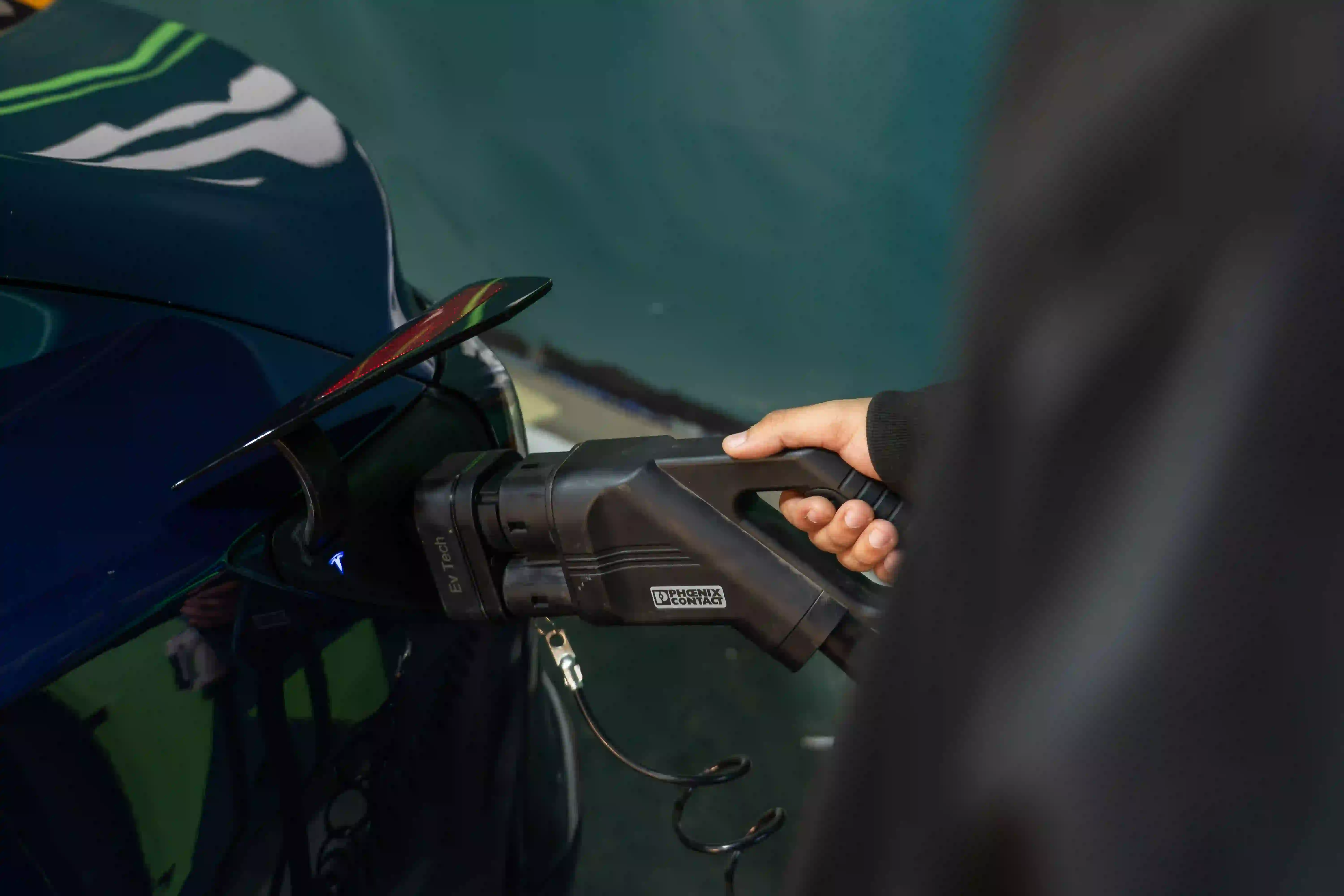
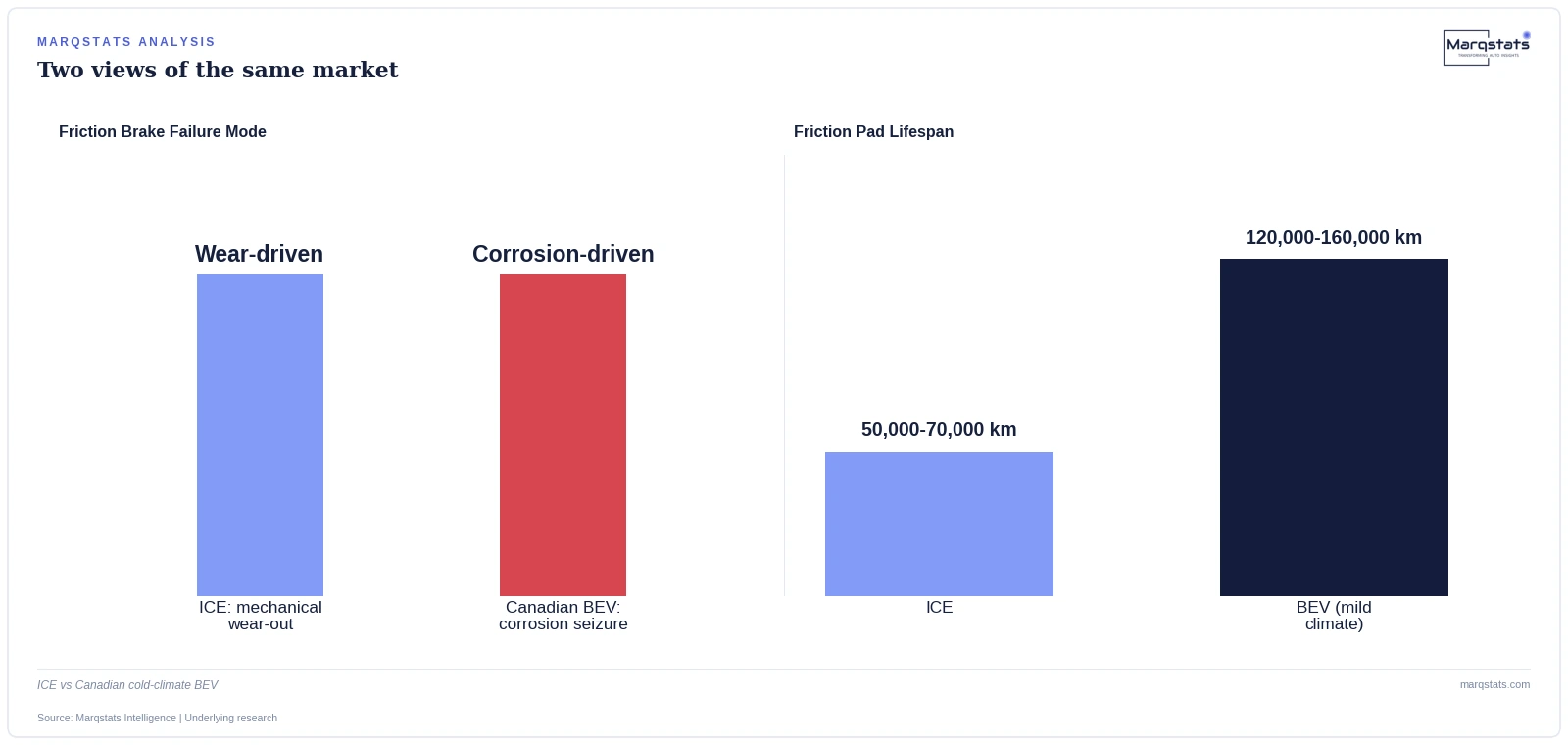
Regenerative braking is one of the most consistently cited EV maintenance advantages worldwide. Capturing kinetic energy through the drive motor instead of burning it off as heat, it can extend friction brake pad life well past 120,000 kilometers in mild climates. Read only that fact, and a workshop might reasonably expect Canadian EV brake service demand to be shrinking too.
It isn't. If anything, it's turned into more predictable, recurring work.
The Number Behind the Reversal
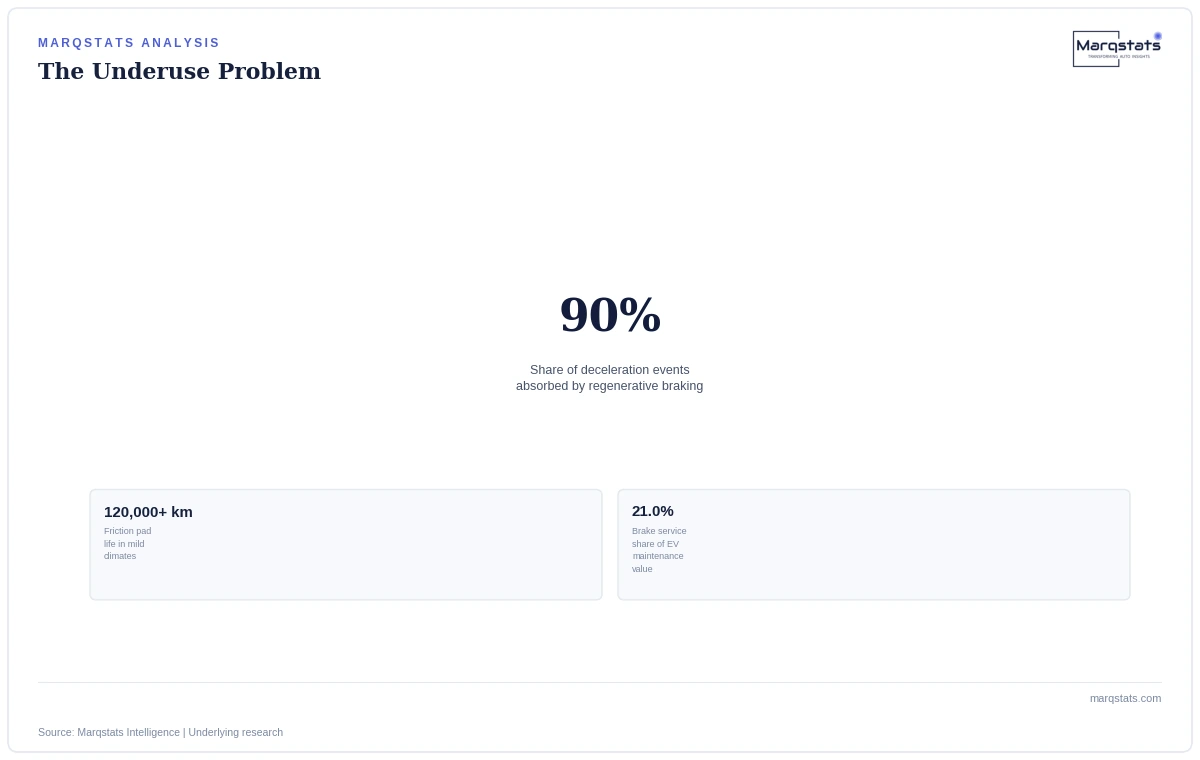
Regenerative braking absorbs up to 90% of routine deceleration events in Canadian EVs. That's genuinely good for pad longevity. It's also exactly the problem.
Why Underused Brakes Are a Problem in Canada Specifically
Friction pads rarely engage with enough force or duration to generate the heat needed to evaporate accumulated road salt brine from Canadian winter de-icing operations. Without that heat cycle, moisture and salt sit on the components. The result is galvanic corrosion — slide pins that seize, calipers that stop moving freely, cast-iron rotors that pit unevenly — a failure mode that has nothing to do with mechanical wear and everything to do with underuse in a corrosive environment.
What This Means for a Workshop's Service Calendar
Canadian EV brake service doesn't disappear. It changes shape. Instead of a wear-driven replacement scheduled around mileage, it becomes an annual preventive teardown, cleaning and lubrication procedure — representing 21.0% of total EV maintenance value, the second-largest service category in the entire market.
A Named Comparison: Why Mild-Climate Data Doesn't Transfer
This is a genuinely important caveat for anyone applying EV maintenance benchmarks across markets. Cost and service-interval data from mild-climate regions — where extended pad life really does translate into less frequent brake work — simply doesn't transfer to Canada's road-salt operating environment. A workshop or fleet operator planning around generic EV brake-service assumptions imported from a warmer climate would genuinely underestimate how often Canadian EVs actually need attention.
The Scale of Work This Represents
Multiply that annual teardown requirement across Canada's active ZEV fleet, already past 685,000 vehicles and growing toward a projected 2.48 million by 2029, and the genuine labor-hour demand this single service category represents becomes clear -- this is not a minor edge case a workshop can afford to overlook when planning technician capacity.
What This Means for Workshops and Fleet Operators
The practical takeaway: Canadian workshops servicing EVs should budget technician time for annual brake teardown and corrosion inspection as a standing line item, not an occasional wear-driven job — and should treat this specifically as a Canadian climate consideration, not a universal EV characteristic.