The Number BYD Wants You to See
This is a broader pattern worth naming, not a criticism specific to BYD: any manufacturer publishing a savings calculator has a genuine commercial incentive to headline the largest, most favorable single number, even when that manufacturer is being honest and transparent about the offsetting costs elsewhere in the same tool, as BYD's appears to be here.
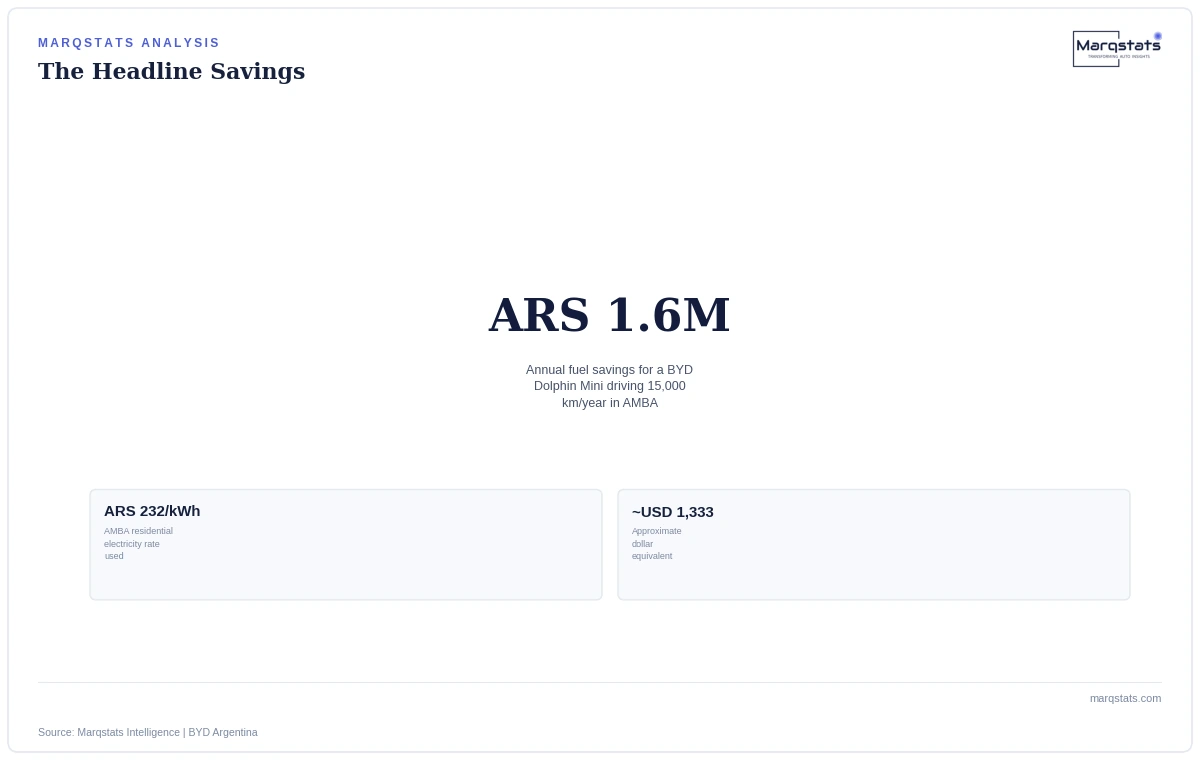
In September 2026, BYD Argentina launched an interactive digital calculator letting drivers compare EV and ICE operating costs directly. Plug in a Dolphin Mini driving 15,000 km a year at AMBA's residential electricity rate of ARS 232 per kWh, and the tool shows ARS 1.6 million — roughly USD 1,333 — in annual fuel savings versus a comparable gasoline car.
That's a genuinely large number, and it's a real one. It's also not the complete picture, and BYD's own supporting materials say so.
The Cost the Calculator Doesn't Headline
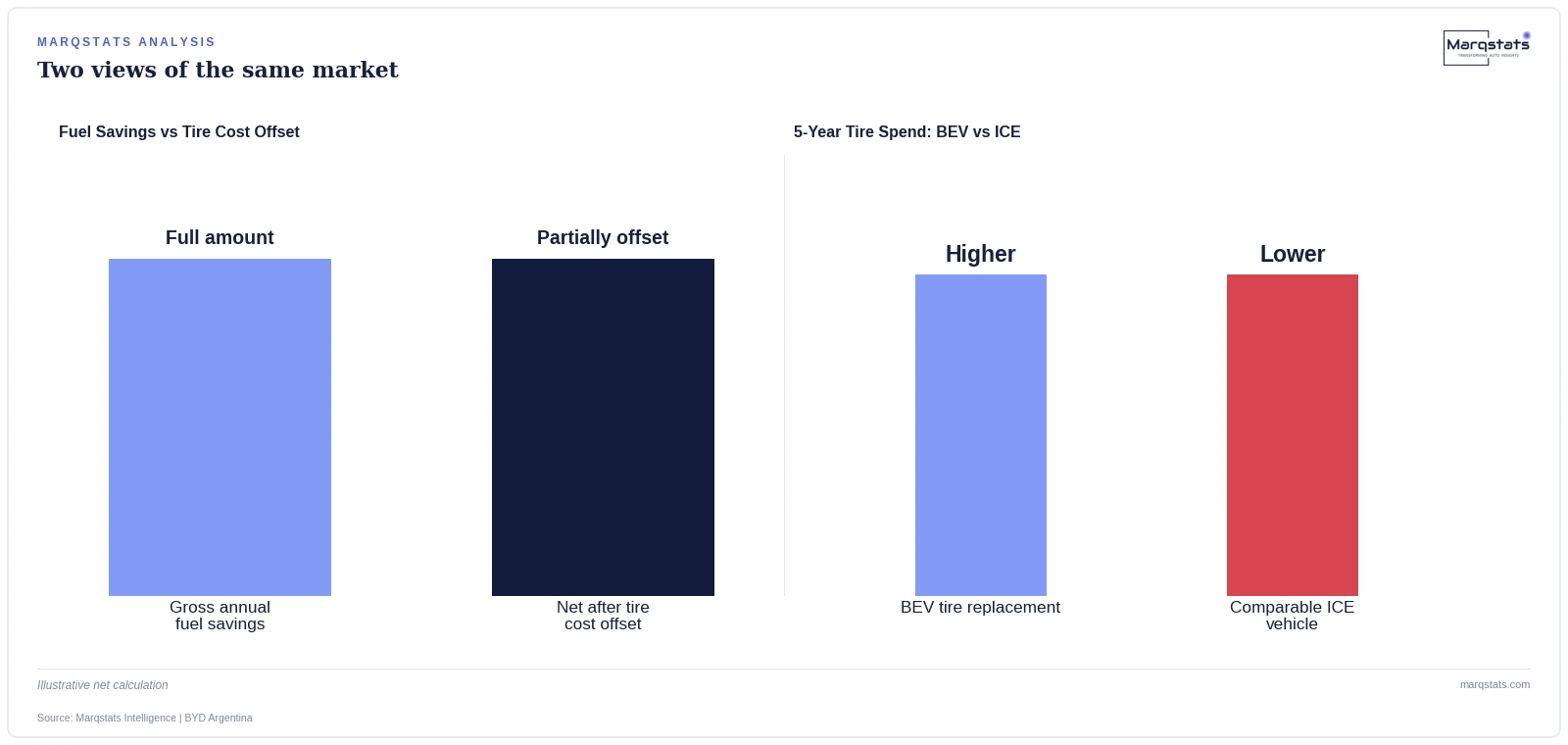
Electric vehicles deliver instant torque and typically carry more curb weight than comparable combustion cars, due to battery mass. Both factors accelerate tire wear meaningfully. BYD's own disclosure acknowledges this directly: specialized EV tire replacement costs partially offset the fuel savings the headline calculator number shows.
Why This Detail Matters More Than It Sounds
This isn't a reason to distrust the fuel-savings figure — ARS 1.6 million a year is real money, and it's calculated from real, disclosed electricity rates. It's a reason to think about EV ownership economics as a net calculation, not a single headline number. The genuine question for a prospective buyer isn't "how much do I save on fuel," it's "how much do I save after fuel savings and increased tire costs are both accounted for."
What the Full Picture Actually Looks Like
Argentina's own market data offers a useful benchmark here: across the broader electrified fleet, five-year tire replacement expenditure runs measurably higher for BEVs than for comparable ICE vehicles specifically because of this torque-and-weight dynamic — even as total five-year ownership costs still come out ahead for the EV once routine maintenance savings are included alongside fuel.
A Named Comparison: How This Compares Across Vehicle Segments
The tire-cost offset isn't unique to the Dolphin Mini specifically — it's a structural feature of battery-electric vehicles generally, driven by the same instant-torque and curb-weight dynamics regardless of manufacturer or model. Any EV savings calculation that omits this factor, from any brand, is telling an incomplete story by the same mechanism.
The Practical Lesson for Prospective EV Buyers
Before treating any single savings-calculator number as the full story, ask what it does and doesn't include. BYD's own calculator, to its credit, is transparent that tire costs run higher — the number worth internalizing isn't the headline fuel-savings figure alone, but the net figure after that offset is subtracted.