
A Penetration Rate That Leads the Country
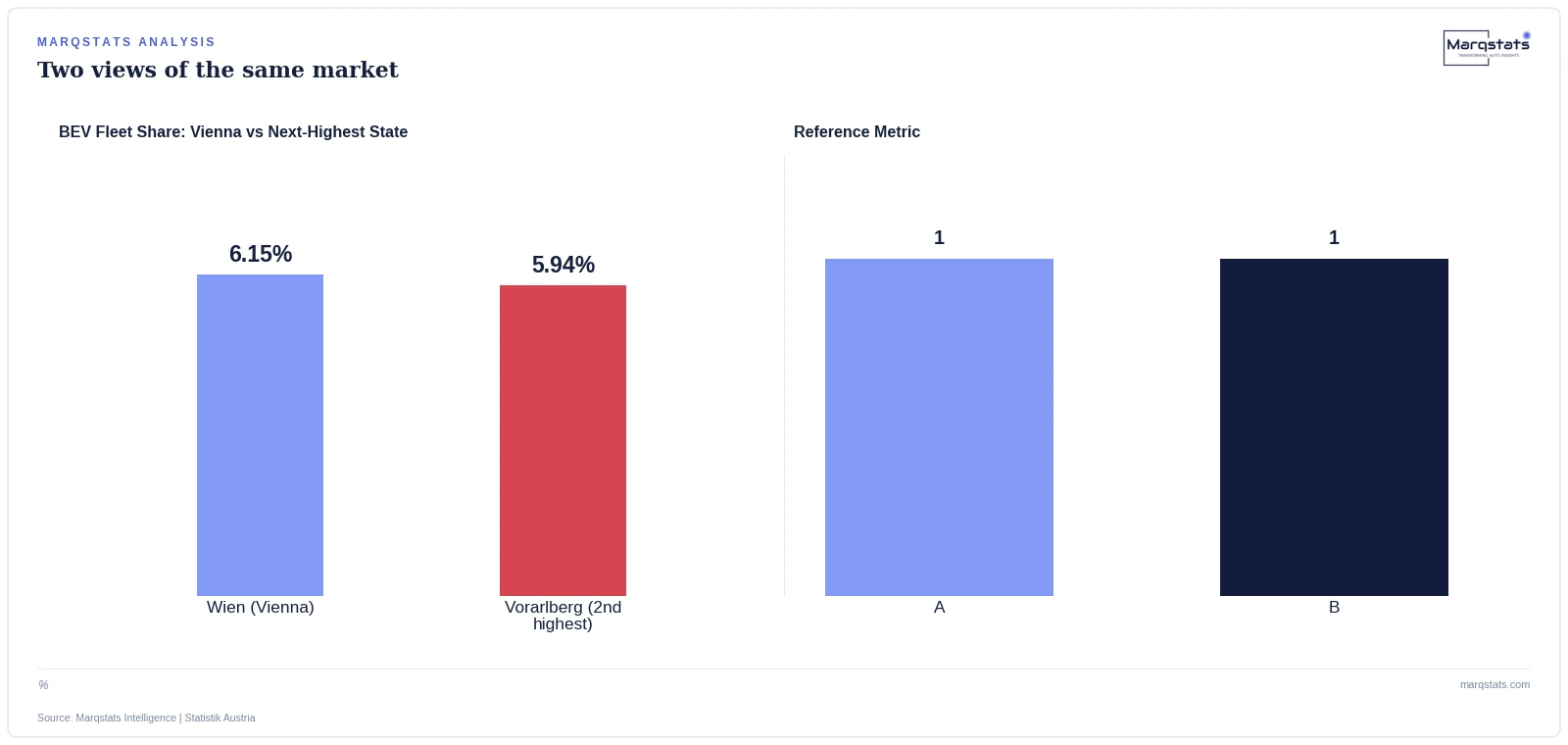
That gap between Vienna and every other federal state is wide enough to look like a clear, unambiguous adoption story on its face.
In brief: Vienna's 6.15% BEV penetration rate leads every other Austrian federal state by a clear margin. Read that as proof the capital is where Austria's electric vehicle servicing demand concentrates most heavily, and you'd only be partly right.
Why the Capital's Numbers Run High
It's a routine, unremarkable business decision with a real downstream statistical consequence for anyone reading the raw numbers.
Major corporate vehicle leasing providers, commercial fleet management companies and mobility operators maintain their headquarters in Vienna — an ordinary administrative decision. Under Austrian registration rules, those companies register their entire nationwide vehicle pools under Viennese municipal plates, regardless of where any individual vehicle actually spends its operating life.
Where Those Vehicles Actually Drive
That gap between plate and pavement is the whole story here.
The plate says Wien. The commute is somewhere else entirely.
— Marqstats Analyst Team
A substantial share of these Vienna-registered corporate vehicles operate daily in commuter corridors across Lower Austria, Upper Austria and Styria — generating real maintenance and tire-servicing demand in suburban and regional workshops, not necessarily in central Vienna facilities.
A Named Comparison: Why This Isn't Just a Vienna Story
Recognizing the pattern helps interpret similar capital-city figures elsewhere too.
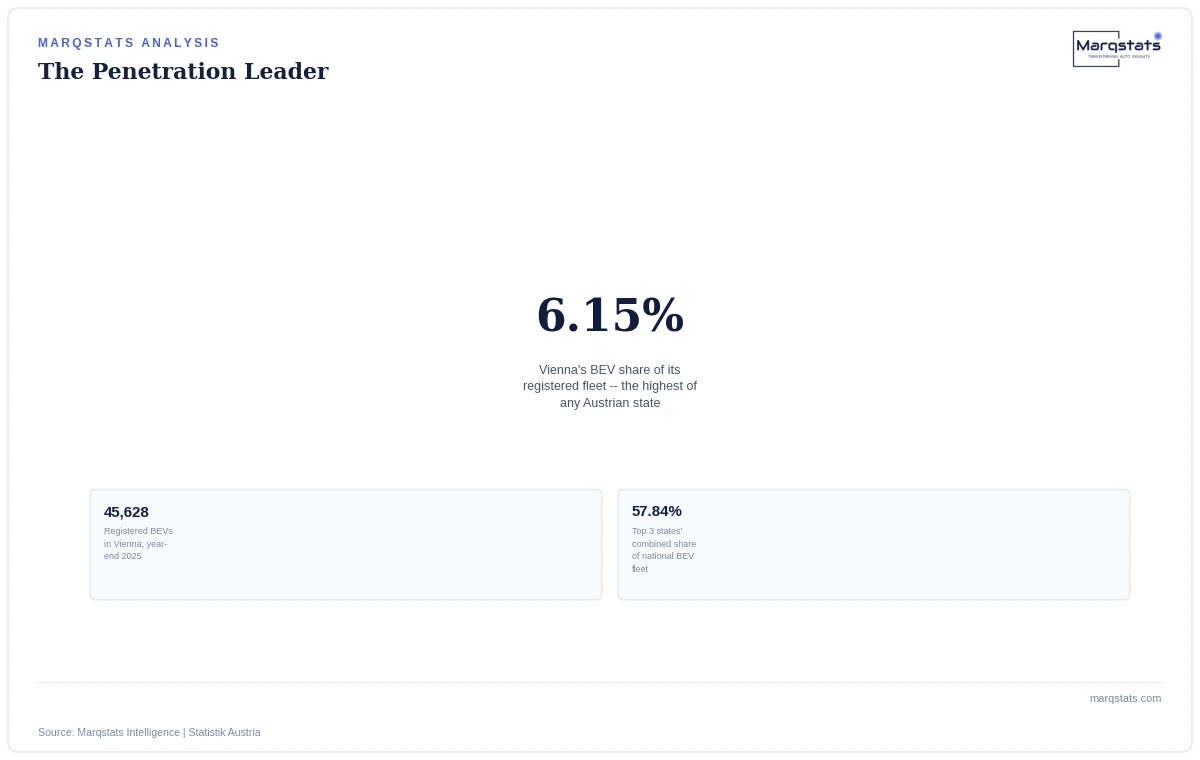
This same registration-versus-circulation pattern shows up in other European capitals with concentrated corporate fleet headquarters — it's a structural feature of how leasing companies operate, not something unique to Austrian administrative quirks. What makes it worth naming explicitly here is that Vienna's genuinely strong organic adoption (driven by urban EV-friendly policy and high resident income) makes the distortion easy to miss, since the capital would likely lead in penetration even without the registration effect.
Why This Pattern Is Unlikely to Change
Corporate headquartering decisions are driven by administrative and tax considerations entirely separate from where a fleet actually operates day to day, meaning there's little structural reason to expect Vienna's registration-versus-circulation gap to narrow as Austria's electrified fleet continues expanding toward 2030.
What This Means for Workshop and Parts Investment
The practical takeaway: anyone siting new high-voltage service capacity based on Vienna's headline penetration figure should weight the documented commuter dispersion into Lower Austria, Upper Austria and Styria specifically, since those surrounding regions carry more real-world servicing demand than their own registration figures alone would suggest.