The Battery That Isn't the Battery
Ask most EV owners what battery matters in their car, and they'll tell you about the big one — the traction pack that determines range. There's a second, much smaller battery every single BEV also depends on: a 12V lead-acid or lithium-iron-phosphate unit that powers onboard computers, door locks, contactors and emergency lighting.
It has nothing to do with how far the car drives. It has everything to do with whether the car starts at all.
Why Australia Specifically Is Hard on This Battery
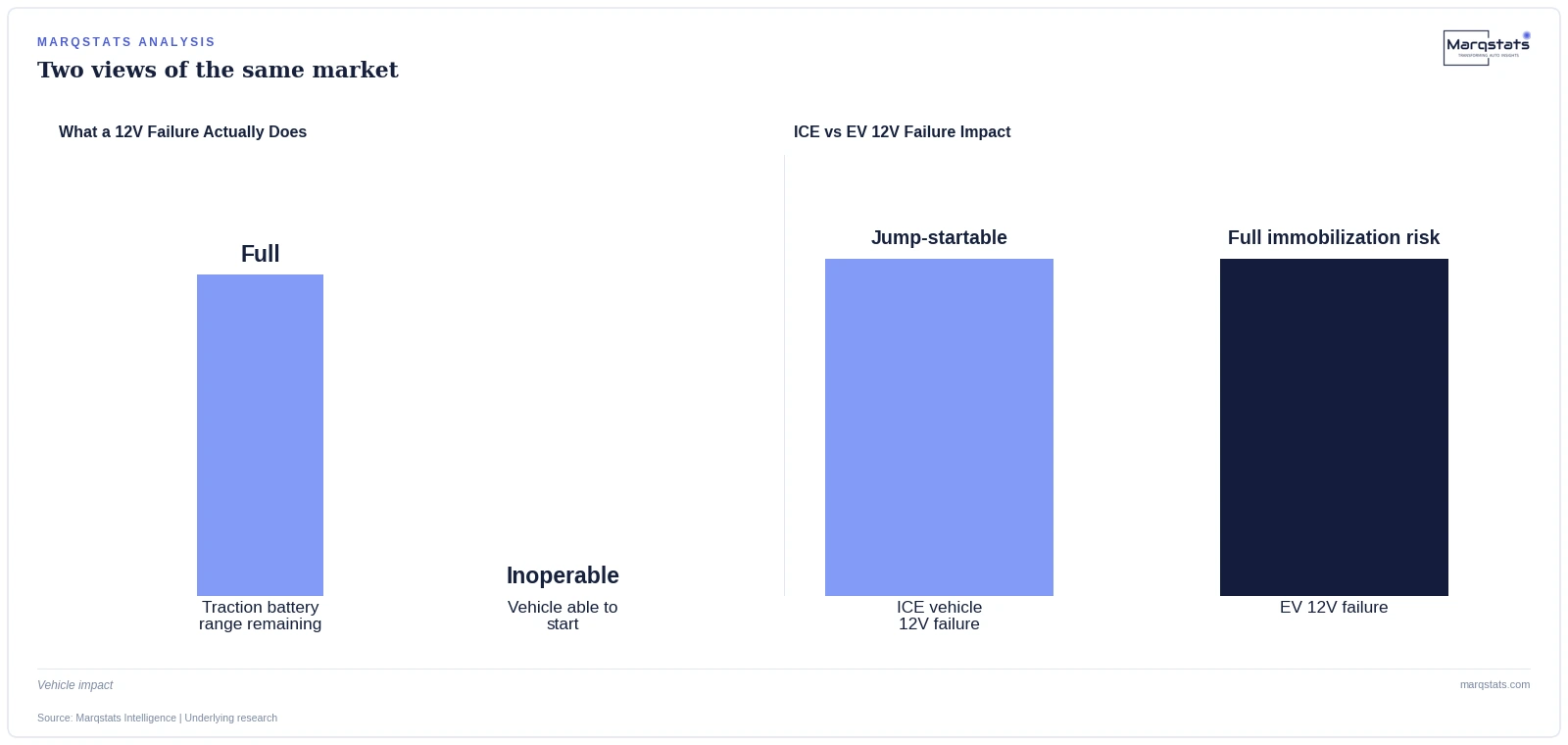
High ambient summer temperatures accelerate chemical degradation in 12V batteries specifically — heat is one of the most reliable predictors of battery lifespan reduction across almost every battery chemistry. Australia's summer conditions push this degradation hard enough that sudden 12V failures within just 3 to 5 years are a documented pattern, not an edge case.
What This Actually Costs
Replacement runs AUD 150 to AUD 400 — a genuinely modest cost next to a traction battery replacement, but a real, recurring line item most manufacturer maintenance schedules don't fully anticipate as a climate-specific risk. It's easy to budget for scheduled logbook servicing. It's much easier to be caught off guard by a 12V failure that happens outside any scheduled visit entirely.
Why This Matters More Than It Sounds
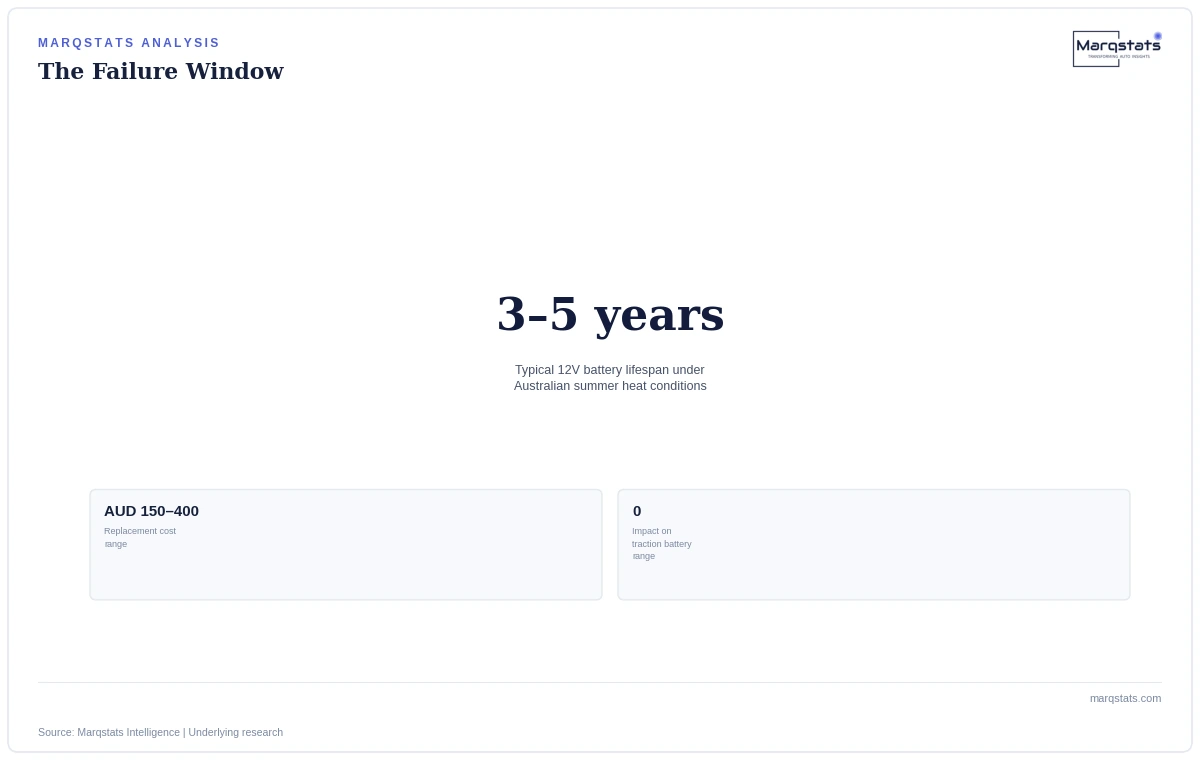
A dead 12V battery doesn't just mean inconvenience — because it powers the contactors and onboard computers the rest of the vehicle depends on, a 12V failure can leave an otherwise fully charged EV completely inoperable. The traction battery might have plenty of range left; the car still won't start.
A Named Comparison: How This Differs From ICE 12V Failures
Every conventional car has a 12V battery too, and heat degrades those as well — but an ICE vehicle's 12V failure is a familiar, well-understood problem most drivers and workshops know how to anticipate and jump-start around. An EV's 12V failure is functionally more disruptive, since it can prevent the high-voltage system itself from safely energizing, turning a routine component failure into a full vehicle immobilization.
Why This Isn't Covered by Most Warranty Conversations
Traction battery warranties get most of the attention in EV ownership conversations — 8-year, 160,000km coverage is now a common industry benchmark most buyers know to ask about. The 12V auxiliary battery rarely comes up in the same conversation at all, despite being the component actually responsible for a meaningful share of unplanned EV breakdowns in practice.
What Owners and Workshops Should Actually Do
For owners, proactive 12V testing during scheduled EV servicing, rather than waiting for a failure, is a genuinely low-cost way to avoid an unplanned breakdown. For workshops, stocking climate-appropriate 12V AGM and LFP replacement units and building 12V health checks into every Australian EV service visit is a straightforward, low-capital way to add genuine value beyond the scheduled logbook basics.