A Standard That Covers Installations, Not People
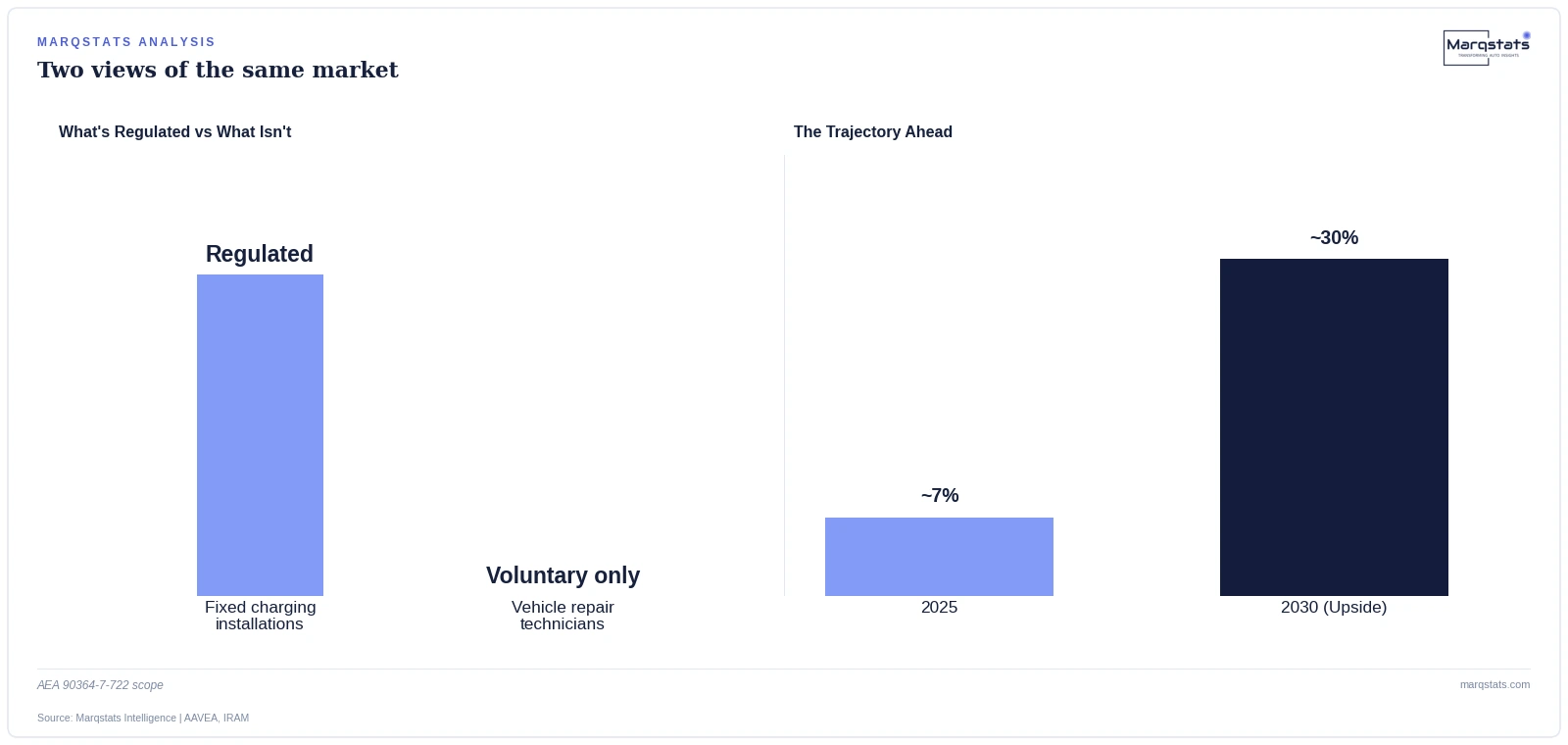
In brief: Argentina has a technical standard for EV charging infrastructure. It does not have one for the people who repair EVs. AEA 90364-7-722 regulates fixed charging installations — wiring, grounding, circuit protection for the equipment that charges a car. It says nothing about who is qualified to open a high-voltage battery pack and work on it safely.
What Fills the Gap Instead
In the absence of a mandatory national certification, vehicle repair safety in Argentina relies entirely on voluntary compliance with IRAM electrical standards or manufacturer-specific training programs. Voluntary means exactly what it sounds like: a workshop can choose to train its technicians to a recognized standard, or it can choose not to, and no regulatory body currently enforces the difference.
The Practical Consequence
There's a technical standard for the charger. There isn't one for the person opening your car's battery.
— Marqstats Analyst Team
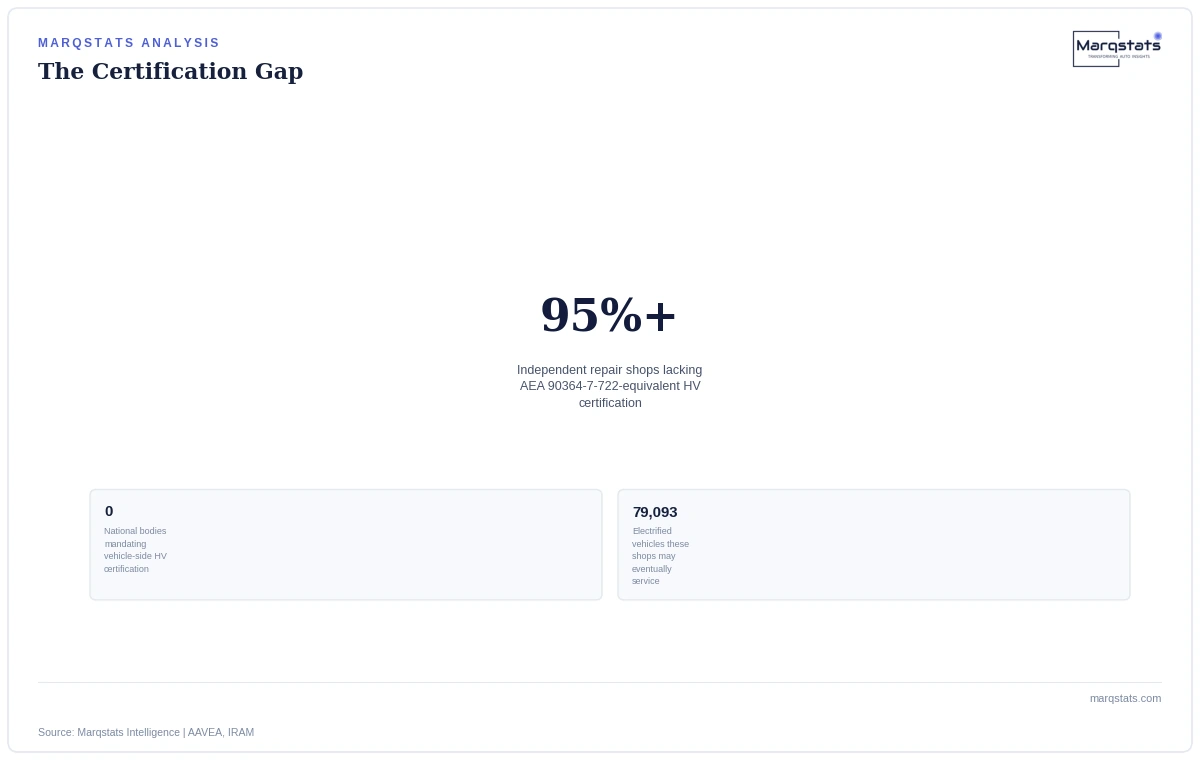
Over 95% of independent repair shops in Argentina currently lack AEA 90364-7-722-equivalent certification for vehicle-side high-voltage work specifically. This isn't necessarily because these shops are unsafe or uninterested — it's that without a mandatory framework, certification remains a discretionary investment most smaller operators haven't prioritized yet, especially while hybrid vehicles requiring only conventional ICE service still dominate 96% of the electrified fleet.
Who This Genuinely Disadvantages
The gap creates a real liability exposure specifically for independent, non-dealer workshops — franchised dealership networks receive factory training and technical support directly from manufacturers as part of their dealership agreements, sidestepping the certification question entirely. An independent garage operating without a clear national standard to point to carries a genuinely harder-to-quantify liability risk if something goes wrong during high-voltage work.
A Named Comparison: How Dealerships Sidestep This Entirely
Franchised dealership technicians never face this specific uncertainty — they train directly on manufacturer-specified programs as a condition of their dealership agreement, with compliance built into the relationship itself rather than left to individual discretion. That structural advantage, more than any difference in genuine technical competence, is part of why dealerships have retained such a commanding share of Argentina's post-warranty hybrid servicing market to date.
Why This Will Likely Change, Eventually
As Argentina's battery-electric and plug-in hybrid fleet grows from under 4% of the electrified parc today toward a projected 30% by 2030 under the market's own Upside Scenario, the pressure for a formal national certification framework will likely intensify — insurers, in particular, have genuine commercial reasons to want a clear compliance benchmark they can reference when underwriting commercial fleet and independent-workshop liability policies.
What This Means for Anyone Entering This Market
For an independent workshop operator, pursuing recognized IRAM-aligned certification voluntarily — ahead of any eventual mandate — is both a genuine safety investment and a credible market-differentiation signal in a landscape where almost no competitor has made the same commitment yet.