Market Snapshot
Key Takeaways
Market Overview & Analysis
Report Summary
The India electric scooter and motorcycle market covers battery-electric two-wheelers — high-speed electric scooters, low-speed electric scooters, electric motorcycles, electric mopeds, and electric cycles (pedal-assist) — sold to retail, commercial, and institutional buyers across India. The market sits at a defining inflection point in 2026. Volume has crossed 1.4 million units annually, high-speed Li-ion scooters have displaced the lead-acid low-speed category from mainstream retail, Delhi has announced phased ICE registration bans, and the PM E-Drive subsidy window is closing in July 2026. Within this, the Indian electric scooter market accounts for 85%+ of retail volume while electric motorcycles are the fastest-growing premium sub-segment led by performance brands.
Demand drivers are firmly in place. Electric scooter price in India now overlaps the equivalent ICE scooter band at INR 80,000–1,20,000 for mass-market models, running costs are approximately one-tenth of petrol (INR 0.15–0.25 per km versus INR 2.50–3.00 per km for ICE), battery pack prices have fallen to around INR 10,000 per kWh (down from INR 20,000 in 2020), and real-world range for top-selling models now ranges from 85–140 km per charge. Tier-2 and Tier-3 city adoption is accelerating faster than metros as Zelio E-Mobility, Supertech EV, Omega Seiki, CollarEV, and Kinetic Watts & Volts target fleet, B2B delivery, and family commuter demand at INR 80,000–1,00,000 price points.
The supply side has also matured rapidly. Battery pack assembly for electric two-wheelers is now 40–60% localised, with TVS, Ather, Ola, Bajaj, and Hero running in-house pack lines. Traction motor manufacturers in India — Sona Comstar, Electrodrive, and Bosch — supply domestic OEMs alongside startup challengers like Ergon Labs (which raised INR 80 million in April 2026 to scale two-wheeler powertrain production) and IRP Systems (which launched the Dynamic 2 motor controller for Indian electric two-wheelers in March 2026). Lithium-ion cell supply remains heavily import-dependent, but the ACC Battery PLI and state-level incentives are pulling in cell-to-pack and cell manufacturing investments from Exide-SVOLT, Amara Raja-Gotion, Agratas, and JSW Energy.
Market Dynamics
Key Drivers
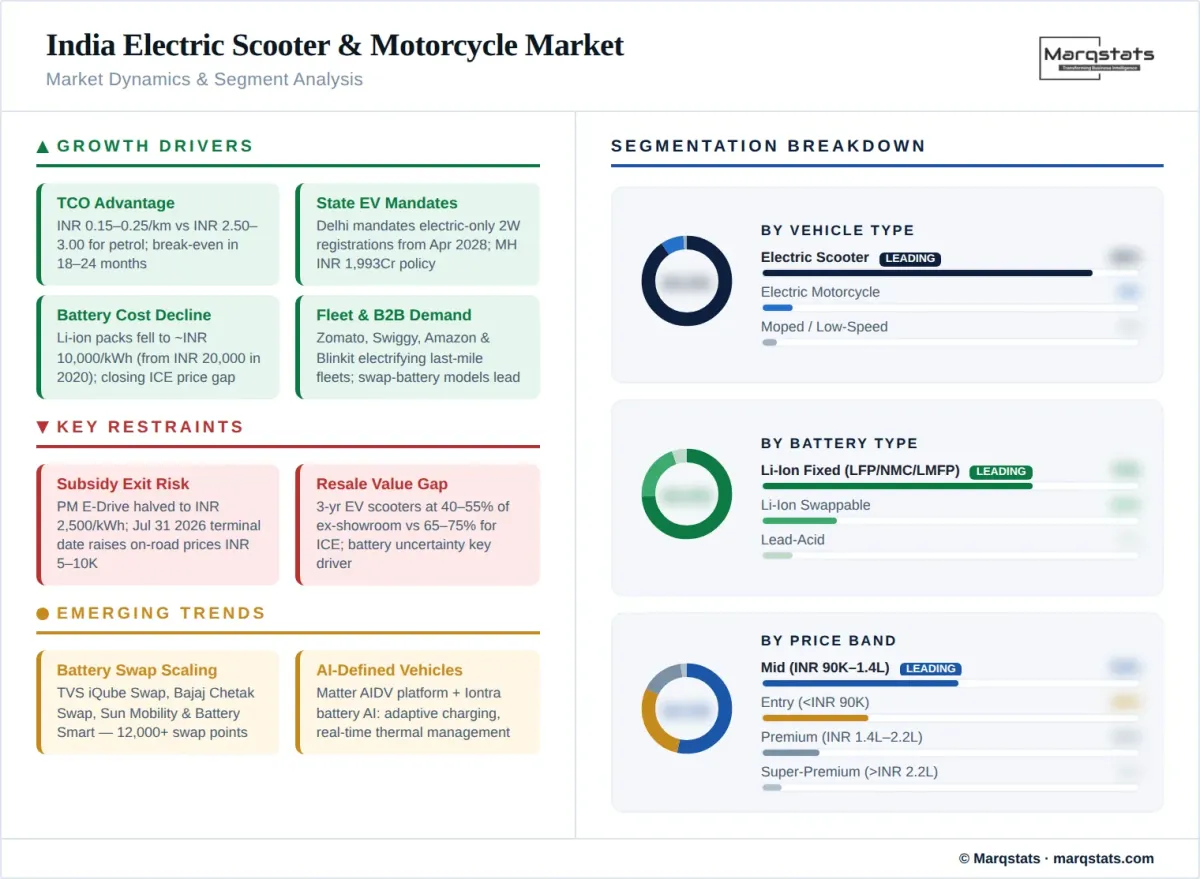
- Total cost of ownership advantage — running costs of roughly INR 0.15–0.25 per km for electric scooters versus INR 2.50–3.00 for petrol scooters deliver break-even against ICE within 18–24 months at typical urban usage of 35–45 km per day.
- State EV policy mandates accelerating regulatory shift — Delhi's Draft EV Policy 2026–2030 mandates electric-only two-wheeler registrations from April 1, 2028 and offers purchase subsidies up to INR 30,000 per vehicle; Maharashtra EV Policy 2025–30 commits INR 1,993 crore in manufacturing and buyer incentives.
- Battery pack price decline — lithium-ion battery pack prices in India fell to approximately INR 10,000 per kWh in 2024 from INR 20,000 in 2020, reducing the price premium of electric scooters versus ICE equivalents by INR 12,000–18,000 across typical 2–3 kWh configurations.
- Rising fuel costs and urban air quality mandates — sustained petrol retail prices above INR 100 per litre combined with metro-level air pollution action plans (Delhi, Mumbai, Bengaluru) are structurally pulling buyers toward electric scooters in India.
- Fleet and B2B delivery demand — e-commerce last-mile delivery operators (Zomato, Swiggy, Amazon, Flipkart, Blinkit) are electrifying two-wheeler fleets, with CollarEV's Moon scooter (March 2026 launch) and Bajaj's WEGO range explicitly targeting B2B delivery at INR 80,000–1,10,000.
Key Restraints
- Subsidy exit risk — PM E-Drive e-2W incentive halved to INR 2,500/kWh (cap INR 5,000/vehicle) from April 2025 with July 31, 2026 terminal date, raising effective on-road prices by INR 5,000–10,000 and compressing near-term demand for the sub-INR 1,00,000 category.
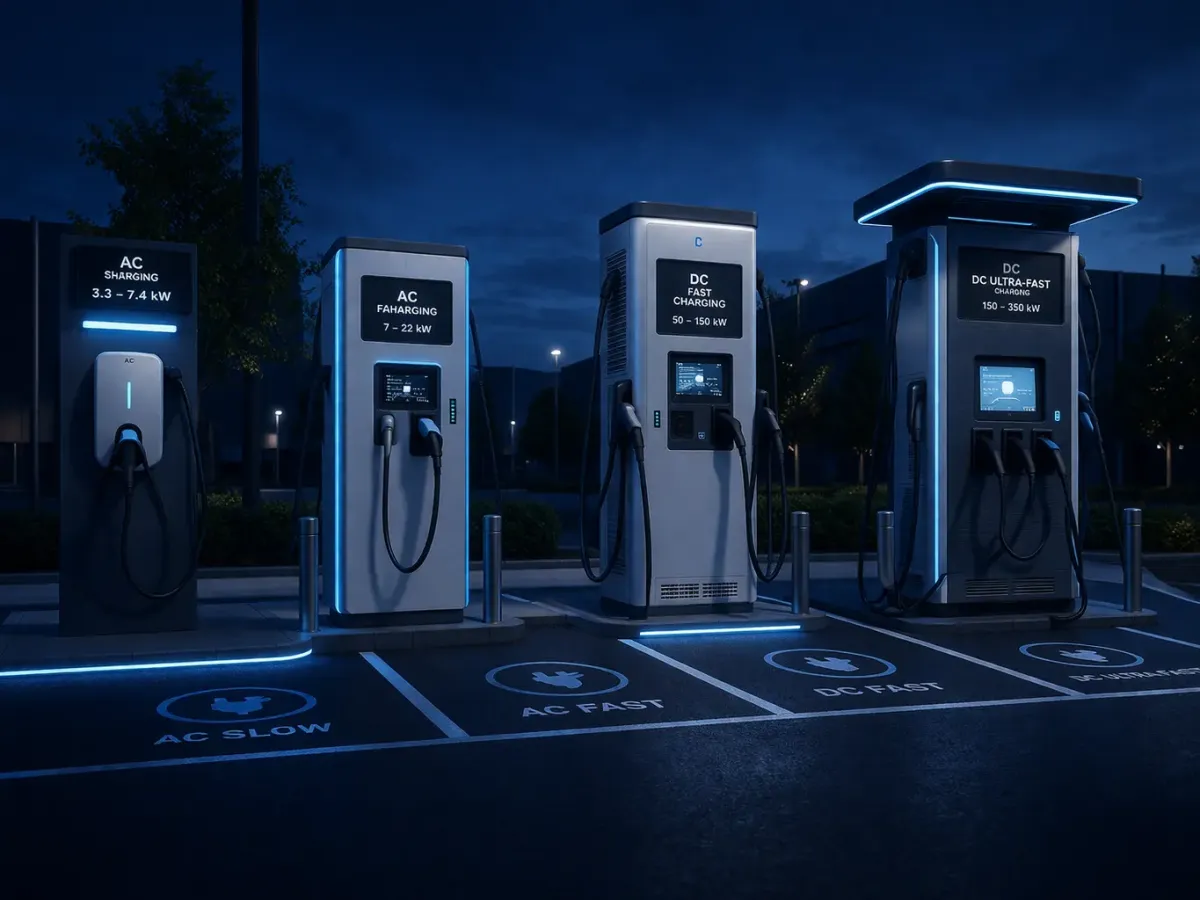
- Public charging infrastructure gaps — while home charging is viable for 70%+ of electric two-wheeler owners, renters and apartment-dwellers without private parking face limited public charging options, particularly outside Tier-1 cities.
- Battery safety and thermal management concerns — AIS-156 certification has raised standards, but consumer recall memory of 2022–23 battery fires continues to create friction at the point of purchase, especially in the sub-INR 90,000 mass-market band.
- Electric scooter resale value uncertainty — three-year-old electric scooters transact at 40–55% of original ex-showroom price versus 65–75% for ICE equivalents, driven by battery warranty uncertainty and rapid product refresh cycles.
- Service network gaps — qualified EV technicians, high-voltage-trained service staff, and authorised spare parts distribution remain thin outside top 50 cities, slowing adoption in Tier-3 and rural markets.
Key Trends
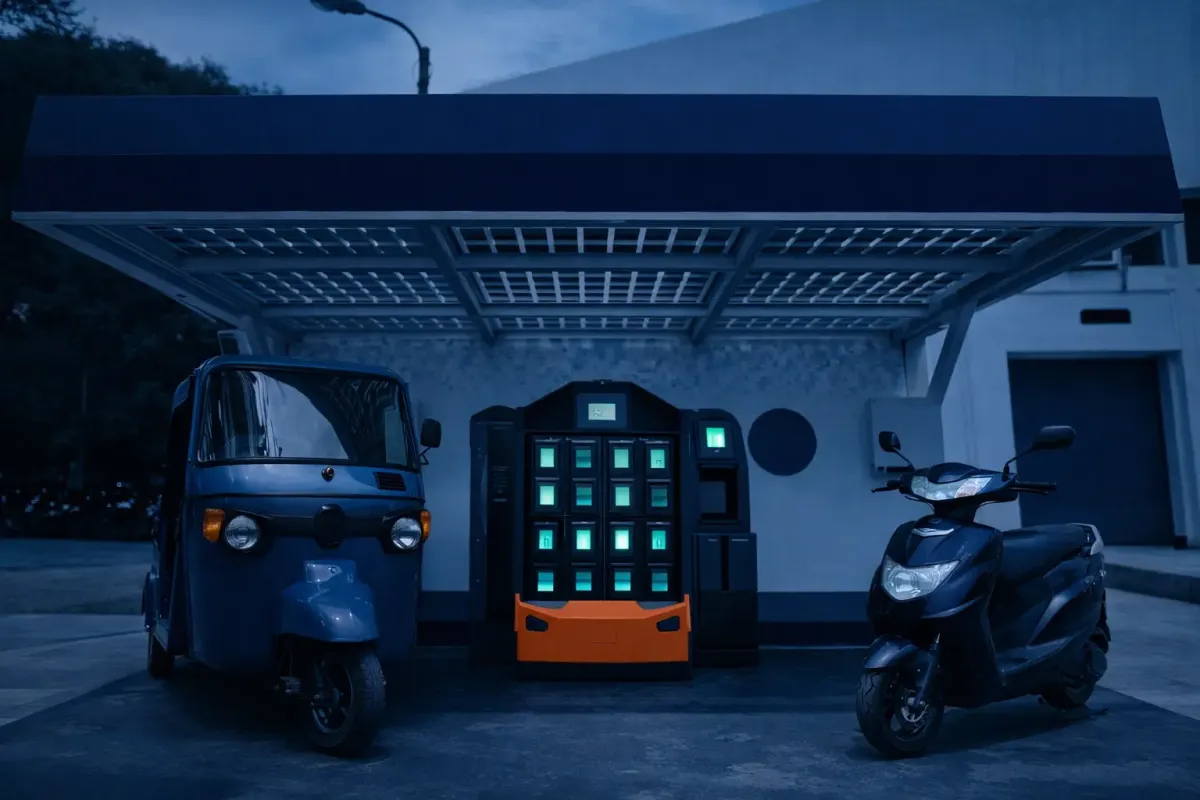
- Swappable battery adoption scaling — TVS iQube Swap, Bajaj Chetak Swappable, and fleet-focused OEMs are deploying battery-swap networks (Ola Hypercharger with Amara Raja, Sun Mobility, Battery Smart) reducing downtime for B2B delivery fleets to under 2 minutes.
- AI-Defined Vehicle platforms emerging — Matter Motor launched the AIDV platform in January 2026, integrating Iontra battery intelligence in March 2026 to enable real-time battery health management, adaptive charging, and continuous software-governed optimisation over the vehicle lifecycle.
- Premium electric motorcycles gaining traction — Ultraviolette Automotive signed a INR 2 billion Karnataka expansion MoU in March 2026 targeting 150,000-unit Phase 2 capacity; Revolt Motors, Tork Kratos, Matter AERA, and Oben Rorr are deepening the INR 1,60,000–3,50,000 performance cohort.
- Localised manufacturing footprint expanding beyond metros — Zelio commissioned a Cuttack (Odisha) plant in February 2026 adding 60,000 units per year; Supertech EV opened a Harapanahalli (Karnataka) facility; Kinetic Watts & Volts scaled its Ahilyanagar (Maharashtra) plant with 99% localised Kinetic DX.
- Smart connectivity and software-defined features becoming standard — Ather AtherStack 7, TVS SmartXonnect, Ola MoveOS, Hero Vida Connect, and Matter AIDV are embedding GPS, OTA updates, ride analytics, and remote diagnostics across the INR 1,00,000+ segment.
Market Segmentation
Electric scooters account for approximately 88% of India electric two-wheeler volume. Top-selling electric scooters include TVS iQube (family commuter, INR 1,11,422 ex-showroom), Bajaj Chetak (INR 1,07,400), Ather Rizta (family-focused, INR 1,19,546), Ather 450X (performance, INR 1,47,999), Honda Activa e (INR 1,18,147), Ola S1 X and S1 Pro, Hero Vida VX2, and Ampere Magnus G Max (INR 94,999). Electric scooter price in India now spans INR 70,000 for entry models to above INR 2,00,000 for premium variants. Segment growth is driven by urban family commuter demand, fleet purchases, and women buyers who prefer step-through design.
Electric motorcycles contribute roughly 8% of volumes but the fastest value growth within the India electric two-wheeler market. Best electric motorcycles in India include the Ultraviolette F77 and X-47 Crossover, Revolt RV400 and RV1, Tork Kratos R, Matter AERA, Oben Rorr, and Hero Surge S32 (launched April 2026 as the world's first category-swapping vehicle, capable of transitioning between a three-wheeler and two-wheeler). The electric motorcycle manufacturers cohort is investing heavily in premium performance — Matter's AI-Defined Vehicle platform, Ultraviolette's INR 2 billion Karnataka expansion, and Hero's L2-5 category pioneering mark the segment's technology frontier.
Electric mopeds and low-speed electric two-wheelers (top speed below 25 km/h, not requiring registration or licence) contribute around 4% of volumes, led by Hero Electric Optima, Okinawa Dual, Ampere Reo, and multiple Tier-3 brands. This segment is gradually shrinking as high-speed Li-ion electric scooters at INR 80,000–1,00,000 replace lead-acid low-speed models at INR 50,000–70,000, particularly in Tier-2 and Tier-3 cities where entry buyers now prefer registered, higher-range options.
Lithium-ion battery chemistries account for over 92% of new India electric two-wheeler sales in 2025. Lithium Iron Phosphate (LFP) dominates the mass-market scooter category (TVS iQube, Bajaj Chetak, Ampere Magnus G Max, OSM Vextra's LMFP 3.45 kWh pack) for its thermal safety and cycle life. Nickel Manganese Cobalt (NMC) powers premium performance models where energy density matters. Lithium Manganese Iron Phosphate (LMFP) is gaining traction for balancing safety, density, and cost.
Lead-acid battery electric two-wheelers have collapsed to under 8% of new sales, concentrated in low-speed (<25 km/h) models that remain unregistered and subsidy-ineligible. PM E-Drive incentives are tied exclusively to lithium-ion advanced chemistry cells, accelerating the chemistry shift.
Swappable battery electric two-wheelers are emerging as a distinct operating model, particularly for B2B fleet and delivery use cases. TVS iQube Swap, Bajaj Chetak Swap, Sun Mobility network, Ola Hypercharger, and Battery Smart collectively cover 12,000+ swap points across India. Swap reduces refuelling downtime to under 2 minutes versus 4–5 hours for home charging, creating a clear operating advantage for commercial fleets.
The entry band captures approximately 28% of volumes, led by low-speed scooters, entry Li-ion scooters (Hero Electric Optima, Okinawa, Ampere), and B2B delivery-focused models like CollarEV Moon (INR 80,000) and OSM Vextra (INR 99,900). This band is the largest volume cohort in Tier-3 cities and rural markets.
The mid band is the commercial heart of the Indian electric scooter market at around 52% of volumes, driven by TVS iQube, Bajaj Chetak, Ather Rizta, Hero Vida VX2, Honda Activa e, Ampere Magnus G Max, and Ola S1 X. This band captures urban family commuter demand and is the most competitive price-feature battleground.
Premium electric two-wheelers account for roughly 15% of volumes, led by Ather 450X, Ather 450 Apex, Ola S1 Pro, TVS iQube ST, Simple One Gen 2 (up to 265 km claimed range), and Matter AERA. Buyers prioritise range, smart features, ADAS-adjacent capability, and brand prestige.
The super-premium cohort holds about 5% of volumes but the highest profit pool per unit, anchored by Ultraviolette F77 (INR 2,99,000+), Ultraviolette X-47 Crossover, Revolt RV BlackRock, Tork Kratos R, BMW CE 04 (INR 15,25,000 — outlier), and upcoming launches including Yamaha AEROX-E, Ather EL01, and Suzuki Burgman Electric.
Private owners represent approximately 72% of electric two-wheeler registrations. Purchase drivers centre on electric scooter mileage (running cost versus petrol), range, charging time, battery warranty, and smart features. Women buyers are a growing cohort, favouring step-through scooters with lower seat height and storage capacity.
B2B delivery and last-mile logistics account for roughly 22% of electric two-wheeler demand, led by food delivery (Zomato, Swiggy), e-commerce last-mile (Amazon, Flipkart, Blinkit, Zepto), and quick-commerce operators. Fleet purchases favour swappable battery models, rugged frames, and real-time telematics. CollarEV, Zelio (Logix cargo scooter), Bajaj WEGO, and Kinetic Green target this cohort specifically.
Shared mobility operators (Yulu, Bounce, Vogo, Zypp) account for around 6% of electric two-wheeler demand. Volume growth is concentrated in metros and Tier-1 cities with dense micro-mobility infrastructure. Rental and subscription models are expanding through platforms like Revolt's My Revolt Plan.
By Geography
Southern India
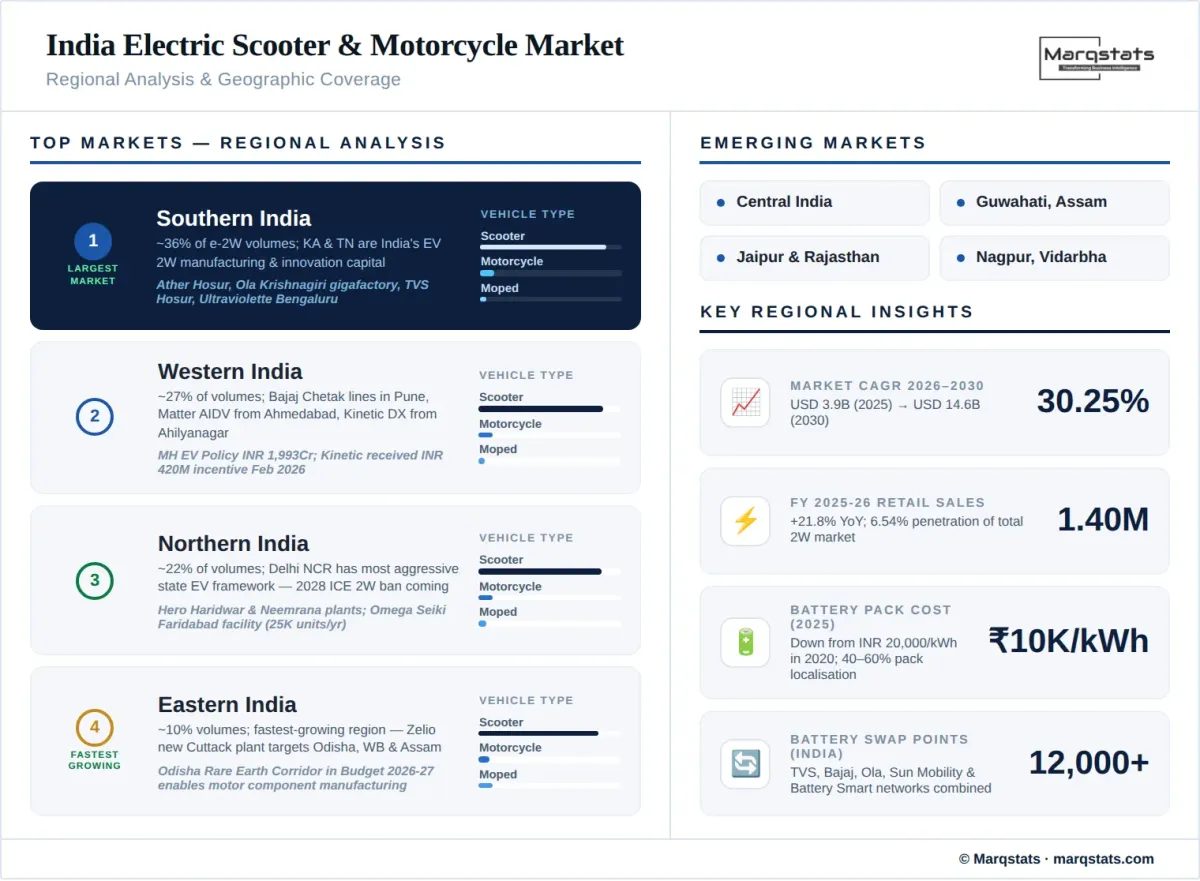
Southern India leads the India electric scooter and motorcycle market with approximately 36% of FY 2025-26 retail volumes, anchored by Karnataka, Tamil Nadu, and Kerala. Karnataka is India's electric two-wheeler manufacturing and innovation capital — Ather Energy runs its Hosur plant, Ola Electric operates its Krishnagiri gigafactory (Tamil Nadu border), Ultraviolette Automotive signed a INR 2 billion Bengaluru expansion MoU in March 2026 with Phase 2 adding 150,000 units per year, Ergon Labs is scaling Bengaluru powertrain production, and Supertech EV commissioned a Harapanahalli plant in February 2026. Tamil Nadu's EV Policy offers 100% road tax and registration waivers for EVs through 2025, and TVS Motor's Hosur plant is the single largest electric two-wheeler production facility in India. Bengaluru, Chennai, Hyderabad, and Coimbatore are the top-five retail markets.
Western India
Western India contributes around 27% of volumes, led by Maharashtra and Gujarat. Maharashtra's EV Policy 2025–30 commits INR 1,993 crore in manufacturing and buyer incentives; Kinetic Watts & Volts received a INR 420 million Maharashtra EV Policy incentive in February 2026 for its Ahilyanagar Kinetic DX production scale-up. Pune hosts Bajaj Auto's Chakan electric scooter lines (Chetak, Chetak Swap), Kinetic Engineering's component manufacturing, and multiple Tier-1 EV component suppliers. Mumbai, Pune, Nashik, Nagpur, and Ahmedabad are major retail markets. Gujarat's Ahmedabad-based Matter Motor is pioneering AI-Defined Vehicle platform rollouts across scooters and motorcycles.
Northern India
Northern India accounts for approximately 22% of India electric two-wheeler volumes, anchored by Delhi NCR, Uttar Pradesh, Punjab, and Haryana. Delhi's Draft EV Policy 2026–2030 is the most aggressive state framework — mandating electric-only new two-wheeler registrations from April 1, 2028, offering purchase subsidies up to INR 30,000, and providing 100% road tax and registration fee exemptions. Hero MotoCorp's Haridwar plant (Uttarakhand border) and Neemrana (Rajasthan) facility anchor northern manufacturing; Omega Seiki Mobility operates its Vextra scooter production from a Faridabad (Haryana) plant with 25,000 units per year capacity. Delhi, Lucknow, Kanpur, Chandigarh, and Jaipur are major retail markets.
Eastern India
Eastern India contributes approximately 10% of electric two-wheeler volumes but is the fastest-growing regional cohort. Zelio E-Mobility commissioned its Cuttack (Odisha) plant in February 2026 adding 60,000 units per year, deliberately targeting Odisha, West Bengal, and Assam to compress delivery times and logistics costs. Kolkata, Bhubaneswar, Guwahati, Patna, and Ranchi are primary retail markets. The Union Budget 2026-27's Rare Earth Corridor allocation for Odisha positions the region for electric motor component manufacturing expansion.
Central India
Central India accounts for roughly 5% of volumes today but is scaling rapidly through dealer network expansion into Madhya Pradesh, Chhattisgarh, and Vidarbha. Mahindra Group's planned INR 150 billion Nagpur mega-manufacturing hub will include electric two-wheeler platforms alongside car and commercial vehicle programmes. Bhopal, Indore, Raipur, and Nagpur are emerging retail markets supported by TVS, Bajaj, Hero, and Ather dealer expansion.
How Competition Is Evolving
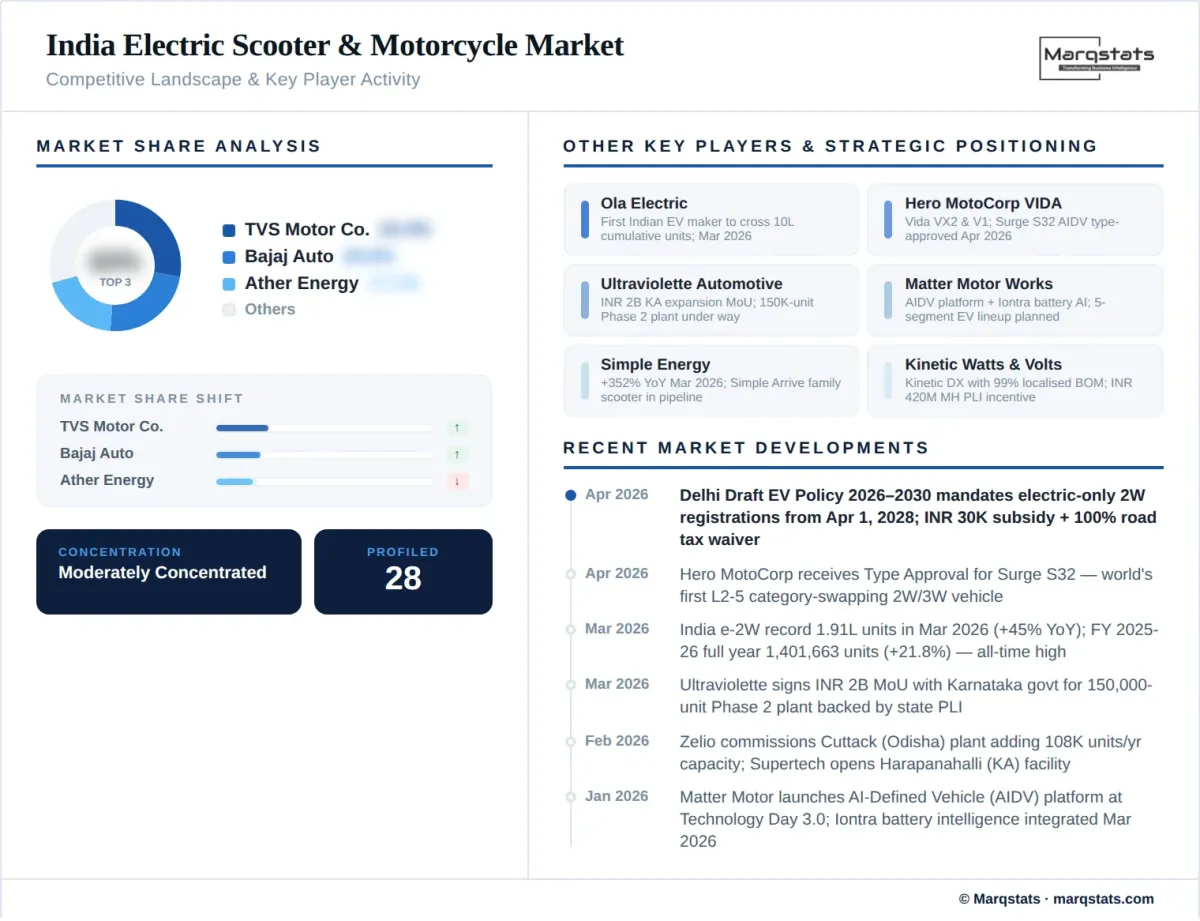
The India electric scooter and motorcycle market is moderately concentrated at the top and highly fragmented at the long tail. Legacy two-wheeler OEMs have decisively taken back leadership from EV pure-plays. TVS Motor Company holds the top position with 24.4% share in FY 2025-26 (341,513 units) driven by the iQube family, TVS X premium scooter, and TVS iQube ST; March 2026 sales alone reached 49,304 units at 60% year-on-year growth. Bajaj Auto ranks second at 20.6% (289,349 units) with the Chetak Swap and expanding Chetak range. Ather Energy holds third at 17.1% (239,178 units) with the Ather 450X, 450S, Rizta family scooter, and upcoming Ather EL01. Ola Electric ranks fourth at 11.7% (164,295 units) and crossed 10 lakh cumulative units in March 2026; Hero MotoCorp VIDA rounds out the top five at 10.3% (144,330 units) with the Vida VX2 and Vida V1.
The mid-tier and challenger cohort is characterised by rapid volume gains off low bases. Greaves Electric Mobility (Ampere brand) launched the Magnus G Max in January 2026 at INR 94,999. River Mobility grew 417% year-on-year in March 2026 to over 4,100 monthly units with its River Indie. Simple Energy delivered 1,740 units in March 2026 (+352% year-on-year) and is preparing the Simple Arrive family scooter to rival TVS iQube, Ather Rizta, and Bajaj Chetak. Kinetic Watts & Volts is scaling the Kinetic DX EV with a 99% localised bill of materials. E-Spring Green Energy, Okinawa Autotech, Zelio E-Mobility, Supertech EV, Omega Seiki Mobility, and CollarEV occupy the entry and B2B fleet segments. Pure electric motorcycle makers — Ultraviolette Automotive, Revolt Motors, Tork Motors, Matter Motor, and Oben Electric — are deepening the performance cohort.
Strategic moves across Q1 2026 have been aggressive. Ultraviolette signed a INR 2 billion Karnataka expansion MoU in March 2026 for a second plant with 150,000 annual unit capacity. Matter Motor launched its AI-Defined Vehicle platform in January 2026 and integrated Iontra battery intelligence in March 2026 for adaptive charging and real-time battery health management. Hero MotoCorp received a Type Approval Certificate for the Surge S32 in April 2026 — positioned as the world's first category-swapping vehicle. Ather Energy incorporated a wholly-owned Hong Kong subsidiary in February 2026 to strengthen APAC procurement and supply chain resilience. Kinetic Engineering's promoters infused INR 400 million into the company via warrant conversion in March 2026 to fund EV and component expansion. Zelio E-Mobility's Cuttack plant commissioning in February 2026 and Supertech EV's Harapanahalli plant opening have widened the manufacturing footprint beyond traditional hubs.
Companies Covered
The report profiles 28+ companies with full strategy and financials analysis, including:
Recent Market Activity
Table of Contents
Coverage & Segmentation
This report provides a comprehensive analysis of the India electric scooter and motorcycle market for the historical period 2021–2025 and forecast window 2026–2030, with 2025 as the base year. Coverage spans high-speed and low-speed electric scooters, electric motorcycles, electric mopeds, and swappable-battery electric two-wheelers across private, B2B delivery, shared mobility, and institutional buyer segments. The study examines market sizing by units and value; segment-level forecasts by vehicle type, battery type, price band, and end use; competitive positioning and share analysis; regional manufacturing and retail cluster mapping; regulatory and policy impact including PM E-Drive, state EV policies, and Delhi EV Policy 2026–30; safety and technical compliance under AIS-156, CMVR, and BIS frameworks.
Primary research included structured interviews with more than 40 industry stakeholders — electric two-wheeler OEM strategy and product leaders, Tier-1 battery and motor suppliers, dealership principals, EV financing partners, fleet operators from food delivery and quick-commerce companies, shared mobility operators, and senior policy analysts from the Ministry of Heavy Industries, the Ministry of Road Transport and Highways, and state transport departments. Secondary research drew on the Federation of Automobile Dealers Associations (FADA), Society of Indian Automobile Manufacturers (SIAM), VAHAN registration data, Ministry of Heavy Industries (PM E-Drive disclosures), Ministry of Road Transport and Highways, Press Information Bureau, state EV policy notifications, company annual reports, investor presentations, stock exchange filings, and proprietary Marqstats Intelligence datasets.