Market Snapshot
Key Takeaways
Market Overview & Analysis
Report Summary
The India ADAS sensors market is moving from a premium-feature stage toward a regulation-backed mainstream sensor market. The current sensor mix is dominated by camera modules at 45-50% revenue share, supported by radar at 30-35%, ultrasonic at 12-18%, and emerging DMS at 3-6%. LiDAR remains a sub-3% niche through 2030 owing to cost barriers. India’s practical Level 2 architecture is camera-radar fusion plus ultrasonic and DMS, with LiDAR reserved for premium pilots and select autonomy programs.
Module-level volumes in 2025 indicate the scale of opportunity: approximately 0.6–0.8 million camera modules, 0.25–0.40 million radar modules, 2.0–2.8 million ultrasonic sensors, and 50,000–100,000 DMS units. SUV and EV variants concentrate the highest sensor content per vehicle. Mahindra XUV700, Hyundai Creta, Kia Seltos, MG Astor, Honda City, and Tata premium SUVs anchor the volume base. Premium EVs from Mahindra, Hyundai, Kia, and Tata further amplify per-vehicle sensor counts.
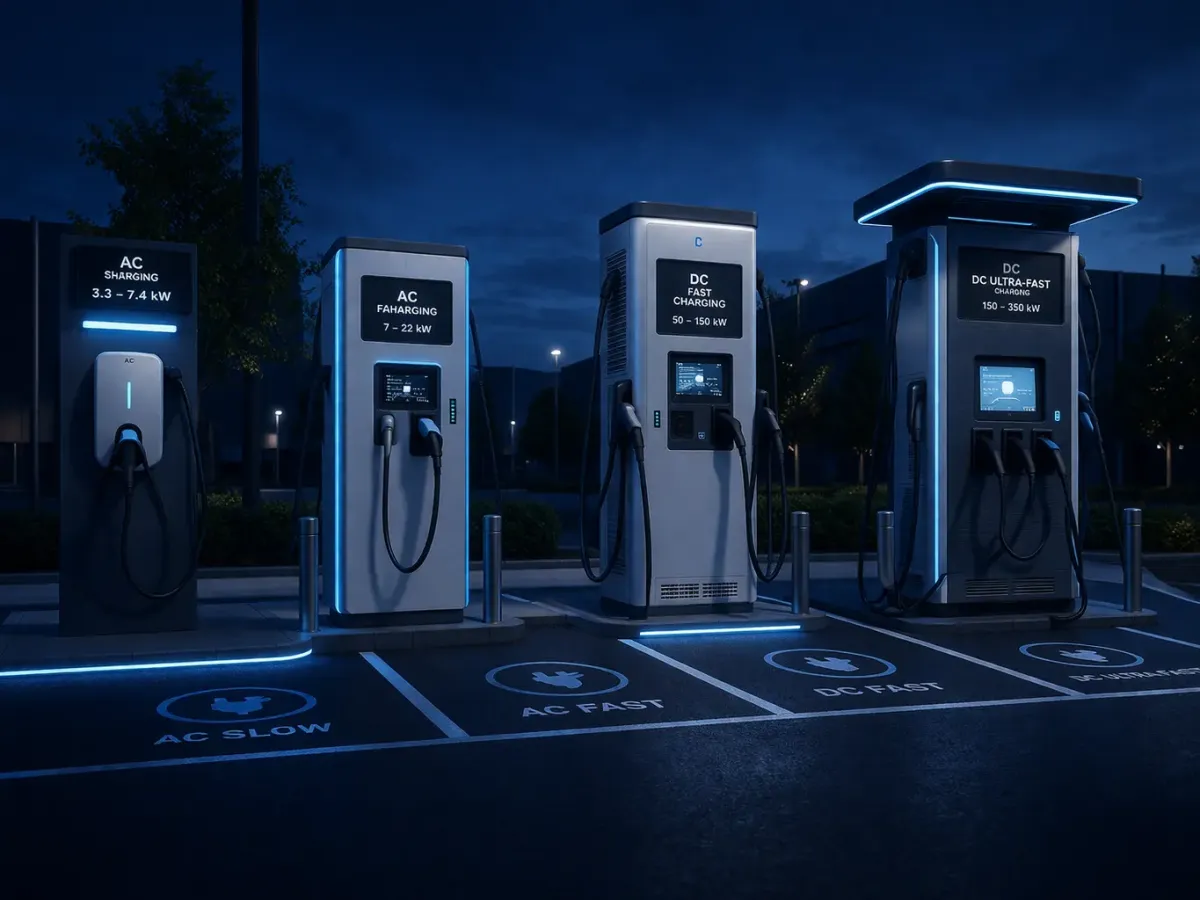
The EV-ADAS overlap is structural rather than incidental. EV buyers are typically more technology-oriented, and OEMs use ADAS as part of premium EV positioning. EV ADAS penetration at 36.4% in H1 2025 sits over four times above the overall PV market average. Charging infrastructure investment accelerates this dynamic by enabling broader EV deployment, creating compounding sensor demand. The India EV Charging Market report covers the parallel charging-network buildout that supports the EV cohort driving high ADAS adoption rates.
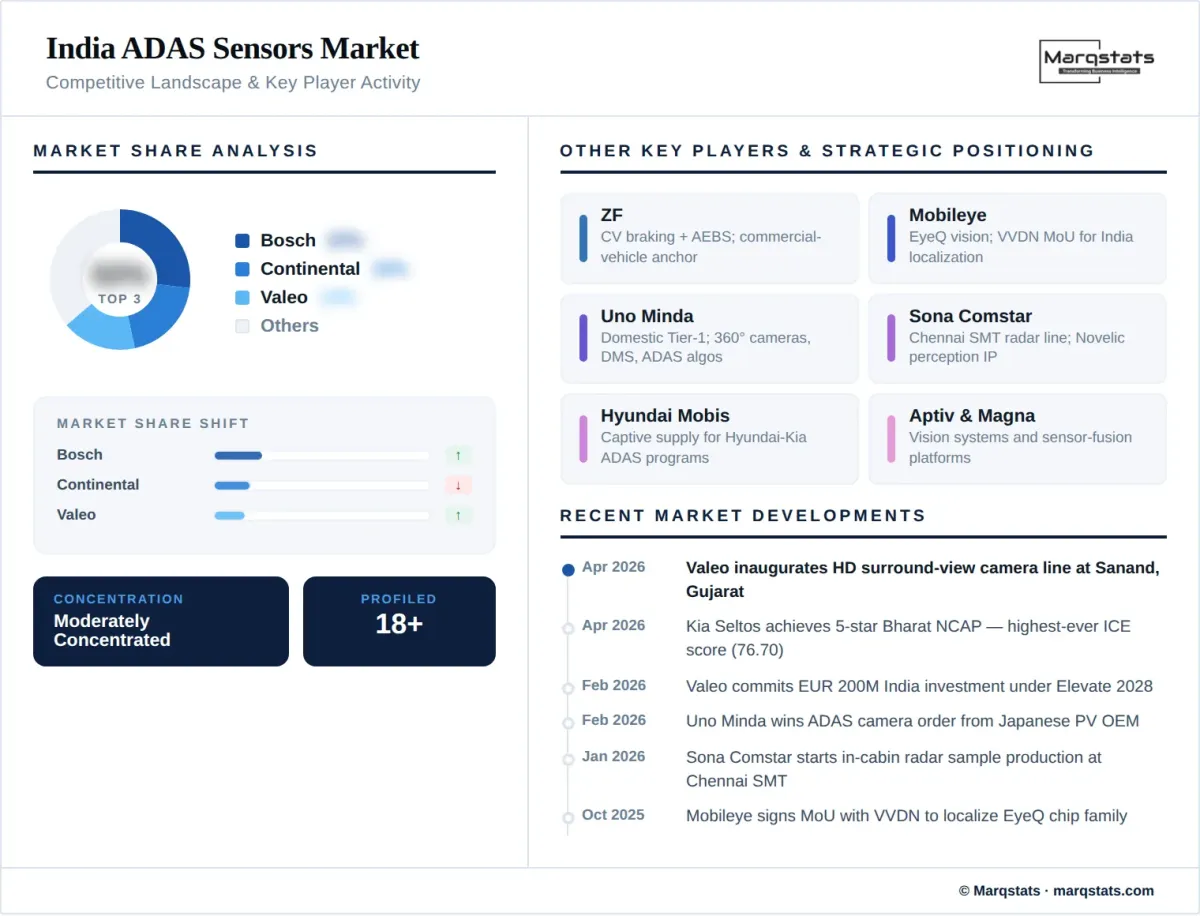
The competitive environment is being reshaped by 2025-2026 supply chain investments. Valeo inaugurated a new HD surround-view camera production line at its Sanand facility in Gujarat in April 2026, scaling vision systems for ADAS and ARAS. Sona Comstar commenced sample production of in-cabin radar sensors at its Chennai SMT line in January 2026, with serial production targeted for H2 CY2027. Mobileye signed a Memorandum of Understanding with VVDN Technologies in October 2025 to localize next-generation ADAS technologies for India OEMs. Uno Minda secured new ADAS camera module orders from a Japanese passenger vehicle OEM in February 2026.
Market Dynamics
Key Drivers
Road safety pressure is structurally high. India recorded 480,583 road accidents and 172,890 fatalities in 2023 according to the Ministry of Road Transport and Highways Road Accident Report 2023. Two-wheeler riders accounted for the largest share of deaths, while pedestrians also represented a major fatality group. The data creates a strong policy and consumer-safety case for autonomous emergency braking (AEB), pedestrian detection, lane warning, blind-spot sensing, and driver-monitoring systems across all vehicle segments.
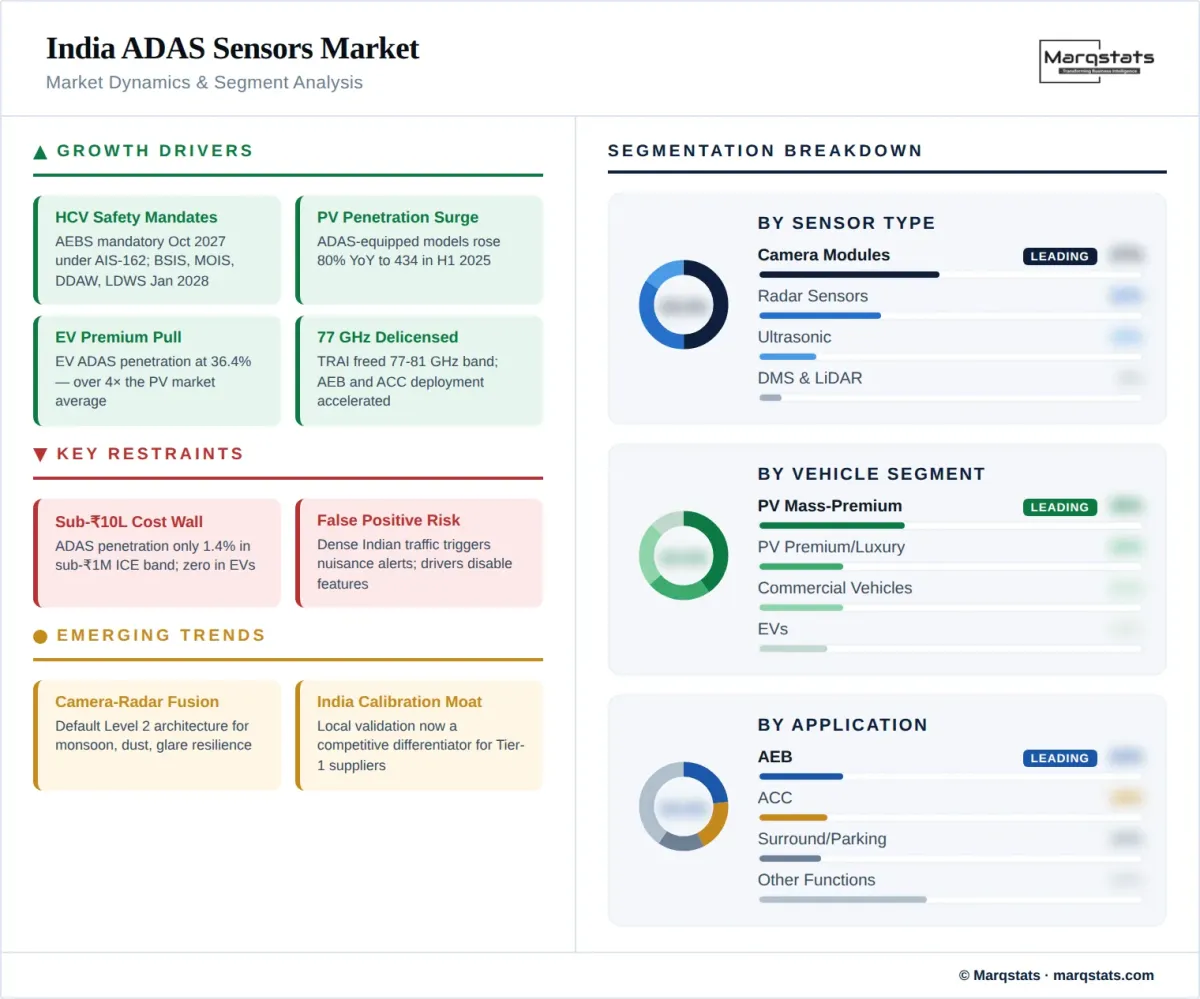
- ADAS is shifting from luxury to mass-premium positioning. ADAS-equipped model versions rose from 241 in H1 2024 to 434 in H1 2025, an increase of more than 80%. SUVs are anchoring this expansion, supported by India’s SUV/UV-led PV market structure where utility vehicles account for 65% of PV sales.
- EVs are over-indexing on ADAS content. EV-specific ADAS penetration reached 36.4% in H1 2025, far above the overall PV average. EV platforms from Mahindra, Hyundai, Kia, MG, and Tata bundle Level 2 ADAS with premium positioning, creating compounding sensor demand as EV volumes scale.
- Bharat NCAP rating pressure is reshaping OEM specification choices. The Kia Seltos achieved a 5-star Bharat NCAP rating in March 2026 with 76.70 points, the highest for any ICE vehicle tested under the programme, supported by Level 2 ADAS with 21 features, blind view monitor, and 360-degree surround camera.
- Radar spectrum policy is improving. India delicensed the 77–81 GHz band for short-range automotive radar use following Telecom Regulatory Authority of India recommendations. The change reduces regulatory friction for 77 GHz radar deployment, supporting AEB, adaptive cruise control, blind-spot information, and moving-off information system applications.
- Production-Linked Incentive (PLI) Auto scheme supports localization of ADAS components. The scheme has a budget outlay of INR 25,938 crore and supports 19 advanced automotive technology vehicle categories and 103 component categories, with a 50% domestic value-addition requirement. ADAS-relevant categories include camera modules, radar modules, harnessing, sensor housings, and India-specific algorithm validation.
Key Restraints
- Cost sensitivity constrains adoption below the INR 10 lakh price band. ADAS penetration in sub-INR 1 million ICE vehicles remained at only 1.4% in H1 2025, while EVs in the same band recorded zero ADAS penetration. Mass adoption requires structural cost-down across camera modules, radar modules, and DMS units.
- False positives degrade driver trust in dense traffic conditions. Indian traffic creates risk of false braking events, false lane alerts, and nuisance warnings. Aggressive system behaviour leads drivers to disable ADAS features, making India-specific calibration quality a critical determinant of adoption durability.
- Service and calibration network readiness lags vehicle-side adoption. ADAS sensors require precise alignment after windshield replacement, bumper repairs, and front-end collisions. India needs a wider network of trained repair shops, windshield calibration points, and radar calibration tools to support the installed base.
- Import dependence persists at the semiconductor layer. Camera image sensors, radar chips, high-performance vision processors, and safety microcontrollers are largely imported. Localization is progressing faster at the module-assembly and validation level than at the core semiconductor manufacturing level.
Key Trends
- Camera-radar fusion is becoming the default Level 2 architecture. Single-sensor systems struggle with India’s monsoon, dust, glare, night driving, and mixed traffic. Camera-radar fusion improves reliability for AEB, adaptive cruise control, blind-spot detection, and cross-traffic alert applications.
- ADAS is being used as a variant-differentiation tool. OEMs are bundling ADAS with connected features, panoramic displays, 360-degree cameras, premium infotainment, and safety packs to push customers into higher trim levels, particularly in SUVs and EVs.
- Driver monitoring systems will accelerate following commercial vehicle mandates. DMS is currently more common in premium vehicles and fleets. Driver Drowsiness and Attention Warning (DDAW) requirements for heavy commercial vehicles from January 2028 will create a substantial new demand pool, alongside ride-hailing fleets, logistics, school buses, and insurance-linked fleet safety programs.
- India-specific ADAS validation is becoming a competitive moat. Global ADAS systems require recalibration for Indian use cases including mixed traffic, two-wheelers cutting across lanes, animals, wrong-side vehicles, poorly marked lanes, glare, dust, rain, potholes, construction diversions, and dense urban traffic. The validation requirement creates opportunity for Indian engineering service providers, test tracks, simulation datasets, and calibration specialists.
Market Segmentation
Camera modules account for approximately 45-50% of the India ADAS sensors market in 2025, the largest revenue category. Use cases include AEB, lane keeping, lane departure warning, traffic sign recognition, 360-degree surround view, and driver monitoring. 2025 module volumes are estimated at 0.6–0.8 million units across front cameras, surround cameras, blind-view cameras, and DMS cameras. Valeo, Bosch, Continental, Uno Minda, and Mobileye anchor supply. The Valeo Sanand HD surround-view camera production line, inaugurated in April 2026, is a key localization milestone.
Radar sensors account for approximately 30-35% of the market in 2025 and represent the fastest-growing segment. Use cases include adaptive cruise control, AEB, blind-spot detection, cross-traffic alert, blind-spot information system (BSIS), and moving-off information system (MOIS) for commercial vehicles. 2025 module volumes are estimated at 0.25–0.40 million units across front and corner short-range radar. The 77–81 GHz band delicensing accelerates deployment. Sona Comstar (through its Novelic acquisition) commenced sample production of in-cabin radar sensors at Chennai in January 2026.
Ultrasonic sensors account for approximately 12-18% of the market in 2025. Use cases include parking assist, low-speed obstacle detection, and blind-view support. 2025 module volumes are estimated at 2.0–2.8 million units, the highest count per vehicle across sensor categories. The segment is high-volume and lower-value, with established suppliers including Bosch, Valeo, and Uno Minda anchoring supply. Pricing is more competitive than camera or radar segments.
DMS sensors account for approximately 3-6% of the market in 2025, with strong growth expected. Use cases include drowsiness detection, attention monitoring, distraction detection, and fleet safety applications. 2025 module volumes remain modest at 50,000–100,000 units, however regulation-led growth is anticipated following the January 2028 DDAW mandate for heavy commercial vehicles. Uno Minda, Continental, Bosch, and Aptiv compete in the segment.
LiDAR accounts for less than 3% of the India ADAS sensors market in 2025 and is forecast to remain a niche category through 2030. Use cases are limited to premium autonomy pilots, advanced perception research, and select luxury programs. 2025 module volumes are below 5,000 units, primarily for testing and pilot deployments. The cost barrier remains the principal constraint for mass adoption in the Indian price-sensitive market.
Mass premium passenger vehicles (INR 10–20 lakh price band) account for approximately 38% of ADAS sensor volume in 2025. Mahindra XUV700, Hyundai Creta, Kia Seltos, MG Astor, Honda City, and Tata Harrier anchor the segment. Level 2 ADAS adoption is expanding rapidly with ADAS-equipped model variants growing more than 80% year-on-year. Camera-radar fusion is the default architecture, supported by 360-degree cameras and ultrasonic parking sensors.
Premium and luxury passenger vehicles (above INR 20 lakh) account for approximately 22% of ADAS sensor volume in 2025. The segment includes Mahindra XUV700 top variants, Hyundai Tucson, Kia Carnival, premium imports from BMW, Mercedes-Benz, Audi, Volvo, and luxury EVs from BYD and select platforms. Sensor content per vehicle is highest in this band, with full radar arrays, surround camera systems, DMS, and selective LiDAR pilots.
Electric vehicles account for approximately 18% of ADAS sensor volume in 2025 despite their smaller share of overall PV volume, owing to the 36.4% ADAS penetration rate. Mahindra BE 6 and XEV 9e, Hyundai Ioniq 5, Kia EV6 and EV9, MG ZS EV, and Tata Curvv EV anchor the segment. Toyota Urban Cruiser Ebella (launched January 2026) brings Level 2 ADAS to the Maruti Suzuki e Vitara sister-platform. Kia Carens Clavis EV (July 2025) features Level 2 ADAS with 20+ autonomous functions.
Heavy commercial vehicles account for approximately 12% of ADAS sensor volume in 2025, with substantial expansion expected from October 2027 onward. The segment is currently led by fleet-driven retrofits and premium long-haul deployments. AEBS, BSIS, MOIS, DDAW, and LDWS will become mandatory in phased implementation. Tata Motors, Ashok Leyland, Volvo Eicher, BharatBenz, and Mahindra Truck and Bus Division will scale procurement.
Light commercial vehicles account for approximately 7% of ADAS sensor volume in 2025. The segment includes Tata Ace EV, Mahindra Bolero Pickup, Maruti Suzuki Super Carry, and Force Trax variants. ADAS adoption is currently limited but is expected to expand through fleet-buyer demand for safety and insurance benefits, alongside e-commerce last-mile fleets and intra-city logistics operations.
Two-wheelers account for approximately 3% of ADAS sensor volume in 2025 but represent a substantial long-term opportunity given India’s 19.6 million annual two-wheeler sales. Continental and Valeo are developing radar-based advanced rider assistance systems (ARAS). Valeo’s strategic partnership with Hero MotoCorp combines Valeo radar and camera technologies with Hero’s market knowledge, with multiple proof-of-concept systems already developed for rider and pedestrian safety.
Adaptive cruise control accounts for approximately 18% of ADAS sensor revenue in 2025. The function relies primarily on front-facing radar combined with camera input. ACC is a default feature in Level 2 ADAS packages across Mahindra XUV700, Hyundai Creta, Kia Seltos, and Toyota Urban Cruiser Ebella. Smart cruise control with stop-and-go capability extends the use case to dense traffic conditions.
Autonomous emergency braking accounts for approximately 22% of ADAS sensor revenue in 2025, the largest application category. AEB requires front camera plus front radar with braking interface integration. The application is mandatory for heavy commercial vehicles from October 1, 2027 under AIS-162, creating a substantial second demand wave. AEB extends to pedestrian, cyclist, and junction-collision avoidance in advanced implementations.
Lane keeping and lane departure warning systems account for approximately 14% of ADAS sensor revenue in 2025. The functions rely on front camera with lane recognition algorithms and steering assist integration. LDWS becomes mandatory for heavy commercial vehicles from January 1, 2028. Indian implementation requires recalibration for poorly marked lanes and construction diversions, creating a localization moat for Indian engineering service providers.
Blind spot detection and cross-traffic alert systems account for approximately 12% of ADAS sensor revenue in 2025. The functions use side-mounted radar and short-range perception sensors. Blind Spot Information System (BSIS) becomes mandatory for heavy commercial vehicles from January 1, 2028. Light commercial fleet operators are early adopters owing to insurance and accident-cost considerations.
Surround-view and parking applications account for approximately 16% of ADAS sensor revenue in 2025. The use cases combine ultrasonic sensors with surround cameras, requiring high sensor counts per vehicle. Tata Sierra (launched November 2025) features 360-degree surround-view camera. Hyundai Venue, Kia Seltos, and Mahindra premium SUVs all bundle the application as part of Level 2 packages. The segment supports the largest module volumes among ADAS applications.
Driver monitoring and drowsiness detection account for approximately 8% of ADAS sensor revenue in 2025, with substantial growth expected from 2028 onward. The application uses in-cabin cameras with attention recognition algorithms. Driver Drowsiness and Attention Warning (DDAW) becomes mandatory for heavy commercial vehicles from January 1, 2028. Adoption extends to ride-hailing, logistics fleets, school buses, and insurance-linked safety programs.
Moving Off Information System (MOIS), traffic sign recognition, automatic high-beam assist, and rear cross-traffic alert account for approximately 10% of ADAS sensor revenue in 2025. MOIS becomes mandatory for heavy commercial vehicles from January 1, 2028. The applications use combinations of front-near-field radar, front cameras, and surround sensors, expanding the per-vehicle sensor count.
By Geography
Western India
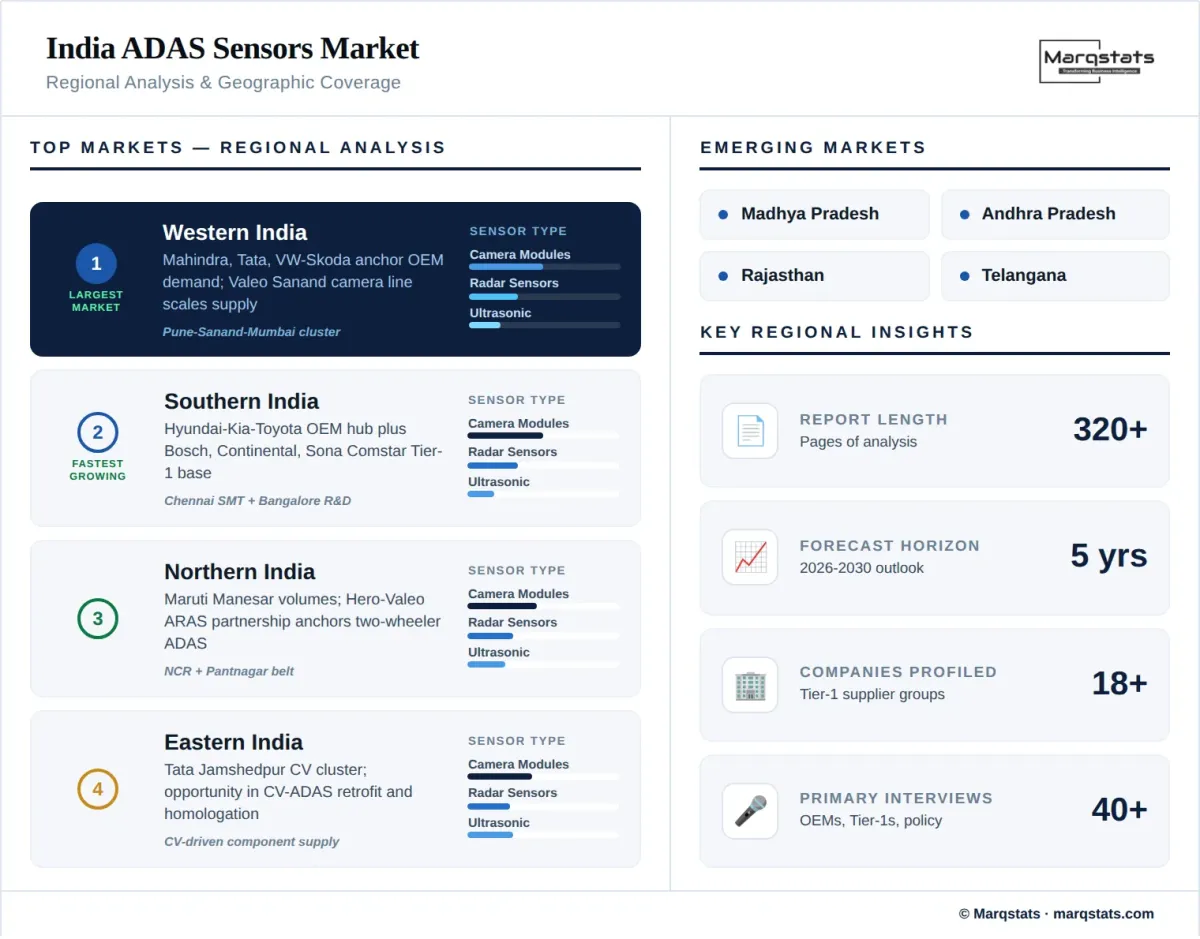
Western India accounts for approximately 38% of India ADAS sensor demand in 2025, the largest regional cluster. Maharashtra (Pune, Mumbai, Nashik, Aurangabad), Gujarat (Sanand, Ahmedabad, Vadodara), and Goa anchor the demand base. Mahindra and Mahindra (Pune, Chakan, Nashik), Tata Motors (Pune), Volkswagen and Škoda (Pune), Volvo Eicher (Pithampur, Madhya Pradesh adjacent), and Maruti Suzuki Hansalpur (Gujarat) drive OEM-side demand. Valeo’s Sanand camera production line scales the supply-side localization.
Southern India
Southern India accounts for approximately 32% of demand in 2025. Tamil Nadu (Chennai, Hosur), Karnataka (Bangalore, Mysore), Andhra Pradesh, Telangana, and Kerala anchor the cluster. Hyundai Motor India (Chennai, Sriperumbudur), Renault Nissan (Chennai), Ford India (Chennai pre-exit), Toyota Kirloskar (Bidadi), Kia India (Anantapur), Bosch (Bangalore), Continental (Bangalore), Sona Comstar (Chennai), and Valeo (Chennai) anchor the cluster. The Sona Comstar Chennai radar SMT line and Valeo Chennai R&D centre support both production and software development.
Northern India
Northern India accounts for approximately 22% of demand in 2025. Haryana (Manesar, Gurgaon, Faridabad), Uttar Pradesh (Greater Noida), Uttarakhand (Pantnagar), Rajasthan, and Punjab anchor the cluster. Maruti Suzuki Manesar, Honda Cars India (Greater Noida pre-exit), Tata Motors (Pantnagar), Hero MotoCorp (Manesar, Gurgaon), Honda Motorcycle and Scooter (Manesar), and Suzuki Motorcycle (Gurgaon) drive demand. The Hero-Valeo ARAS partnership anchors two-wheeler ADAS development from this cluster.
Eastern India and Other Regions
Eastern India and other regions account for approximately 8% of demand in 2025. West Bengal, Odisha, Jharkhand, Bihar, and Northeast states anchor smaller manufacturing clusters. Tata Motors Jamshedpur, Hindustan Motors (West Bengal historical), and multiple component suppliers contribute. The cluster is dominated by commercial vehicle and component manufacturing rather than passenger vehicle assembly, creating opportunity for CV-ADAS retrofit and homologation services.
How Competition Is Evolving
The competitive environment in the India ADAS sensors market is moderately concentrated with active localization underway. The top six Tier-1 suppliers accounted for approximately 72% of 2025 sensor revenue, comprising Bosch, Continental, ZF, Valeo, Mobileye, and Uno Minda. Korean and Japanese OEM-linked suppliers Hyundai Mobis and Denso participate through their captive OEM relationships. Domestic Tier-1 Uno Minda is scaling across ultrasonic sensors, 360-degree cameras, driver attention monitoring, and ADAS algorithms for collision warning, lane departure, traffic sign recognition, ACC, and blind spot detection.
Mobileye and VVDN Technologies signed a Memorandum of Understanding in October 2025 to localize next-generation ADAS technologies including the EyeQ chip family for India OEMs and export. Mahindra has selected Mobileye SuperVision and Surround ADAS configurations for upcoming models. Sona Comstar commenced sample production of in-cabin radar sensors at its Chennai SMT line in January 2026, leveraging Novelic’s sensing and perception technologies, with serial production targeted for H2 CY2027. Valeo’s EUR 200 million India investment commitment under Elevate 2028 includes ADAS, electrification, and small-mobility applications.
OEM-side competition is reshaping rapidly. Mahindra is positioned as the most aggressive Indian OEM on Level 2 ADAS, with deployments across XUV700, XUV 3XO, BE/XEV electric platforms. Hyundai SmartSense Level 2 ADAS extends across Creta, Verna, Alcazar, and Ioniq 5. Kia Seltos achieved a 5-star Bharat NCAP rating in March 2026 with 21 ADAS features. Tata Sierra (November 2025) features Level 2 ADAS with 22 functions. Honda Sensing extends ADAS into the sedan and compact-sedan segments. Maruti Suzuki remains volume leader and represents the largest latent ADAS-adoption opportunity through its forthcoming EV programs and premium models.
Companies Covered
The report profiles 18 company profiles+ companies with full strategy and financials analysis, including:
Recent Market Activity
Table of Contents
Coverage & Segmentation
The India ADAS Sensors Market report analyzes the sensing-hardware market across passenger vehicles, commercial vehicles, electric vehicles, and two-wheelers for the period 2021 to 2030. The report covers historical data for 2021-2025, with 2025 as the base year, and forecasts spanning 2026-2030. Market sizing is conducted in USD millions and unit volumes. The study examines camera modules, radar sensors, ultrasonic sensors, driver-monitoring sensors, LiDAR, IMU/GNSS support sensors, and sensor-fusion-ready perception modules. The scope excludes central ADAS ECUs, braking and steering actuators, infotainment displays, software licences, and full autonomous-driving compute.
The study evaluates regulatory frameworks including Bharat NCAP, Bharat NCAP 2.0 proposed amendments, the Automotive Industry Standards (AIS-162, AIS-184, AIS-186, AIS-187, AIS-188), and the 77–81 GHz radar band delicensing. The Press Information Bureau notification confirms mandatory safety device timelines for heavy commercial vehicles: AEBS under AIS-162 from October 1, 2027, and BSIS, MOIS, DDAW, and LDWS from January 1, 2028. Competitive profiling covers 18 Tier-1 supplier groups operating across module manufacturing, calibration, and India-specific software validation.