Executive Summary
Global energy turbulence, from OPEC+ supply cuts to conflict across the Middle East, has driven crude oil above USD 100 per barrel in 2026 and pushed gasoline and diesel pump prices sharply higher. Consumers now face fuel costs not seen since 2022, eroding the economics of internal combustion vehicles. Steady declines in battery pack prices are lowering electric vehicle prices and running costs at the same time.
The combination of high oil prices and cheaper batteries is widening the total cost of ownership gap in favour of electric vehicles. Major markets, including the European Union, the United States, and China, are already recording faster EV sales in response to fuel-price shocks. The oil shock is no longer only a burden for drivers; it has become a tailwind for electric mobility.
Oil Supply Shocks Lift Pump Prices
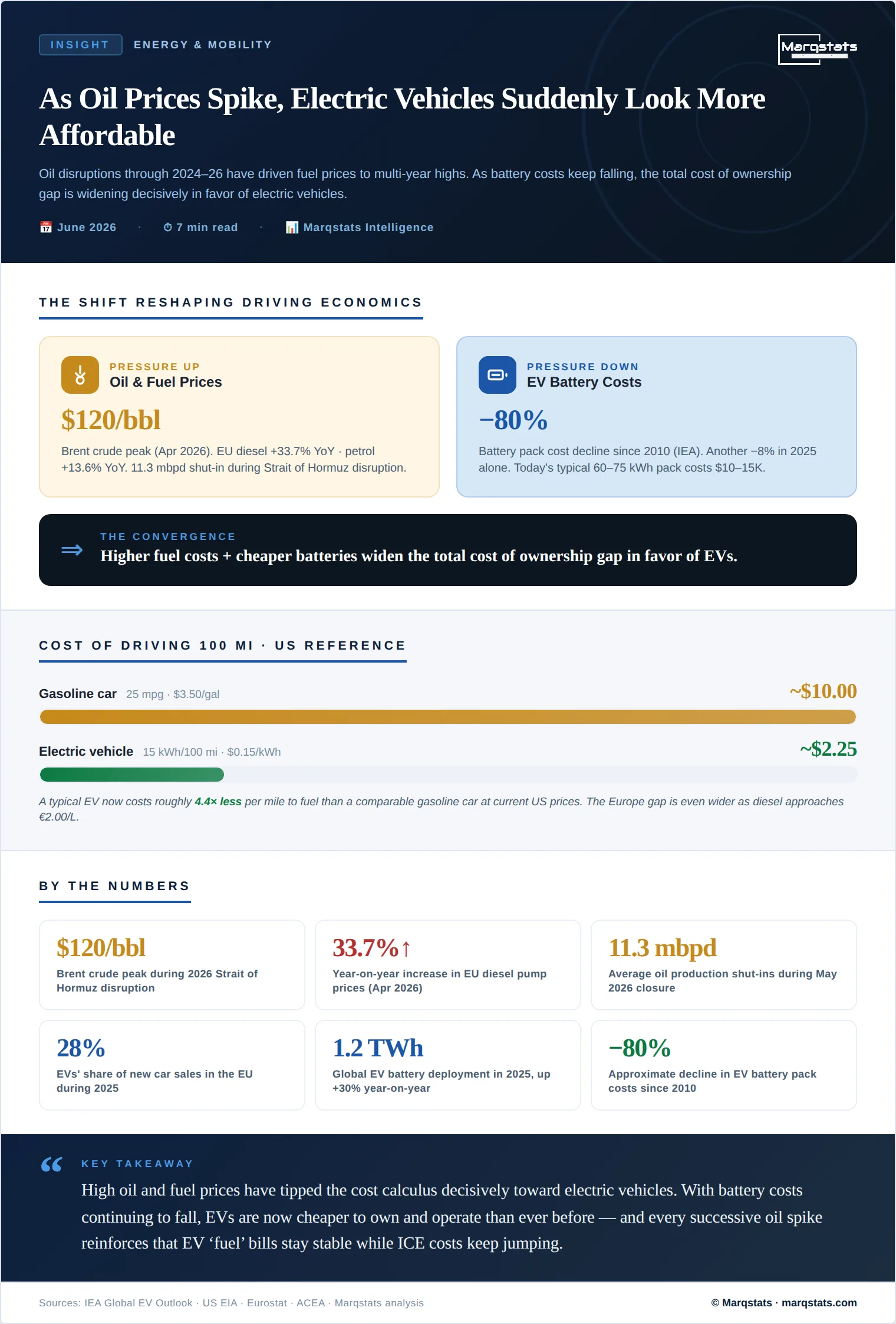
A series of geopolitical shocks across 2024 to 2026 has tightened oil markets severely. In late 2025 and early 2026, conflict in the Middle East effectively closed the Strait of Hormuz, a critical oil transit chokepoint, triggering one of the largest supply disruptions on record. Producers across Iraq, Kuwait, Saudi Arabia, and the United Arab Emirates cut exports sharply, removing an estimated 10 to 15 million barrels per day from the market. Brent crude briefly reached about USD 120 per barrel in April 2026. After modest easing on ceasefire hopes, oil averaged near USD 95 per barrel for the year, the highest since 2022.
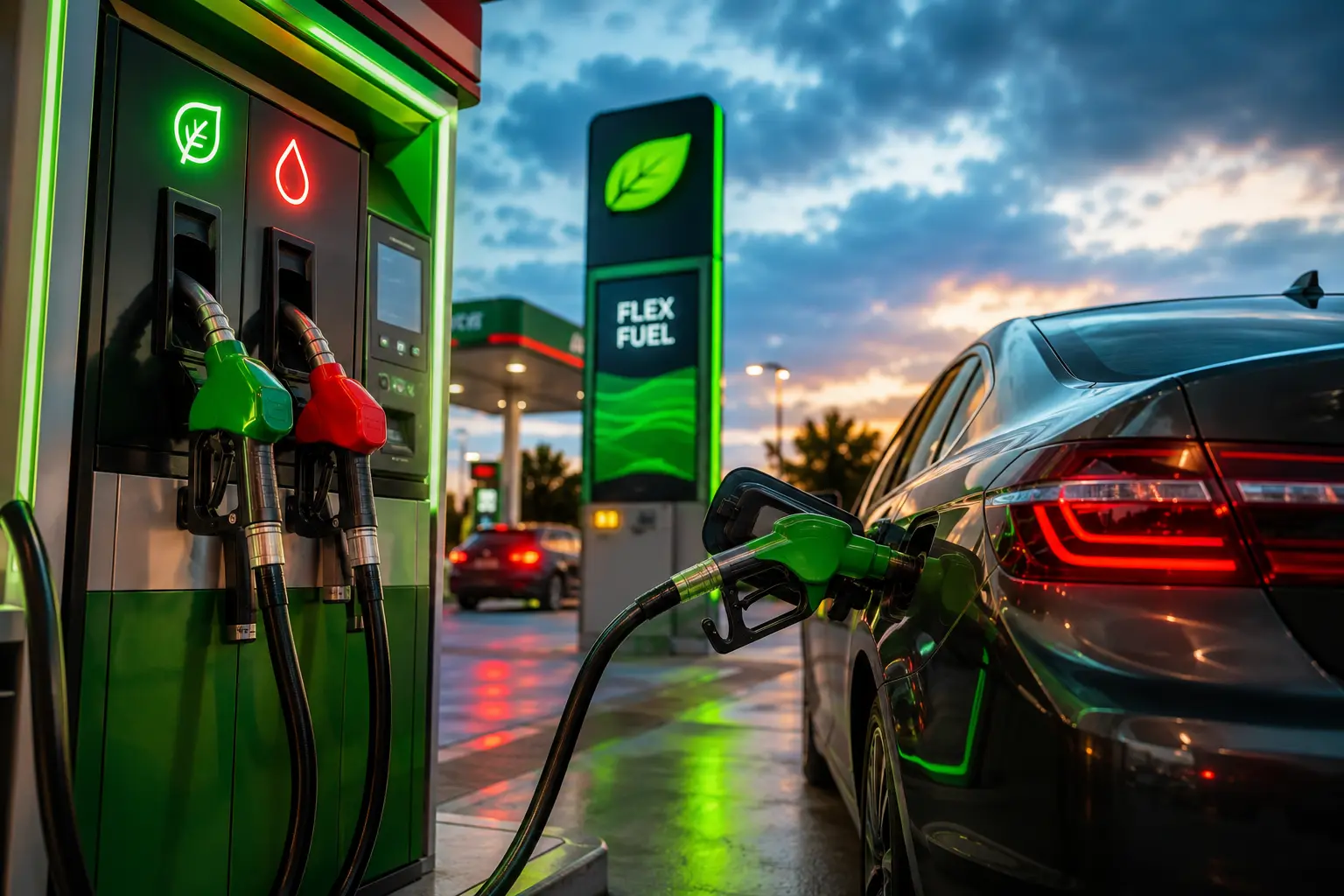
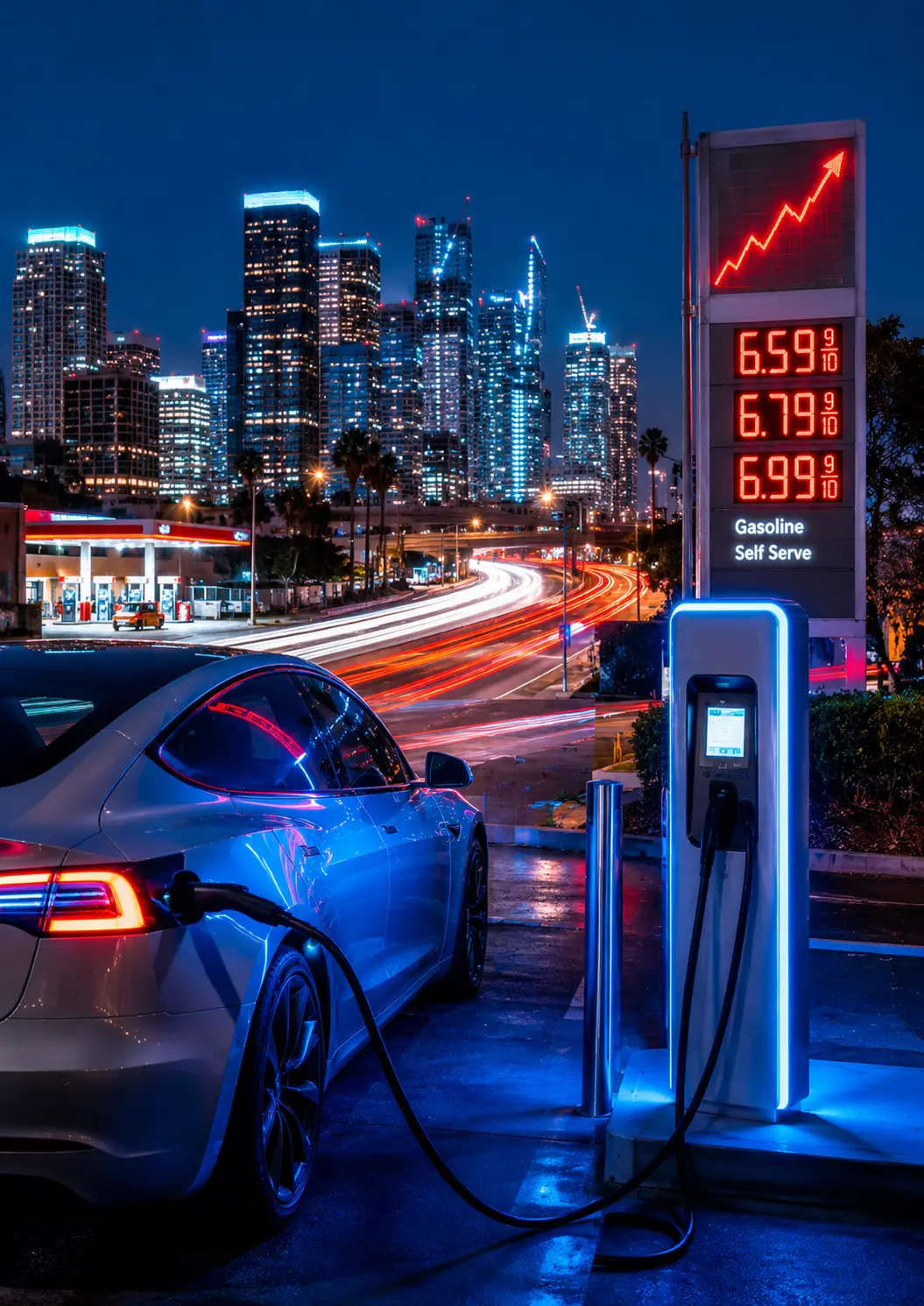
The oil shock translated quickly into higher pump prices. Wholesale fuel costs in the United States rose by roughly USD 1 per gallon between the first and second quarters of 2026. In Europe, consumers faced a double-digit increase in early 2026; April 2026 pump prices ran about 20 percent higher than a year earlier. Diesel rose hardest, up 33.7 percent year-on-year in April, owing to its use across heating and industry as well as transport. Petrol rose about 13.6 percent year-on-year. Any major oil-price surge now feeds straight into household fuel bills.
Higher Fuel Costs Shift the Per-Mile Equation
For drivers of conventional cars and trucks, the fuel increases have been painful. At current oil prices, the per-mile fuel cost of an internal combustion vehicle sits well above historical norms. A midsize sedan in the United States, rated near 25 miles per gallon, now incurs materially higher fuel cost per mile than a year earlier. In Europe, the effect is sharper owing to higher fuel taxes; diesel approached EUR 2.00 per litre across many markets by mid-2026.
Electric vehicle owners avoid most of these swings. Electricity prices are not indexed directly to oil and stay more stable, particularly where renewable generation has expanded. At a typical European residential rate near EUR 0.20 per kilowatt-hour and EV efficiency near 15 kilowatt-hours per 100 kilometres, energy cost falls to about EUR 3 per 100 kilometres, a fraction of diesel fuel cost today. In the United States, the equivalent EV cost is about USD 2.25 per 100 miles against roughly USD 10 per 100 miles for a petrol car. Charging now compares favourably with refuelling.
Moreover, many governments are responding to high fuel bills with policies that favour electric vehicles. Several European Union countries temporarily reduced fuel taxes or offered EV purchase incentives after the early 2026 price spikes. Where subsidies were not expanded, public sentiment shifted regardless. Large fleet operators, including couriers and bus services, report accelerated electrification plans, since predictable energy cost serves as a hedge against volatile oil markets.
Falling Battery Costs Lower EV Prices
The upfront price gap between electric and internal combustion cars is narrowing steadily. Battery pack prices have fallen roughly 80 percent since 2010, owing to manufacturing efficiencies and improved raw-material availability. Recent analysis from the International Energy Agency found pack prices fell a further 8 percent in 2025, even as lithium and cobalt prices spiked temporarily. A battery pack now costs in the low hundreds of dollars per kilowatt-hour, implying a USD 10,000 to USD 15,000 pack for a typical 60 to 75 kilowatt-hour car.
Lower battery costs have allowed automakers to trim EV list prices or add capacity at the same price. Government modelling in the United States indicates that many small EVs are set to reach purchase-price parity with petrol cars by the late 2020s. Manufacturers report steadily narrowing margins between base EV and internal combustion models.
These manufacturing gains compound the fuel-cost advantage. In total cost of ownership terms, an EV is already cheaper to own than a comparable internal combustion vehicle where fuel is expensive enough. A Marqstats model indicates that, across five years, an EV saves 10 to 15 percent in total cost of ownership at current oil prices, against less than 5 percent when oil traded near USD 60 per barrel. The break-even oil price at which an EV pays back its premium has fallen. With Brent near USD 100, payback occurs within three to four years of ownership for common segments, against six to eight years when fuel was cheap.
Fleets and Policy Reinforce Electrification
Government and corporate policy add a further reinforcing factor. Many major auto markets have committed to phase out new internal combustion vehicles through the 2030s, including European Union and United States fuel-economy standards and China's new-energy-vehicle targets. Faced with steep fuel bills, policymakers are reaffirming these goals. In the European Union, high fuel taxes and pending restrictions on combustion-engine buses have prompted several cities to announce accelerated electric-bus procurement. Public support for tighter carbon rules has risen as pump prices climb.
In China, where fuel subsidies are already low, oil spikes have made domestically produced EVs, often 10 to 20 percent cheaper than foreign brands, more attractive again. Some provincial authorities temporarily raised EV registration quotas in early 2026. In the United States, legislators have weighed a temporary expansion of EV tax credits and home-charging rebates under an energy-security banner, though no final measure has passed.
Policy action, whether new incentives, targets, or tariffs, reinforces the economic trend. Many government fleet operators have announced quick electrification to cut fuel spending. Each new vehicle purchase and regulatory adjustment now tilts toward EVs, a sharp shift from the era of low oil prices.
EV Sales Respond to Energy Price Shocks
Early data shows the market reacting already. EV market share in the European Union reached about 28 percent in 2025 and grew fastest in the final quarter, as oil prices climbed. A comparable pattern appeared across 2022 and 2023, when a surge in gasoline prices coincided with record EV sales in Europe and China. European EV sales reached about 4.2 million units in the period, according to International Energy Agency data.
Regions with higher fuel-import dependence recorded outsized gains in EV uptake after oil spiked. Italy and Germany, with heavy commuter traffic and expensive diesel, logged EV sales growth well above the European Union average in the first quarter of 2026.
Global EV penetration remains modest; about one car in fifteen worldwide is electric. Most drivers have yet to face a purchase decision under high oil prices. With oil volatility set to persist through 2026, more consumers will encounter that choice. Each successive spike reinforces a simple contrast: EV energy bills stay stable while internal combustion costs keep climbing.
Conclusion
The 2024 to 2026 oil-price shock is rewiring the economics of road transport. By making gasoline and diesel far more expensive, it has turned a niche advantage into a mainstream driver of EV adoption. Falling battery costs and durable policy amplify the effect. At current energy prices, driving on electricity is cheaper than burning fuel across nearly all use cases. Automakers are set to accelerate electrification to stay price-competitive, and consumers will increasingly favour EVs as a hedge against future fuel inflation.